
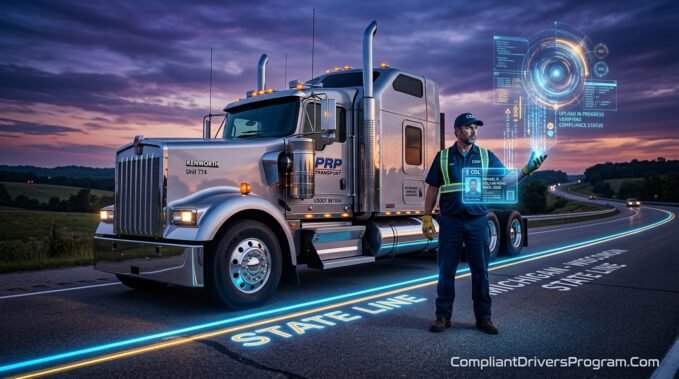
If you’re planning to transfer CDL to another state, there’s one rule you need to understand before anything else: you can only hold a commercial driver’s license in one state at a time. Federal law makes that non-negotiable, and it’s the reason every driver who relocates has to go through this process, no matter how long they’ve been driving or how clean their record is.
I’ll walk you through exactly how the transfer works in 2026, what documents you need, how long you have to complete it, and what’s changed this year that could affect your timeline.
Can You Transfer a CDL to Another State?
Yes, but “transfer” doesn’t mean your old license just moves with you. Your CDL is tied to your state of domicile, meaning the state where you legally live. When you move, you don’t keep driving on your old CDL indefinitely. You surrender it and get a new one issued by your new home state.
This is different from CDL reciprocity. Reciprocity is what lets you drive commercially across state lines on your current CDL before you’ve moved. It doesn’t excuse you from converting your license once you’ve actually relocated. The two concepts get mixed up constantly, so it’s worth keeping them separate in your head.
Why There’s a Deadline
Federal regulation under 49 CFR Part 383 prohibits holding CDLs from more than one state at the same time. Once you establish residency somewhere new, your old state’s CDL is technically no longer valid for you to hold, even if it hasn’t expired yet.
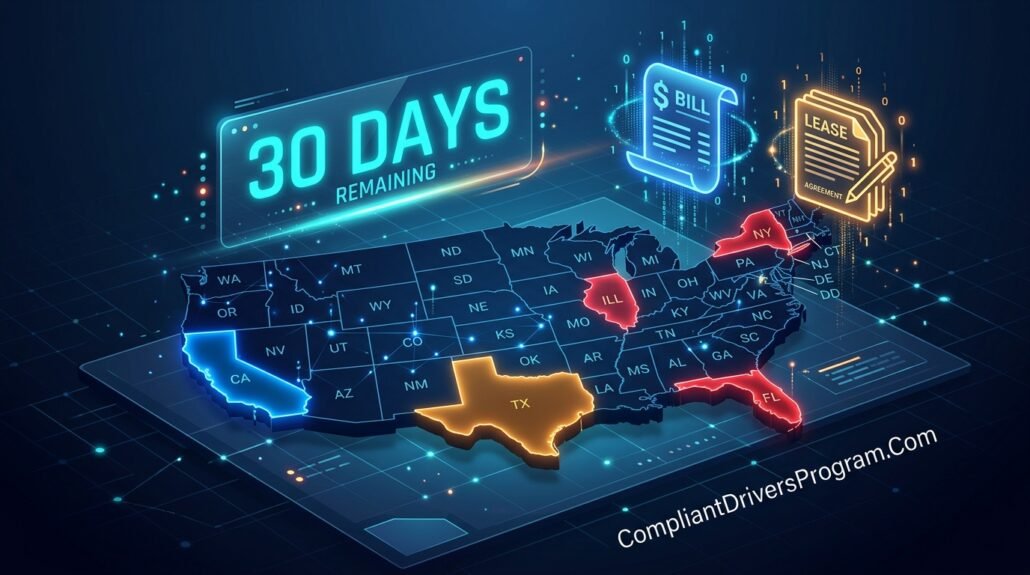
Every state sets its own transfer window, and most fall somewhere between 30 and 60 days after you establish residency. A handful extend that to 90 days. Some states start the clock the moment you get a new state ID or register a vehicle there, not necessarily the day you physically move in. That distinction matters, so check your new state’s specific rule rather than assuming a standard timeline applies.
Step-by-Step: How to Transfer Your CDL
1. Establish Residency First
You need proof you actually live in the new state before the DMV will process a transfer. A signed lease, a mortgage statement, or a utility bill in your name usually works. Keep the date on these documents, since that’s often what starts your transfer window.
2. Confirm the Transfer Deadline
Look up your new state’s specific window. Some states, like Pennsylvania and Arizona, give you exactly 30 days. Others allow up to 60 or 90. Don’t rely on what a friend told you about their state; check your new state’s driver licensing agency directly.
3. Gather Your Documents
You’ll typically need your current out-of-state CDL, proof of the new residency, your Social Security card or number, and a valid DOT medical examiner’s certificate. If you’re not sure your medical card is current, it’s worth checking before your DMV appointment rather than during it.
4. Schedule or Visit the DMV in Person
Most states require an in-person visit for a CDL transfer, even if part of the application can be started online. Some offices require an appointment, so check before you show up.
5. Pass Required Testing
Many states waive the skills test for a same-class transfer, but the general knowledge written test is often still required. If you hold a hazardous materials endorsement, expect to retake that portion of the knowledge test as well.
6. Surrender Your Old CDL
The new state will physically take your out-of-state CDL when it issues the new one. This isn’t optional. It’s how the system prevents you from holding two active commercial licenses at once.
Documents You’ll Typically Need
- Current out-of-state CDL
- Proof of new state residency (lease, utility bill, mortgage statement)
- Social Security card or number
- Valid DOT medical examiner’s certificate
- Proof of identity and lawful presence in the U.S.
- Payment for applicable transfer and testing fees
If you’re adding or maintaining a hazardous materials endorsement, budget extra time. That endorsement requires a separate TSA background check in every state, and it doesn’t automatically carry over just because you had it before.
What Happens to Your Endorsements
Your endorsement history generally follows you through the CDL reciprocity system, but that doesn’t mean every endorsement transfers cleanly. A few things to watch for:
- Hazmat (H): Requires a fresh TSA background check tied to your new state’s application, even if your existing hazmat endorsement hasn’t expired. Review the hazmat endorsement requirements before you apply so you’re not caught off guard by the fingerprinting step.
- Passenger (P) and School Bus (S): Usually transfer with documentation, but some states require a supplemental skills test.
- State-specific endorsements: A small number of states have endorsement categories that don’t exist federally. If your old state had one, your new state may not recognize it at all.
For a full breakdown of what each endorsement covers and what it takes to keep it active, the CDL endorsements guide covers every category in detail.

Example State Transfer Windows
Deadlines vary enough that you shouldn’t assume your new state follows the national average. Here’s how a few states currently handle it, based on their own published rules:
| State | Transfer Window | Notes |
|---|---|---|
| Pennsylvania | 30 days | Must appear in person at a Drivers License Center |
| Arizona | 30 days | Requires a valid medical certificate at time of transfer |
| Massachusetts | Varies by transaction | May require a certified driving record less than 30 days old |
| Most other states | 30 to 60 days, some up to 90 | Clock often starts at first state ID, lease, or vehicle registration |
Because these numbers change and individual state agencies update their own rules, always confirm the current window directly with your new state before relying on a figure you read somewhere else, including this one.
How Much Does a CDL Transfer Cost?
Fees vary by state, but budget for a few separate charges rather than a single flat cost. Most states charge a licensing or transfer fee that’s comparable to what a new resident pays for a standard CDL, typically somewhere in the range of $50 to $100. On top of that, expect a knowledge testing fee if your state requires you to retake the written exam, and a separate fee if you’re transferring a hazmat endorsement, since that includes a TSA background check and fingerprinting cost that’s billed independently of the DMV transaction. If you’re unsure what your new state charges, its licensing agency’s fee schedule is usually published online, and it’s worth checking before your appointment so you’re not caught short at the counter.
Does Your CDL Class Stay the Same When You Move?
Your CDL class, whether Class A, B, or C, doesn’t change just because you moved to a new state. If you held a Class A CDL in your old state, you’ll receive a Class A CDL in your new one, assuming your documentation and testing requirements are met. What can change is whether your new state classifies certain vehicle types differently, or whether it requires state-specific testing for a particular vehicle configuration your old state didn’t test for. This is uncommon, but it does happen, particularly with combination vehicles and certain agricultural or specialized equipment classifications. If your work involves anything outside standard tractor-trailer operation, it’s worth asking your new state’s licensing office directly whether your vehicle type requires anything additional.
Your medical certification status also carries forward, but it has to be current. If your DOT medical card is close to expiring around the time of your move, renewing it before you start the transfer process saves you from a second trip to the doctor mid-transfer.
CLP Transfers Work Differently
If you only hold a commercial learner’s permit rather than a full CDL, don’t assume it will transfer the same way. Many states don’t allow CLP transfers at all. If you move mid-training, you may need to restart your permit process in your new state, including the federally required 14-day holding period before you’re eligible to take the skills test. If you’re early in the process, it’s worth reviewing how to get your CLP in the new state before you assume your existing permit carries over.
2026 Update: Non-Domiciled CDL Transfers Have Tightened
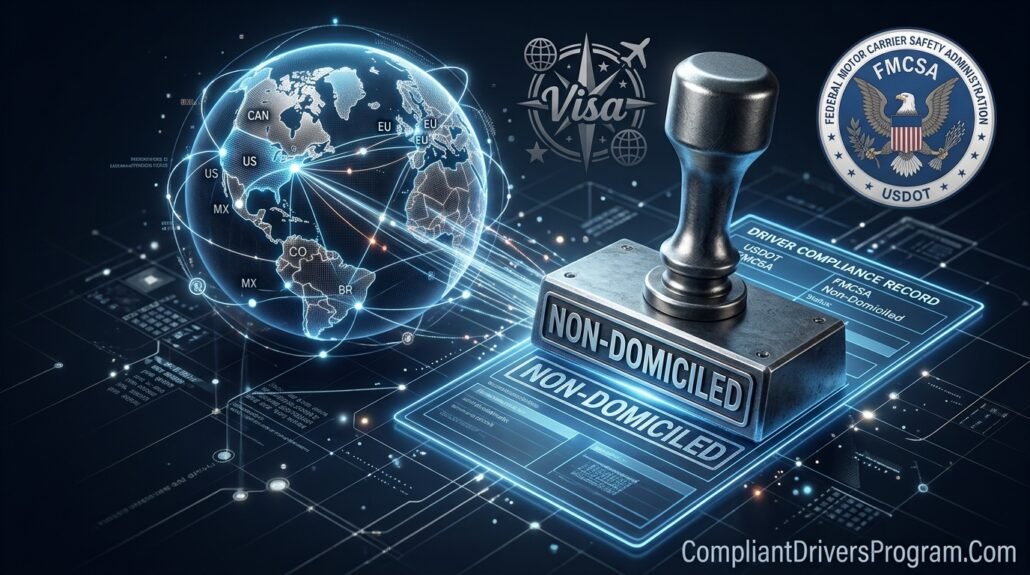
This is one of the biggest changes affecting CDL transfers this year, and it doesn’t apply to most U.S. citizens, but it’s worth knowing about if it affects you or your carrier. In February 2026, the FMCSA finalized a rule that significantly restricts who can transfer, renew, or upgrade a non-domiciled CDL. Under the rule, which took effect March 16, 2026, eligibility is now limited to drivers holding specific employment-based visa categories, and transfer transactions now trigger a full re-verification of immigration status.
Because of this, several states, including Indiana and Washington, paused processing non-domiciled CDL and CLP transfers entirely while they update their verification systems. If you or someone on your team holds a non-domiciled CDL and is planning an interstate move, confirm your new state’s current processing status before assuming a standard transfer timeline applies. This situation has also drawn ongoing litigation, so the rule’s status is worth rechecking if your move is still weeks away.
What Happens If You Miss the Transfer Deadline
Operating on an out-of-state CDL after your transfer window closes is a violation, even if the license itself hasn’t technically expired. Consequences can include citations, and in some cases, your carrier may not be able to keep dispatching you until your license situation is resolved. If you know you’re going to miss a deadline because of a documentation delay, contact your new state’s licensing agency before the window closes rather than after. Most agencies are more flexible when you reach out proactively.
CDLIS and Why Your Record Follows You
Every time a state issues, renews, or transfers a CDL, it checks the Commercial Driver’s License Information System, a national database that tracks your licensing history and violations across every state. When you transfer, your new state pulls your CDLIS record from your previous state before finalizing your license. If that record isn’t available or is incomplete, your application can be delayed while the state contacts your prior licensing agency directly. This is one of the most common reasons transfers take longer than expected, so if your DMV appointment stalls, ask specifically whether they’re waiting on a CDLIS pointer from your old state.
Don’t Forget to Re-Certify Your Driving Type
When your new state issues your CDL, you’ll typically need to complete a self-certification statement declaring what kind of driving you do, interstate, intrastate, excepted, or non-excepted. This isn’t a formality. It determines what medical documentation your state requires and whether you’re subject to full federal drug and alcohol testing rules. If your driving classification changed along with your move, for example you were intrastate-only before and now work for a carrier that operates across state lines, update your CDL self-certification status accordingly. Getting this wrong doesn’t just cause paperwork headaches. It can flag your file during a carrier audit.
What This Means for Your Employer
If you drive for a carrier, your CDL transfer isn’t just your problem to manage. Motor carriers are required to maintain a driver qualification file that reflects your current state of licensure, medical certificate status, and endorsements. When you transfer, let your employer know as soon as the new license is issued so they can update your file and confirm you remain compliant with FMCSA recordkeeping requirements. A driver operating under an outdated license record in the carrier’s file can create compliance exposure during an audit, even if the driver personally did everything correctly.
Common Mistakes That Slow Down a Transfer
- Waiting until the deadline is almost up before starting the process
- Showing up without proof of residency dated appropriately
- Assuming a hazmat endorsement carries over without a new background check
- Not confirming whether an appointment is required at the new DMV office
- Letting the DOT medical certificate lapse during the move
- Forgetting to notify their employer once the new CDL is issued
Frequently Asked Questions
Most states give you 30 to 60 days after establishing residency, though some allow up to 90. Check your new state’s driver licensing agency for the exact window, since it varies.
Usually not for a same-class transfer, but the general knowledge written test is commonly required, and any endorsement-specific knowledge test may need to be retaken too.
Most endorsements transfer with proper documentation, but hazmat requires a new TSA background check regardless of your prior endorsement status.
Only until your new state’s transfer deadline passes. After that, operating on the old CDL is a violation, even if it hasn’t expired.
Your application may be delayed until the state receives your CDLIS pointer record from your previous state. Contact the DMV directly to confirm what’s holding up processing.






![DOT Drug Test: What You Must Know in 2026 [Full Guide]](https://compliantdriversprogram.com/wp-content/uploads/2026/03/DOT-Drug-Test-150x150.jpeg)



Leave a Reply