
One traffic violation can raise your insurance rates by 20% or more. A single at-fault accident can follow your driving record for years. Yet most drivers never take a single step to prove they are safe behind the wheel.
The Compliant Drivers Program fixes that problem. It gives you a clear path to prove your driving skills, lower your insurance premiums, and stay on the right side of transportation regulations. Whether you drive a personal vehicle or manage an entire fleet, this guide covers everything you need to know in 2026.
This article is for individual drivers who want cheaper insurance, commercial drivers who need DOT compliant driver requirements 2026 met, and fleet managers who want safer teams on the road.
Key Takeaways
- A Compliant Drivers Program certifies your safe driving skills and helps you meet federal and state requirements.
- Certified drivers can save hundreds of dollars per year on auto insurance premiums.
- You can complete most compliant driver certification programs online from home in just a few hours.
- The Department of Transportation and Federal Motor Carrier Safety Administration set the compliance standards commercial drivers must follow.
- Program costs typically range from $25 to $100 for individual courses, with fleet programs priced per driver.
What Is a Compliant Drivers Program?
A Compliant Drivers Program is a structured training and certification system. It teaches you safe driving habits and proves you meet specific safety standards. These programs exist for both personal and commercial drivers.
Think of it like a continuing education course for your driving skills. You learn updated traffic laws, defensive driving techniques, and driver safety protocols. At the end, you earn a certificate that proves your competence.
Some programs focus on meeting Federal Motor Carrier Safety Administration rules. Others help everyday drivers qualify for insurance discounts. The common goal is the same. You become a safer, more responsible driver.
If you want a full walkthrough of how the system operates, check out our guide on how the Compliant Drivers Program works.
How Compliant Driver Certification Works
The certification process is simple. You sign up for an approved course. You complete the required training modules. Then you pass a final assessment.
Most programs follow this basic flow:
- Register for an approved course online or in person.
- Complete all training modules covering traffic laws, hazard awareness, and defensive driving.
- Pass a final quiz or exam with a minimum score.
- Receive your driver safety certification document.
- Submit your certificate to your insurance company, employer, or the DMV as needed.
The certificate is usually valid for a set period. Most last between two and three years. After that, you take a refresher course to stay current.
Who Needs This Certification?
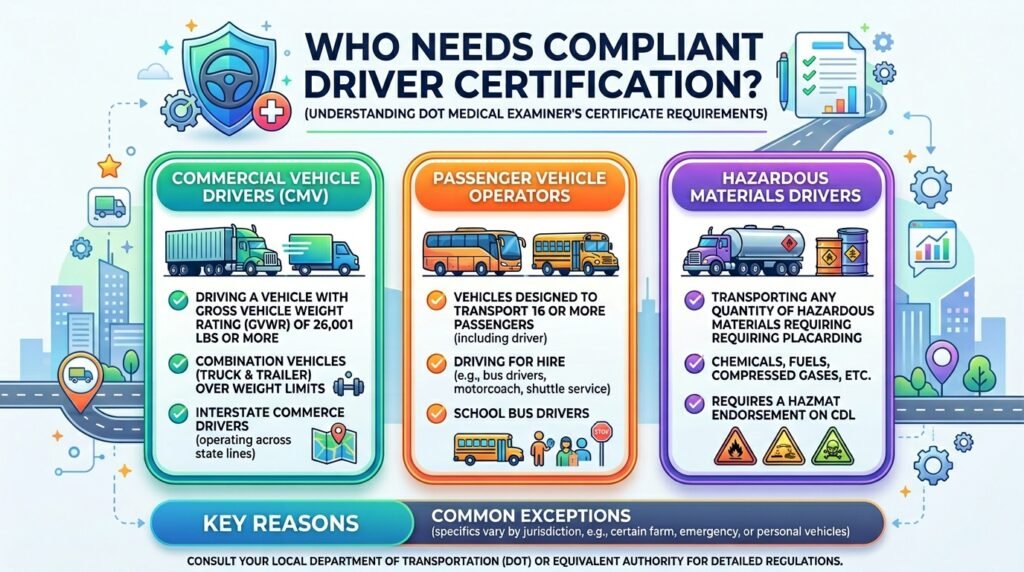
Not everyone is required to get certified. But many people benefit from it. Here is a quick breakdown:
| Driver Type | Required or Optional | Main Benefit |
|---|---|---|
| Personal vehicle drivers | Optional | Insurance discounts |
| Commercial truck drivers (CDL holders) | Often required | DOT/FMCSA compliance |
| Fleet drivers | Usually required by employer | Reduced liability and accidents |
| Rideshare drivers | Optional | Lower insurance rates |
| Teen or new drivers | Varies by state | Meet graduated licensing rules |
Commercial drivers face the strictest rules. The Department of Transportation requires them to maintain a complete driver qualification file. This file proves they meet all federal safety standards.
Why You Need Driver Safety Certification in 2026
Traffic fatalities in the United States remain stubbornly high. The National Highway Traffic Safety Administration (NHTSA) reported tens of thousands of deaths on U.S. roads in recent years. Motor vehicle safety standards keep evolving to address these numbers.
In 2026, the reasons to get certified are stronger than ever.
Save Money on Auto Insurance
Insurance companies reward safe drivers. When you complete a safe driving program, many insurers cut your premium by 5% to 15%. Some states even require insurers to offer this discount.
The math works in your favor. A course that costs $50 could save you $200 or more per year. Over a three-year certification period, that adds up fast.
Want to know the exact savings? Read our detailed breakdown of Compliant Drivers Program insurance cost.
Stay Compliant with Federal and State Rules
Rules change every year. New transportation regulations take effect. Speed limits shift. Distracted driving laws get tougher. A compliant driver program keeps you updated on all of it.
For commercial drivers, staying compliant is not optional. The Federal Motor Carrier Safety Administration enforces strict rules under its safety programs. Failing an audit or inspection can shut down your operation.
Protect Your Driving Record
Points on your license lead to higher insurance rates. Enough points lead to suspension. Many states let you take a safe driving program to remove points or prevent them from hitting your record.
This is one of the fastest ways to keep your record clean. You invest a few hours of training. You protect years of driving privileges.
Reduce Accident Risk
This one matters most. Driver risk management training works. Drivers who complete certified programs get into fewer accidents. They learn to spot hazards sooner. They make better decisions under pressure.
The National Safety Council has long promoted defensive driving courses as a proven way to cut crash rates. The data supports what common sense already tells you. Better training means safer roads.
How to Become a Compliant Driver in 2026
Getting certified is not complicated. But you need to follow the right steps to make sure your certificate counts.
Steps to Get Certified as a Safe Driver
Here is the complete process from start to finish:
Step 1: Determine Your Needs
Ask yourself why you want certification. Is it for an insurance discount? A job requirement? Points removal? Your reason shapes which program you choose.
Step 2: Check Your State Requirements
Each state has its own rules about which courses qualify. Some states only accept courses from approved providers. Check your state DMV website for the approved list.
Step 3: Choose an Approved Program
Pick a course that matches your needs and your state’s requirements. Look for programs approved by the National Safety Council or your state’s DMV.
Step 4: Complete the Training
Finish all required modules. Most online courses let you work at your own pace. In-person courses usually run four to eight hours.
Step 5: Pass the Final Assessment
You need to score above the minimum threshold. Most programs set this at 80%. If you paid attention during training, passing is straightforward.
Step 6: Get Your Certificate
Download or receive your certificate. Keep a copy for your records. Send copies to your insurance company or employer as needed.
If you need help with the initial setup, our Compliant Drivers Setup 2026 guide walks you through every detail.
DOT Compliant Driver Requirements 2026
Commercial drivers face additional requirements from the Department of Transportation. These go beyond a simple safety course. Here is what DOT compliance includes in 2026:
- Valid CDL with proper endorsements for your vehicle type
- Current medical certificate (DOT physical exam)
- Clean driving record meeting minimum standards
- Completed driver qualification file on record with your employer
- Hours of service compliance tracked through electronic logging devices
- Drug and alcohol testing participation
- Annual driving record review by your employer
Drivers who haul hazardous materials need a hazmat endorsement on their CDL. Those pulling tanker vehicles need a tanker endorsement as well.
The FMCSA website has the full list of current federal requirements for commercial drivers.
Best Compliant Driver Certification Programs Online
You have dozens of options for online certification. Not all programs are equal. Here is how to find the right one.
What to Look for in a Training Course
Before you sign up for any program, check these five things:
- State approval: The course must be recognized by your state’s DMV or insurance department.
- Accreditation: Look for backing from the National Safety Council, AAA, or similar organizations.
- Course length: Most legitimate programs require four to eight hours of instruction.
- Content quality: The course should cover current laws, defensive driving, and hazard recognition.
- Certificate delivery: You should receive your certificate immediately after completion.
An AARP driver safety online course is a popular option for drivers over 50. It is available in all 50 states and most insurance companies accept it for premium discounts.
FMCSA Compliant Driver Training Course Options
Commercial drivers need courses that specifically address FMCSA standards. These programs are more detailed than standard defensive driving courses.
A quality FMCSA compliant driver training course covers:
- Pre-trip and post-trip vehicle inspections
- Hours of service regulations and electronic logging
- Cargo securement rules
- Emergency procedures and accident reporting
- Driver safety protocols for commercial vehicles
- Hazardous materials handling basics
These courses often count toward employer-mandated training hours. They help build your driver qualification file and keep your carrier’s safety rating strong.
The best security awareness training for compliance-driven industries goes beyond just driving skills. It also covers workplace safety, regulatory updates, and incident prevention strategies.
Compliant Driver Program Cost and Benefits
Let us talk money. What does certification cost, and is it worth the investment?
How Much Does Compliant Driver Training Cost?
Costs vary based on the type of program and your location. Here is a general pricing guide:
| Program Type | Typical Cost Range | Duration |
|---|---|---|
| Basic defensive driving (online) | $25 to $50 | 4 to 6 hours |
| State-approved point reduction course | $30 to $80 | 4 to 8 hours |
| AARP driver safety course | $25 (members) / $30 (non-members) | 6 to 8 hours |
| Commercial driver compliance training | $50 to $150 | 8 to 16 hours |
| Fleet safety training (per driver) | $40 to $100 | Varies |
| Advanced certification programs | $100 to $300 | 16+ hours |
Important Note: These prices reflect general ranges at the time of writing. Check with specific providers for current 2026 pricing. Rates may vary by state and provider.
For a deeper look at what you will pay, visit our Compliant Drivers Program insurance cost page.
The Return on Investment
A $50 course that saves you $200 per year on insurance gives you a 300% return. That does not even count the value of avoiding accidents, tickets, and license points.
Here is what certified drivers typically gain:
- Insurance savings of 5% to 15% on annual premiums
- Point removal or prevention on driving records
- Lower deductibles with some insurance plans
- Better job prospects for commercial driving positions
- Reduced liability for fleet operators
- Peace of mind knowing you have current, updated skills
Where to Get Compliant Driver Certification Near Me
You have two main options for finding certification programs:
Online Programs: The most convenient choice. You complete everything from your computer or phone. Most states accept online certificates. Popular providers include the National Safety Council, AAA, and state-approved online schools.
In-Person Programs: Some drivers prefer classroom instruction. Check with your local community college, driving school, or DMV office. Many offer weekend classes.
Employer-Provided Training: If you drive for a company, ask your employer. Many fleet operators provide compliant driver certification as part of their fleet compliance management program.
Interested in commercial driving careers that require certification? Browse our guide on CDL jobs and see what truck driver salary ranges look like in 2026.
Compliant Drivers Program Insurance Explained
One of the biggest reasons people join a Compliant Drivers Program is insurance savings. Let us break down how this works.
How Safe Driving Programs Lower Your Premiums
Insurance companies calculate your rate based on risk. The higher your risk, the more you pay. A driver safety certification tells your insurer you are a lower risk.
Here is the typical process:
- You complete an approved safe driving program.
- You send your certificate to your insurance company.
- Your insurer applies a discount to your premium.
- You enjoy lower rates for the certification period (usually two to three years).
- You renew your certification to keep the discount active.
Many states require insurance companies to offer discounts to certified drivers. The exact percentage varies, but 5% to 15% is common.
Compliant drivers program insurance works best when combined with other safe driving behaviors. A clean record plus certification equals maximum savings.
Want to understand how enrollment works? Our article on how to enroll in Compliant Drivers Program Insurance has the full walkthrough.
Is Compliant Drivers Program Insurance Legit?
This is one of the most common questions we get. The short answer is yes. Legitimate compliant drivers program insurance discounts are real and widely available.
However, you need to watch out for scams. Here are signs of a legitimate program:
- State approval from your DMV or insurance department
- Recognized provider with verifiable credentials
- Transparent pricing with no hidden fees
- Real certificate accepted by major insurance companies
- Positive reviews from verified participants
If something sounds too good to be true, it probably is. Always verify before you pay. Read our full investigation on whether Compliant Drivers Program insurance is legit.
You can also see what real participants say in our Compliant Drivers Program reviews page.
For a list of providers that work with these programs, check out our list of Compliant Drivers Program insurance companies.
How Fleet Safety Programs Enhance Road Safety Compliance
Individual drivers benefit from certification. But the impact multiplies when entire fleets participate. Fleet compliance management is a growing priority for transportation companies across the USA.
Companies that invest in fleet-wide driver risk management see measurable results. Accident rates drop. Insurance costs fall. Driver retention improves.
Driver Behavior Monitoring Systems
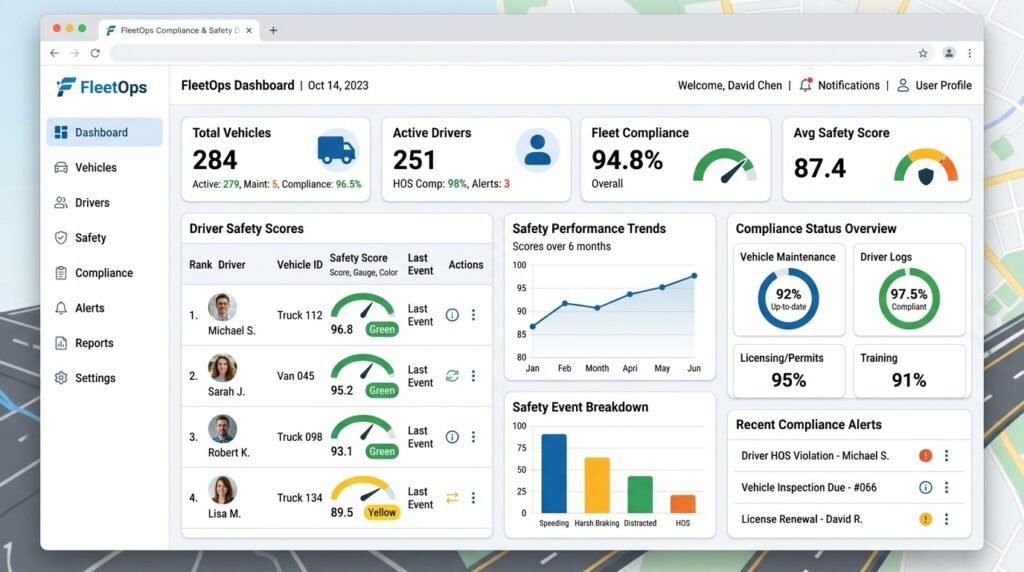
Modern fleets use technology to track and improve driving habits. A driver behavior monitoring system records data like:
- Hard braking events
- Rapid acceleration
- Speeding incidents
- Sharp cornering
- Distracted driving alerts
- Hours of service violations
This data feeds directly into training programs. Managers can identify which drivers need additional coaching. They can also reward drivers who consistently perform well.
The combination of monitoring and training creates a feedback loop. Drivers improve because they know their habits are tracked. They stay improved because training reinforces good behavior.
Best Fleet Automation Software for Driver Safety
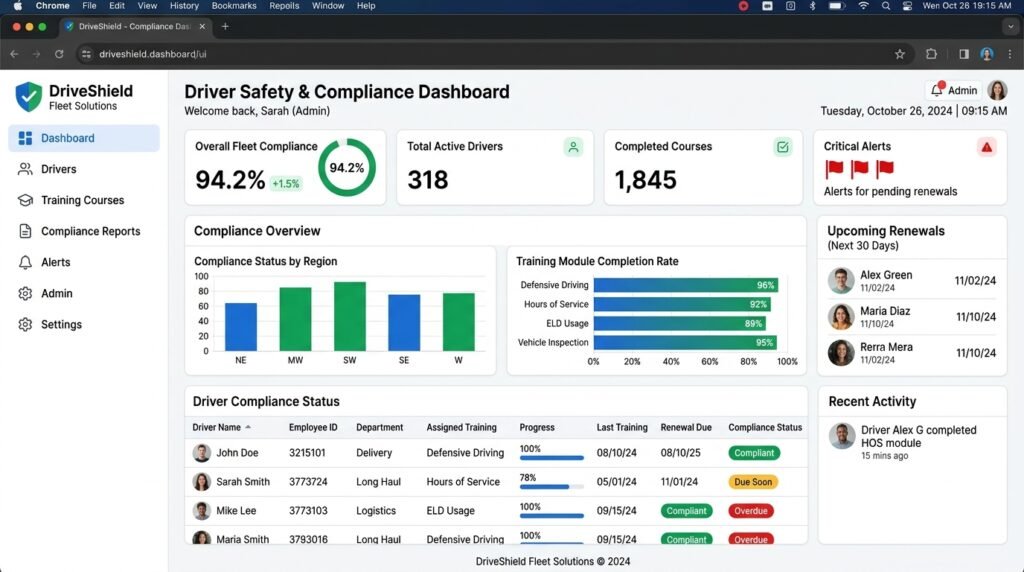
The best fleet automation software to improve driver safety and compliance does more than just track behavior. It automates key compliance tasks:
- Automatic ELD recording for hours of service
- Maintenance scheduling based on mileage and time
- License and certification tracking for all drivers
- Expiration alerts for medical cards, CDLs, and endorsements
- Incident reporting and documentation
- Training assignment and completion tracking
These tools take the guesswork out of fleet compliance management. They help fleet managers stay ahead of FMCSA audits and inspections.
Fleet operators who need vehicle coverage should also review our guide on commercial vehicle insurance to find the best rates.
Steps to Maintain Your Driver Safety Certification
Getting certified is just the beginning. Staying certified requires ongoing effort.
How Long Does Compliant Driver Certification Take?
Initial certification times depend on the program type:
- Basic online course: 4 to 6 hours
- State-approved classroom course: 6 to 8 hours
- Commercial driver compliance course: 8 to 16 hours
- Advanced safety certification: 16 to 40 hours
Most online courses let you spread the time over multiple sessions. You do not have to finish everything in one sitting. Some programs give you up to 30 days to complete all modules.
Renewal and Continuing Education
Your certificate has an expiration date. Here is how to stay current:
Know Your Expiration Date: Mark it on your calendar. Set a reminder 30 days before it expires. Do not let your certification lapse.
Take the Renewal Course: Renewal courses are usually shorter than the initial program. Many take only two to four hours. They focus on updates and new regulations.
Stay Informed Between Renewals: Safe driving habits are a daily practice. Keep up with traffic law changes in your state. Follow motor vehicle safety standards updates from the Department of Transportation.
Track Your Records: Keep copies of all certificates, course completions, and correspondence with your insurance company. Digital copies stored in the cloud are best.
For commercial drivers, maintaining your certification is part of your overall driver qualification file. Your employer must keep this file current at all times.
Building a Long-Term Safety Record
The real value of a Compliant Drivers Program shows up over time. A consistent history of certification tells insurers and employers you take safety seriously.
Here are habits that support your long-term record:
- Renew on time every certification cycle
- Report completed courses to your insurance company promptly
- Drive defensively every single trip
- Avoid distractions including phones, food, and passengers
- Follow posted speed limits and traffic signs
- Maintain your vehicle with regular inspections and repairs
These driver safety protocols work together with your certification to build a strong, clean driving history.
Frequently Asked Questions
You become certified by completing an approved driver safety course. Choose a program accepted by your state’s DMV or insurance department. Complete all required training modules and pass the final assessment. You will receive a certificate you can submit to your insurer or employer.
Costs range from about $20 to $150 depending on the program type and state. Basic online defensive driving courses start around $20 to $50. Commercial driver compliance training costs $50 to $150 or more.
For most personal vehicle drivers, certification is optional. However, commercial drivers often must complete safety training to meet DOT and FMCSA requirements. Some employers require it for all fleet drivers. Certain states also mandate defensive driving courses for ticket dismissal or point reduction.
You can get certified online through providers like the National Safety Council, AAA, and state-approved driving schools. In-person options include local driving schools, community colleges, and DMV-affiliated programs. Many employers also offer certification through their fleet compliance management programs.
Most basic courses take four to eight hours. You can usually complete online courses at your own pace over several days. Commercial driver programs may require eight to sixteen hours or more. Renewal courses are shorter, typically two to four hours.
Commercial drivers with proper certifications and endorsements earn some of the best wages in the transportation industry. Check out our guide to the highest paying trucking jobs to see where certification pays off most.
Conclusion
A Compliant Drivers Program is one of the smartest investments you can make as a driver in 2026. It protects your driving record and lowers your insurance costs. It keeps you compliant with DOT and FMCSA standards. Most importantly, it makes you a safer driver on the road.
The process is straightforward. Choose an approved program. Complete the training. Get your certificate. Start saving money and driving with confidence.
Whether you drive a personal car or operate a commercial fleet, certification proves you take driver risk management seriously. Insurance companies reward it. Employers value it. And your safety on the road depends on it.
Do not wait for a ticket or an accident to push you into action. Start your Compliant Drivers Program certification today. Check our guide on how to enroll in the Compliant Drivers Program and take the first step toward safer, smarter driving.
Based on available information as of early 2026. Check official sources for the most current requirements and pricing.
Insurance Savings Calculator
See how much you could save with the Compliant Drivers Program
Calculating your personalized savings…
| Method | Cost | 3-Yr Savings | Privacy |
|---|---|---|---|
| CDP CourseBest | $35 | $720 | 🔒 High |
| Telematics App | Free | $360 | ⚠️ Low |
| Do Nothing | $0 | $0 | 🔒 High |






![DOT Drug Test: What You Must Know in 2026 [Full Guide]](https://compliantdriversprogram.com/wp-content/uploads/2026/03/DOT-Drug-Test-150x150.jpeg)



Leave a Reply