
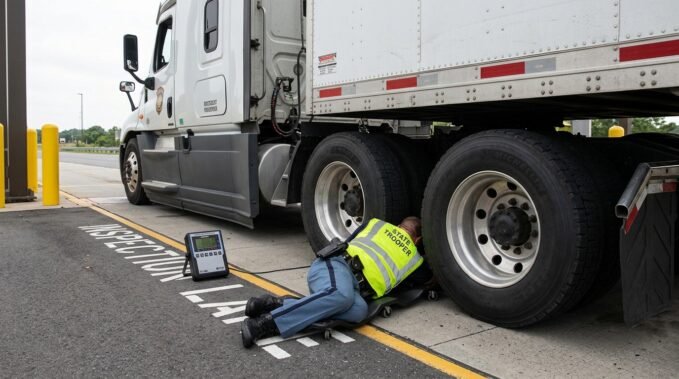
A DOT inspector waves your truck into the weigh station. Your grip tightens on the wheel. Do you know which of the six inspection levels you are about to face? Most drivers do not, and that lack of knowledge costs them time, money, and sometimes their ability to keep driving.
Every commercial vehicle on U.S. highways can be stopped for a DOT inspection at any time. But not every inspection is the same. There are six distinct DOT inspection levels, and each one checks different things. Some focus on the driver. Others focus on the vehicle. One even covers radioactive cargo.
This guide breaks down all six DOT inspection levels 1 through 6 in plain language. You will learn what inspectors look for, how long each level takes, and how to prepare. Whether you are a solo driver, an owner-operator, or a fleet manager, this breakdown helps you stay ready for any roadside inspection DOT officers throw your way.
Key Takeaways
- The DOT uses 6 inspection levels, from the most detailed (Level 1) to the most specialized (Level 6).
- Level 1 is the most thorough inspection. It covers both the driver and the full vehicle.
- A Level 3 inspection focuses only on the driver and documents, not the vehicle.
- Every inspection result feeds directly into your CSA score, affecting your safety record.
- Knowing what each level checks helps you prepare and avoid costly out-of-service orders.
What Are DOT Inspection Levels?
The DOT inspection levels are six standardized categories used across the United States, Canada, and Mexico. The Commercial Vehicle Safety Alliance (CVSA) created these levels. They give law enforcement a clear framework for inspecting commercial vehicles and their drivers.
Each level has a specific scope. Some are broad and cover everything. Others are narrow and target one area. The level an inspector chooses depends on time, location, vehicle type, and what they observe during the initial stop.
All inspections follow procedures set by the Federal Motor Carrier Safety Administration (FMCSA). The results get uploaded to a national database. This data feeds into your carrier’s safety record. Poor results can trigger audits, fines, and shutdowns.
If you want a broad overview of what DOT expects from your equipment, check out our DOT Truck Inspection Guide for a full breakdown.
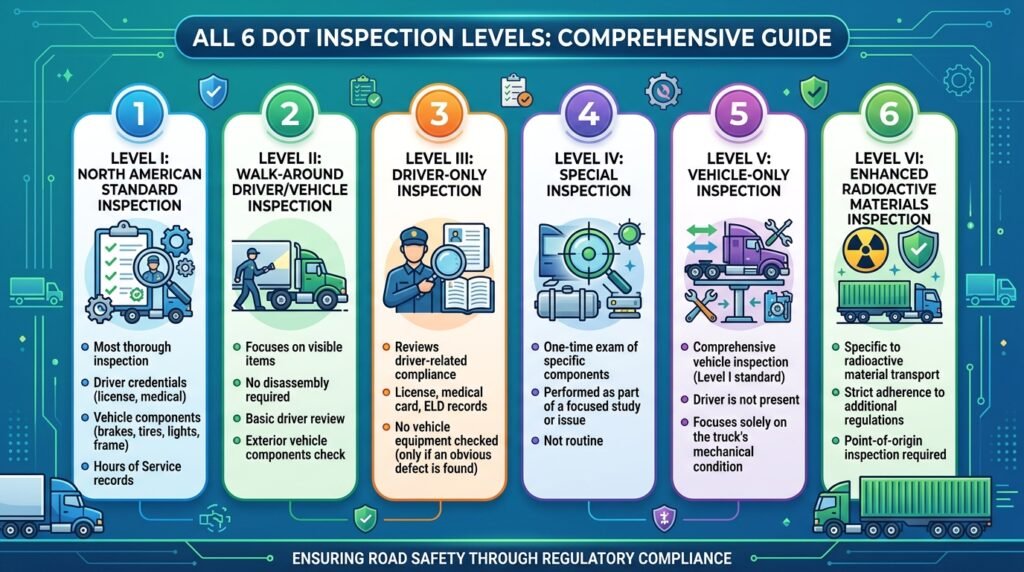
Here is a quick snapshot of what each level covers before we go deeper:
- Level 1 – Full driver and full vehicle inspection
- Level 2 – Walk-around vehicle check plus full driver check
- Level 3 – Driver-only inspection (no vehicle check)
- Level 4 – Special one-time examination of a specific item
- Level 5 – Vehicle-only inspection (no driver check)
- Level 6 – Full inspection plus radioactive materials checks
Level 1: North American Standard Inspection
The Level 1 inspection is the gold standard. It is the most complete and most common roadside inspection DOT officers perform on commercial vehicles. Inspectors check everything. The driver. The entire vehicle. Under the truck. Everything.
This is the inspection most drivers dread. It takes the longest and covers the most ground. If something is wrong with your truck, your paperwork, or your hours, a Level 1 will find it.
What Inspectors Check During a Level 1 Inspection
A level 1 inspection has two main parts: the driver inspection and the vehicle inspection.
Driver-related items include:
- Valid commercial driver’s license (CDL)
- Medical examiner’s certificate (MEC)
- Hours-of-service (HOS) records and ELD data
- Seat belt use
- Alcohol and drug impairment signs
- Driver Vehicle Inspection Report (DVIR)
- Shipping papers and hazmat documents (if applicable)
- Skill Performance Evaluation (SPE) certificate (if applicable)
Vehicle-related items include:
- Brakes (adjustment, components, connections)
- Tires (tread depth, condition, inflation)
- Lights and reflectors
- Steering components
- Suspension system
- Frame and body condition
- Exhaust system
- Coupling devices (for tractor-trailers)
- Windshield wipers
- Fuel system integrity
- Cargo securement
The inspector will crawl under the vehicle. They will measure brake adjustment with a gauge. They will check tire tread depth with a tool. This is thorough, hands-on work.
Common Out-of-Service Findings at Level 1
If the inspector finds a serious safety problem, they will issue an out-of-service order. This means your truck cannot move until you fix the problem. Based on available CVSA data, the most common DOT out-of-service criteria violations include:
- Brake adjustment problems
- Brake component defects
- Tire issues (bald, flat, or damaged)
- Hours-of-service violations
- Operating without a valid medical certificate
- Cargo securement failures
A single out-of-service violation can sideline you for hours or days. It also damages your carrier’s safety rating. Learn more about what happens when you receive out-of-service violations and how they affect your record.
How Long Does a Level 1 Inspection Take?
A full Level 1 inspection typically takes 45 minutes to over an hour. If the inspector finds problems, it can stretch longer. During enforcement events like the annual CVSA International Roadcheck, inspectors work efficiently but still cover every item on the commercial vehicle inspection checklist.
Level 2: Walk-Around Driver and Vehicle Inspection
A Level 2 inspection covers many of the same items as Level 1. The big difference is that the inspector does not go underneath the vehicle.
This is a walk-around check. The inspector examines everything they can see or reach from outside the truck. They also conduct a full driver inspection, just like Level 1.
What Happens During a Level 2 Inspection
During a Level 2, the inspector will:
- Check all driver credentials (CDL, medical card, HOS records)
- Walk around the vehicle looking for visible defects
- Inspect tires, lights, and reflectors
- Check for fluid leaks
- Examine the windshield and mirrors
- Verify cargo securement
- Look at the exhaust system from outside
- Inspect coupling devices
The inspector stays outside the vehicle. They will not crawl under the truck to measure brake adjustment or check suspension parts. However, if they spot something suspicious during the walk-around, they can upgrade to a full Level 1 inspection.
How Level 2 Differs from Level 1
| Feature | Level 1 | Level 2 |
|---|---|---|
| Driver check | Yes | Yes |
| Exterior vehicle check | Yes | Yes |
| Under-vehicle check | Yes | No |
| Brake measurement | Yes | No (visual only) |
| Average time | 45-60+ minutes | 20-30 minutes |
| Can escalate to Level 1 | N/A | Yes |
Level 2 inspections are faster and very common at weigh stations and during routine enforcement stops. Many drivers experience these more often than Level 1.
What Is a Level 3 DOT Inspection?
A Level 3 DOT inspection focuses entirely on the driver. The inspector does not check the vehicle at all. This inspection is all about your paperwork, your credentials, and your fitness to drive.
If your documents are in order and you are following hours-of-service rules, a Level 3 should be quick and painless.
Documents and Credentials Reviewed at Level 3
During a Level 3 driver inspection, the officer will review:
- Commercial driver’s license (CDL) with correct class and endorsements
- Medical examiner’s certificate (MEC)
- Hours-of-service records (paper logs or ELD data)
- Record of duty status
- Seat belt use
- Driver Vehicle Inspection Report (DVIR)
- Shipping papers
- Hazardous materials endorsements (if carrying hazmat)
- Signs of drug or alcohol use
The inspector may also check for Skill Performance Evaluation certificates and waivers. If you have any exemptions, keep that documentation in the cab at all times.
A Level 3 inspection usually takes 15 to 20 minutes. It is the fastest of the common truck inspection types. But do not take it lightly. An hours-of-service violation or expired medical card can still result in an out-of-service order that keeps you off the road.
Levels 4, 5, and 6: Specialized Inspections Explained
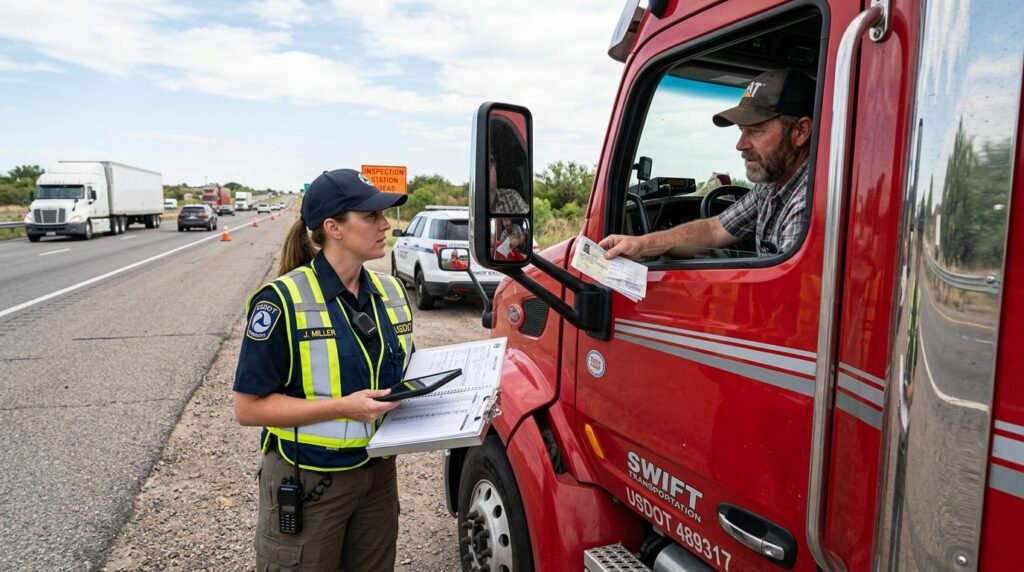
The first three levels handle most DOT roadside inspection requirements. Levels 4, 5, and 6 are less common. They serve specific purposes that most drivers will rarely encounter.
Level 4: Special One-Time Inspection
A Level 4 inspection is a one-time examination of a specific item. An inspector uses this level to look at one particular thing in detail.
For example, a Level 4 might focus on:
- A specific defect reported to FMCSA
- Exhaust system issues on a certain vehicle type
- A particular brake component
- Cargo securement for a specific load type
- Frame cracks or structural concerns
This level often happens as part of a study or investigation. FMCSA may order Level 4 inspections to gather data on a trending safety issue. For instance, if regulators want to study tire failures on a certain trailer type, they might set up Level 4 inspections at multiple locations.
Level 4 inspections can also happen when someone files a complaint about a specific vehicle.
Level 5: Vehicle-Only Inspection
A Level 5 inspection is the opposite of Level 3. The inspector checks the vehicle but does not inspect the driver. The driver does not even need to be present.
This type of vehicle inspection often happens at:
- Truck terminals and fleet yards
- Maintenance facilities
- Construction sites
- Carrier headquarters
The inspector performs the same vehicle checks as a Level 1 inspection. They go under the truck, check brakes, tires, lights, frame, exhaust, and more. The only difference is that they skip all driver-related items.
Level 5 inspections help investigate fleet-wide maintenance issues. If a carrier shows a pattern of brake problems, FMCSA or state officers may visit the yard and inspect multiple vehicles at once.
Level 6: Enhanced NAS for Radioactive Shipments
The Level 6 inspection is the most specialized. It applies only to vehicles carrying transuranic waste and highway route-controlled quantities of radioactive material.
This level includes everything from a Level 1 inspection, plus additional checks for radioactive cargo:
- Radiological monitoring of the shipment
- Verification of proper placarding and labeling
- Review of shipping papers for radioactive materials
- Inspection of packaging and containment
- Verification of route plans and emergency response information
- Checking radiation exposure monitoring devices
Most commercial drivers will never face a Level 6 inspection. It covers a very small number of shipments. But if you haul radioactive materials, you must know this level exists and prepare accordingly.
The Department of Transportation and the Nuclear Regulatory Commission both regulate these shipments. Violations can result in severe penalties. For more on DOT penalty structures, review our DOT fines guide.
Compare All 6 DOT Inspection Levels Side by Side
Here is a side-by-side breakdown of all six DOT inspection levels so you can see the differences at a glance.
| Level | Official Name | Driver Check | Vehicle Check | Under Vehicle | Special Focus |
|---|---|---|---|---|---|
| Level 1 | North American Standard | Yes | Yes | Yes | Full inspection |
| Level 2 | Walk-Around | Yes | Yes (exterior) | No | Visual vehicle check |
| Level 3 | Driver Only | Yes | No | No | Credentials and HOS |
| Level 4 | Special Inspection | Varies | Varies | Varies | One specific item |
| Level 5 | Vehicle Only | No | Yes | Yes | Vehicle without driver |
| Level 6 | Enhanced NAS | Yes | Yes | Yes | Radioactive materials |
This table gives you a clear picture of what each level covers. The most common levels you will face on the road are Level 1, Level 2, and Level 3. Levels 4, 5, and 6 happen under specific circumstances and are far less frequent.
How Roadside Inspections Affect Your CSA Score
Every roadside inspection DOT officers conduct gets recorded in a national database. The data flows into FMCSA’s Safety Measurement System (SMS). This system calculates your CSA score trucking carriers use to measure safety performance.
Your CSA score affects more than you might realize:
- Insurance rates go up with poor scores
- Your ability to win contracts and loads decreases
- Risk of receiving a full DOT audit increases
- Officers select you for future inspections more often
- Your overall safety rating drops
Violations found during any of the six truck inspection types add points to your CSA score. Different violations carry different point values. More recent violations count more than older ones. Serious violations carry much heavier weight.
For example, a brake adjustment violation during a Level 1 inspection adds significant points to your Vehicle Maintenance BASIC category. An hours-of-service violation during a Level 3 adds points to your HOS Compliance BASIC category.
Clean inspections help your score too. When an inspector completes any level and finds zero violations, that clean result gets recorded. Over time, clean inspections dilute the impact of past violations. So every good inspection is an investment in your record.
Want to understand how your score works in detail? Read our complete guide on CSA scores and safety ratings to learn how points are calculated and what you can do to improve your standing.
Prepare for Any Truck Inspection Type
You cannot predict which DOT inspection level you will face on any given day. But you can prepare for all of them at once. Solid preparation is the single best defense against out-of-service orders, violations, and fines.
Keep Your Paperwork Current and Organized
For Level 1, Level 2, and Level 3 inspections, officers check your documents first. Have these ready in your cab at all times:
- Valid CDL with correct endorsements
- Current medical examiner’s certificate
- Up-to-date hours-of-service records on your ELD
- Current Driver Vehicle Inspection Report (DVIR)
- Registration and insurance documents
- Shipping papers (properly completed)
- Hazmat documents (if you are carrying hazardous materials)
Keep these documents organized in one spot. Do not make the inspector wait while you search through a messy pile of papers. A well-organized cab shows professionalism and starts the inspection on a positive note.
Run a Thorough Pre-Trip Inspection Every Day
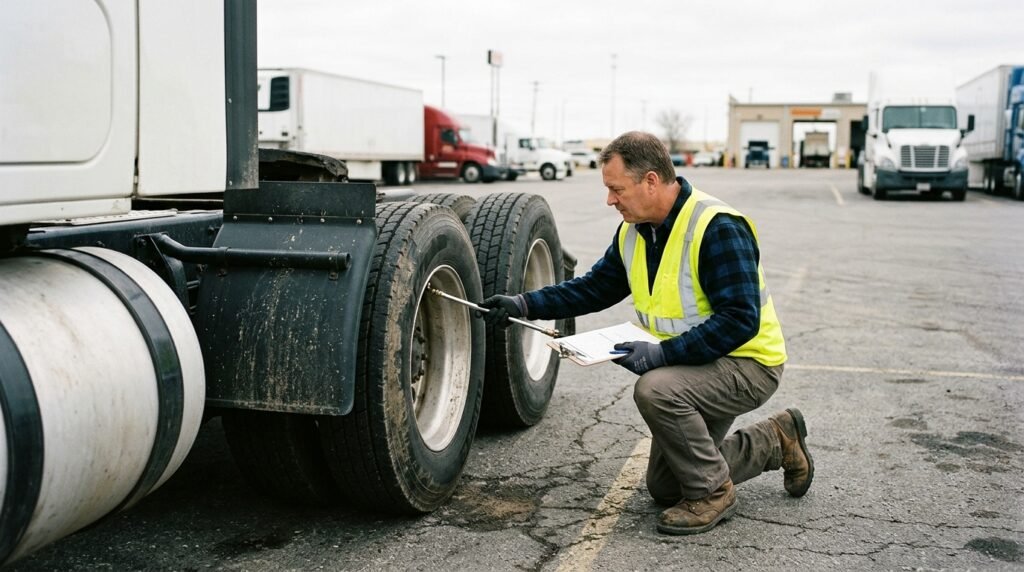
A daily pre-trip inspection catches problems before an inspector does. Walk around your truck. Check the tires, lights, brakes, and fluid levels. Look under the vehicle for leaks or damage.
Use a structured checklist every single time. Our pre-trip inspection checklist covers every item DOT inspectors look for during a vehicle inspection. Following it daily keeps your truck road-ready and inspection-ready.
Use a Reliable ELD Device
Hours-of-service violations rank among the top reasons drivers get placed out of service. A reliable ELD device keeps your records accurate and compliant with DOT roadside inspection requirements. It also makes the inspection process faster because the inspector can pull your data quickly.
If you are shopping for an ELD or thinking about switching, see our list of the best ELD devices for options that meet current FMCSA requirements.
Fix Known Defects Before You Roll Out
This sounds obvious, but many drivers hit the road with known problems. A cracked windshield, a dim headlight, or a slow air leak might seem minor. But any of these can trigger a violation during a vehicle inspection and land you with an out-of-service order.
If your post-trip inspection or DVIR reveals a defect, fix it before the next trip. Do not gamble. The cost of a repair is almost always less than the cost of a violation. Trucking safety compliance starts in your own yard, not at the weigh station.
Stay Calm and Professional
Your attitude matters during an inspection. Inspectors are doing their job to keep roads safe. Being polite, cooperative, and organized can make the process smoother for everyone. Have your documents ready. Answer questions honestly. Do not argue about findings during the inspection itself. There are proper channels for disputes afterward.
For a full picture of how to stay on the right side of federal regulations, explore our guide to DOT compliance for trucking.
Frequently Asked Questions
A Level 3 DOT inspection is a driver-only check. The inspector reviews your CDL, medical certificate, hours-of-service records, and other documents. They do not inspect the vehicle at all. It typically takes 15 to 20 minutes and is the fastest of the common DOT inspection levels.
Level 1 and Level 3 inspections are the most common. Level 1 gives the most complete picture of both driver and vehicle compliance. And level 3 is popular at roadside stops because it is quicker and focuses only on driver documentation and credentials.
Yes. If an inspector conducting a Level 2 walk-around spots something suspicious, they can escalate to a full Level 1 inspection. For example, if they notice brake fluid leaking, they may decide to go under the vehicle for a closer look and a full brake measurement.
Every DOT inspection result gets uploaded to the FMCSA database. Violations add points to your CSA score trucking carriers rely on for their safety rating. Clean inspections with no violations also get recorded and work in your favor over time. Your carrier’s overall safety rating depends partly on inspection outcomes.
Yes. All 50 states, along with Canada and Mexico, follow the same six CVSA inspection levels. This standardization ensures consistent enforcement across all of North America. The Commercial Vehicle Safety Alliance maintains and updates these standards.
You can view your carrier’s inspection data through the FMCSA Safety Measurement System (SMS) portal. This tool shows your inspection results, violations, and CSA score across all BASIC categories. Checking it regularly helps you spot trends and fix problems before they grow.
Conclusion
Understanding all six DOT inspection levels puts you ahead of most drivers and carriers on the road. When you know what inspectors check at each level, you prepare with confidence. No surprises. No panic at the weigh station.
Level 1 covers the full driver and vehicle. Level 2 skips the under-vehicle check. Level 3 focuses only on the driver. Level 4 targets one specific issue. Level 5 inspects the vehicle without the driver present. Level 6 adds radioactive materials checks on top of a full inspection.
Every single inspection feeds into your CSA score. Clean inspections build your record. Violations damage it. The choice you make every morning before you roll out matters.
Start with a solid pre-trip inspection each day. Keep every document current and within reach. Fix defects before they become violations at a roadside inspection. These simple habits protect your CDL, your career, and your livelihood.
Ready to strengthen your trucking safety compliance program? Explore our complete guide to DOT compliance for trucking and build a system that keeps your fleet on the road and out of trouble.
Last updated: March 2026. Information reflects current CVSA and FMCSA standards. Always verify the latest DOT inspection levels and requirements on the official FMCSA website.
Inspection Level Guide






![DOT Drug Test: What You Must Know in 2026 [Full Guide]](https://compliantdriversprogram.com/wp-content/uploads/2026/03/DOT-Drug-Test-150x150.jpeg)



Leave a Reply