
Rain and Fog Driving for Truckers: 15 Life-Saving Tips Most Drivers Learn Too Late
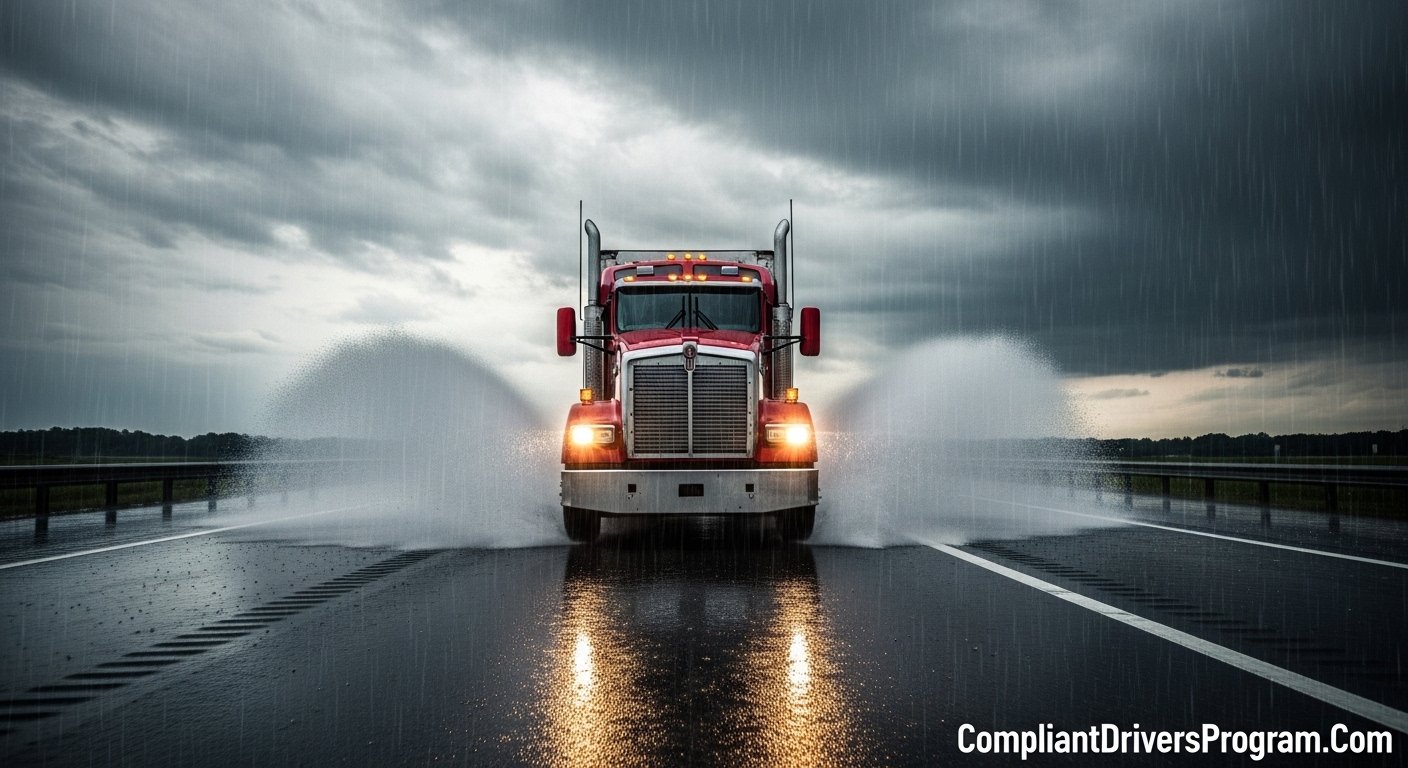
A fully loaded semi weighs around 80,000 pounds. Now picture that much weight barreling down a soaked highway with zero traction. Scary, right? Driving truck in rain kills more truckers every year than ice and snow combined. The Federal Motor Carrier Safety Administration reports that rain plays a role in nearly 25% of all weather-related truck crashes. Fog makes things even worse by stealing your ability to see what’s ahead.
This guide hands you real, proven strategies for staying alive and keeping your rig on the road. You’ll learn how to handle hydroplaning, deal with wet brakes, manage reduced visibility, and much more. Whether you’ve been driving for 20 years or just finished your CDL, these tips can literally save your life.
Why Rain and Fog Are a Trucker’s Worst Enemies
Most people think snow is the biggest threat on the road. That’s actually wrong. Rain causes far more crashes because drivers don’t respect it enough. They keep rolling at full speed and trust their tires way too much. A wet highway changes everything about how your truck handles.
Fog driving trucks safely requires a totally different mindset than clear-weather driving. Fog doesn’t just limit what you can see ahead. It also makes road surfaces damp, messes with your depth perception, and tricks you into driving faster than you should. Combined with rain, fog turns a routine haul into a genuine survival situation.
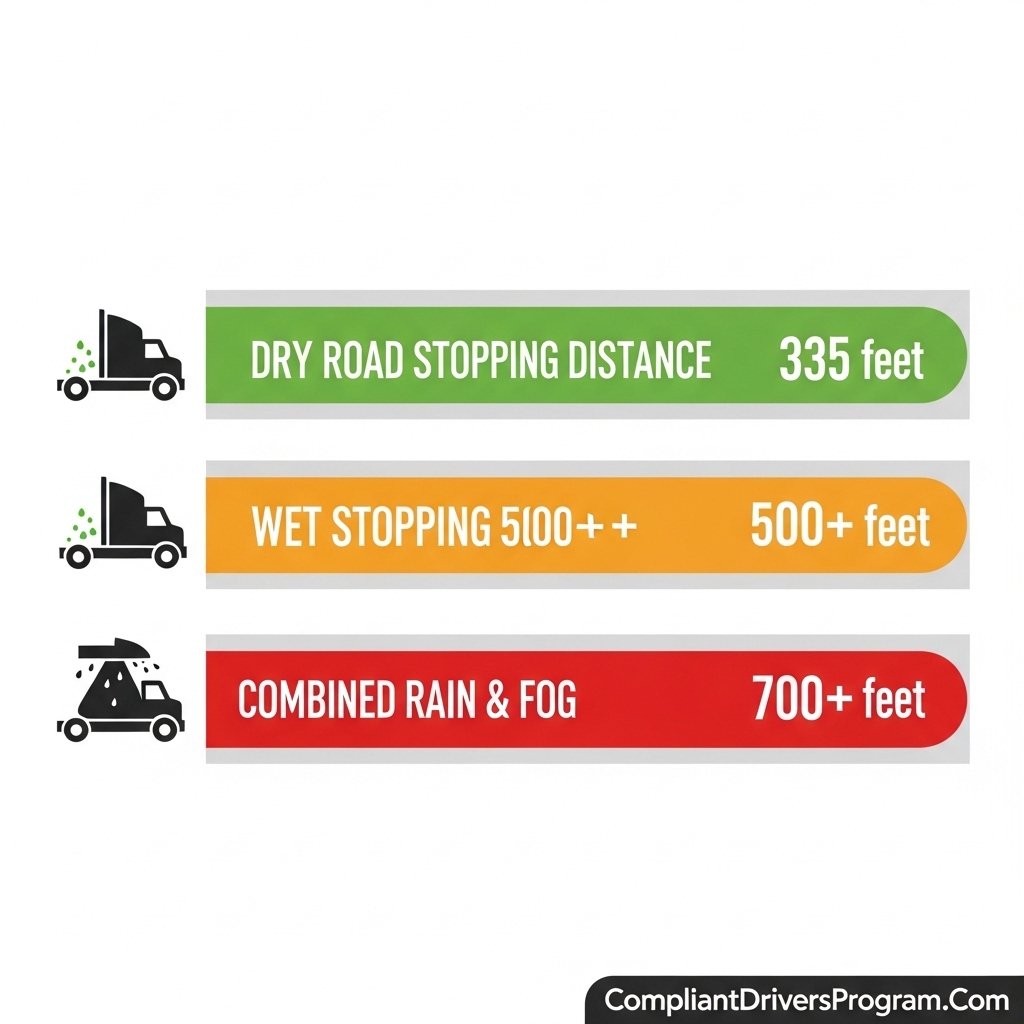
Here’s what makes rain and fog so dangerous for big rigs. Your stopping distance on wet pavement nearly doubles compared to dry roads. At 55 mph, your truck needs about 335 feet to stop on dry ground. On wet pavement, that number jumps to over 500 feet. That extra distance is the difference between a close call and a fatal wreck.
The First 15 Minutes of Rain Are the Most Dangerous
Quick tip: the most slippery moment on any road happens right when rain starts falling. Oil, grease, and rubber dust sit on the road surface during dry spells. When the first drops of rain hit, they mix with that grime and create an incredibly slick film. Your tires basically float on a layer of oily water.
This is when hydroplaning risk shoots through the roof. Your tires can’t cut through the water fast enough, and they lose contact with the pavement. You suddenly have zero steering control and zero braking power. Most drivers don’t realize this happens at speeds as low as 35 mph with worn tires.
Driving semi truck in rain tips from veteran truckers always start with the same advice. Slow down during those first 15 to 20 minutes of rainfall. Give the rain time to wash the road clean before you push your speed back up. Even then, stay well below the posted speed limit. Your dispatcher doesn’t ride in the cab with you, so don’t let delivery pressure override your safety judgment.
How to Handle Hydroplaning in a Big Rig
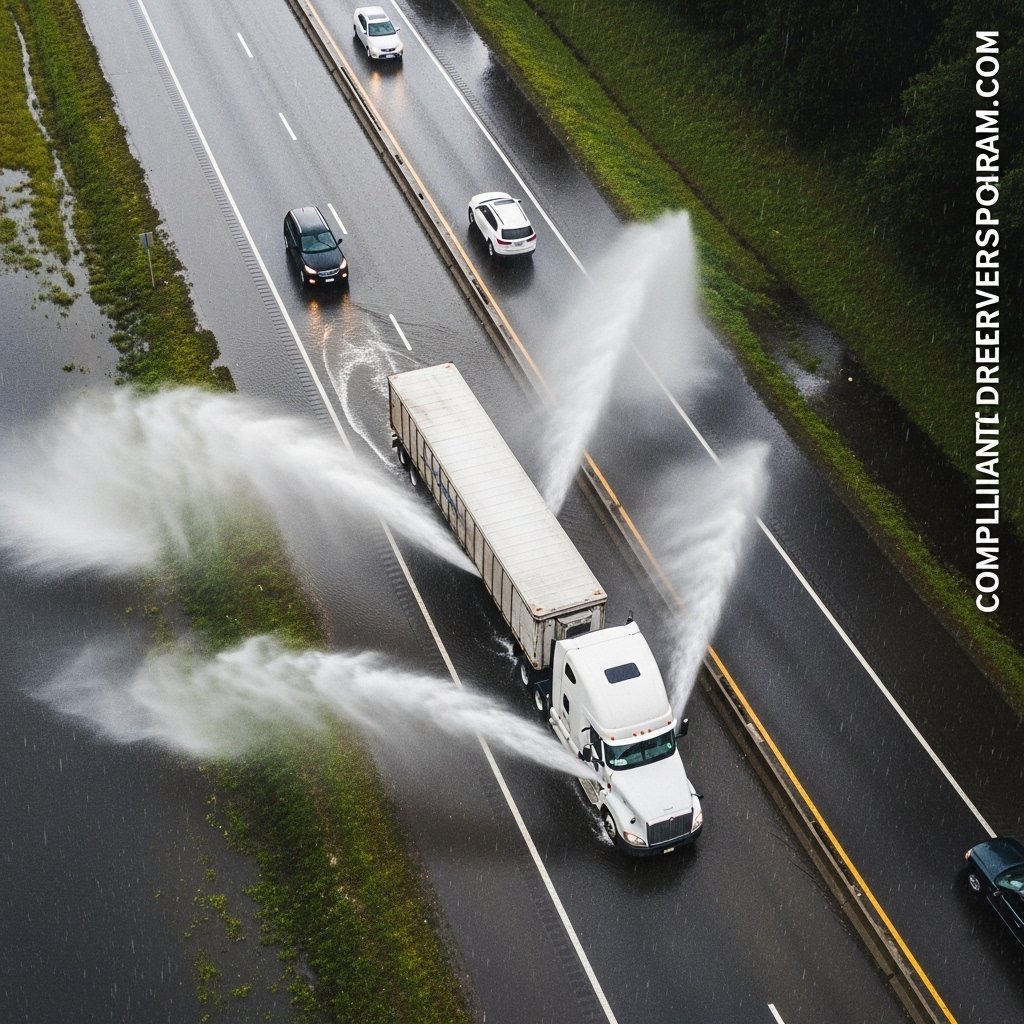
Hydroplaning happens when water builds up between your tires and the road surface faster than your tires can push it away. Your truck basically surfs on top of the water. You lose all grip, and the steering wheel feels loose and unresponsive. Panic makes it worse because most drivers slam the brakes, which locks the wheels and sends the truck into a skid.
Here’s exactly what you should do if your truck starts hydroplaning. First, take your foot off the accelerator immediately. Don’t hit the brakes hard. Let the truck naturally slow down on its own. Keep your steering wheel pointed straight ahead and resist the urge to overcorrect.
Your tire condition plays a massive role in hydroplaning prevention. Tires with less than 4/32-inch tread depth on the steer axle can’t channel water properly. The FMCSA recommends checking your tread depth before every trip in wet conditions. Make your pre trip inspection checklist a non-negotiable habit, especially during rainy seasons.
Fog Driving Safety for Truckers: What Actually Works
Fog driving safety for truckers starts with one honest question. Can you see far enough ahead to stop safely? If the answer is no, you need to slow down until the answer becomes yes. That sounds simple, but ego and schedule pressure make drivers push through fog at dangerous speeds every single day.
Most people don’t know this: fog causes a specific type of crash called a chain-reaction pileup. These happen because multiple vehicles drive too fast and too close in low visibility trucking conditions. One car hits the brakes, and suddenly 30 vehicles are stacked up on the highway. Truckers involved in these pileups rarely walk away without serious injuries.
Your headlights matter more in fog than in any other condition. Always use your low beams in fog. High beams bounce off the water droplets in the fog and reflect light straight back into your eyes. That actually makes visibility worse, not better. Low beams aim downward and light up the road surface without creating that blinding glare.
Fog driving trucks also demands you use every tool available. Turn on your four-way flashers when visibility drops below 500 feet. This helps vehicles behind you see your truck. Keep your wipers running to clear moisture from your windshield. Crack your window slightly so you can hear traffic around you. Sound travels well in fog, and your ears become a backup safety system.
Rain & Fog Driving for Truckers: Safety Guide
Wet Brakes: The Hidden Killer Nobody Talks About
You’ve been rolling through heavy rain for 30 minutes. You approach a red light and press the brake pedal. Nothing happens the way it should. Your brakes feel spongy, weak, and delayed. That’s wet brakes in action, and they’ve caused countless truck accidents.
Water gets between your brake drums and brake shoes during extended rain driving. This thin layer of water acts as a lubricant and reduces your braking friction dramatically. Your truck doesn’t stop when you need it to. How to drive truck in heavy rain safely means understanding this problem and knowing how to fix it on the fly.
Here’s the trick experienced truckers use. Lightly tap your brakes every few minutes while driving through rain. This creates friction heat that evaporates the water from your brake surfaces. Don’t ride the brakes constantly because that causes overheating and brake fade. Just quick, light taps every couple of minutes keep your brakes dry and responsive.
After driving through standing water or deep puddles, your brakes need immediate attention. Apply light brake pressure for about a quarter mile after hitting deep water. You’ll feel the brakes go from weak to strong as the water burns off. This technique has saved more lives than most truckers realize. Check out these truck driver safety tips for more critical habits every driver needs.
Your Following Distance Needs to Triple
On a dry road, most truckers follow the 7-second rule. That gives you enough space to react and stop safely behind the vehicle ahead. In rain, you need to bump that up to at least 10 seconds. In heavy fog, go to 15 seconds or more. Your stopping distance increases so much that anything less puts you in danger.
Think about it this way. At 55 mph, your truck covers about 80 feet every single second. A 7-second following distance gives you 560 feet of space. In rain, your brakes and tires perform worse, so you need that extra buffer. Those additional seconds give you time to react, brake, and avoid a collision.
Tailgating in rain or fog is basically gambling with your life. Other vehicles can stop much faster than your loaded truck. If a car cuts in front of you and slams the brakes, you need that extra space. Learn more about proper spacing in this guide on blind spot and following distance safety. It covers everything you need to know about safe gaps between vehicles.
Visibility Gear That Keeps You Alive
Your wipers are your first line of defense when driving truck in rain. Worn-out wiper blades smear water across your windshield instead of clearing it. That smearing creates glare from oncoming headlights and makes everything blurry. Replace your wiper blades every six months, or immediately when they start streaking.
Rain-X or similar water-repellent treatments work wonders on your windshield. These products make water bead up and roll off the glass at highway speeds. You get dramatically clearer vision even in heavy downpours. Apply it before storm season starts and reapply it every month for best results.
Your mirrors need attention too. Adjust them before you hit the road, not while you’re driving through a storm. Add convex mirrors if you don’t already have them. They give you a wider field of view and help compensate for the reduced visibility rain and fog create. A good best dash cam for truckers also helps you record conditions and provides evidence if something goes wrong.
Pro Tip: Keep a clean, dry microfiber cloth within arm’s reach. Use it to wipe the inside of your windshield when it fogs up. Defrosters help, but a quick wipe gives you instant clarity when you need it most.
Speed Management: The Number One Rule
Every single wet road driving truck tip comes back to one thing. Slow down. Speed is the number one factor in rain and fog crashes for trucks. Reducing your speed by just 10 mph gives you significantly more reaction time and shorter stopping distance. That small adjustment can prevent a catastrophic wreck.
The National Highway Traffic Safety Administration reports that speeding contributes to roughly 29% of all traffic fatalities. Add rain or fog to the mix, and that percentage climbs even higher for commercial vehicles. Your truck’s weight works against you in wet conditions. More weight means more momentum, and more momentum means longer stops.
Don’t trust cruise control in wet or foggy conditions. Cruise control can actually cause hydroplaning because it tries to maintain speed even when your tires lose traction. When your drive wheels start spinning on water, cruise control feeds more power to them. That’s exactly the opposite of what you need. Keep your foot on the pedal so you can feel changes in traction and respond instantly.
Match your speed to the actual conditions, not the speed limit sign. The speed limit assumes dry, clear conditions. Rain and fog change the equation completely. If visibility drops below a quarter mile, cut your speed to 45 mph or less. If you can’t see beyond 200 feet, consider pulling over and waiting it out.
When to Pull Over and Stop
Sometimes the smartest thing a trucker can do is stop driving. Heavy rain, dense fog, or any combination of low visibility trucking conditions can make the road genuinely unsafe. There’s no load worth dying for, and no delivery deadline that justifies risking your life or someone else’s.
Pull over when you can’t see the taillights of the vehicle ahead of you. Pull over when rain is so heavy your wipers can’t keep up. Pull over when fog reduces visibility to less than 200 feet. Find a truck stop, rest area, or wide shoulder and park safely until conditions improve. Use apps from this list of truck GPS and parking apps to find safe stopping spots quickly.
When you do pull over, make yourself as visible as possible. Turn on your four-way flashers and your marker lights. Don’t park on the shoulder of a busy highway if you can avoid it. Other drivers might mistake your lights for a moving vehicle and follow you right onto the shoulder. Rest areas and truck stops are always the safest choice.
Pre-Trip Checks Specific to Rain and Fog
Before you roll out on a rainy day, your truck needs a weather-specific inspection. Check your wipers for cracks, tears, and proper tension. Test your headlights, taillights, marker lights, and flashers. Inspect your tire tread depth on all axles. A quick 15-minute check can prevent a disaster down the road.
Your defroster and heater need to work properly in rain and fog conditions. Moisture inside the cab fogs up your windshield fast. A broken defroster turns a minor annoyance into a major safety hazard. Test it before you leave the yard, not when you’re already on the interstate.
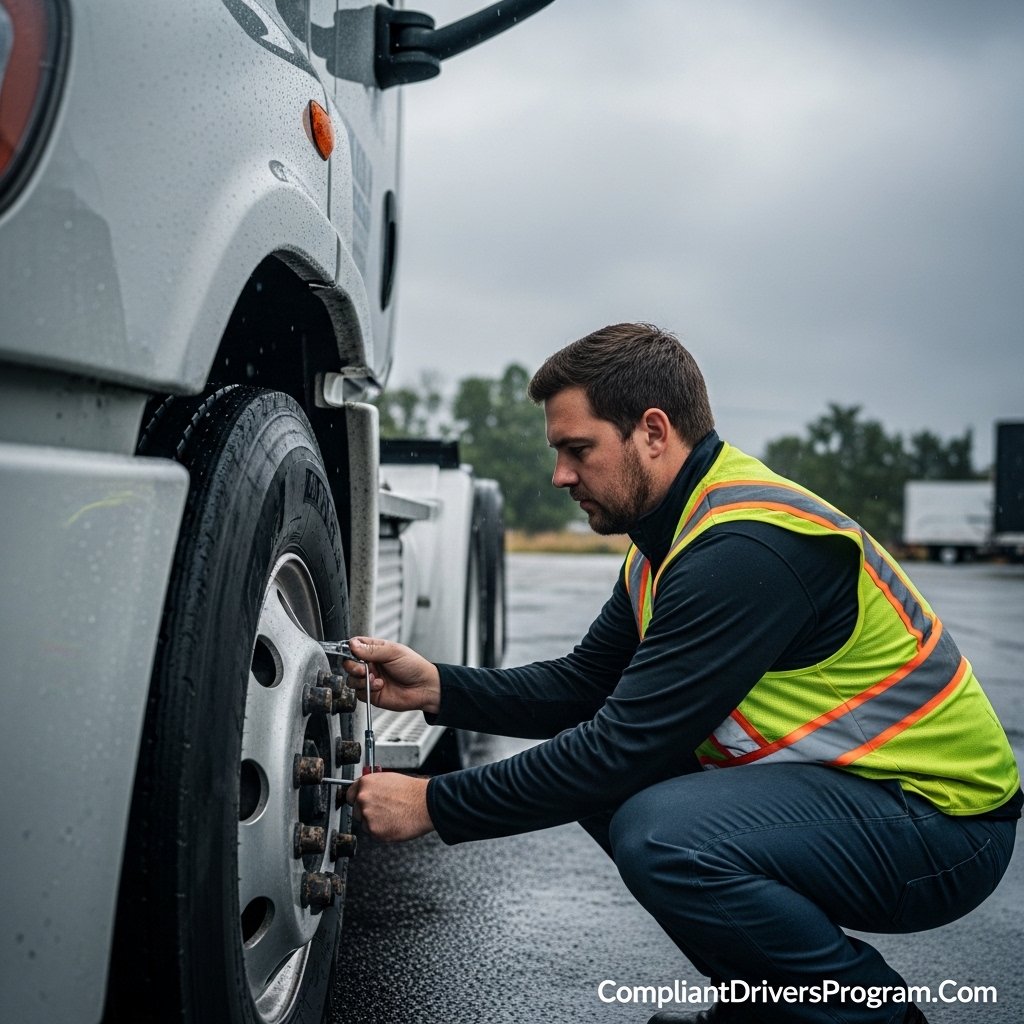
Don’t forget about your brakes during your pre-trip. Listen for unusual sounds during your brake test. Check for worn pads, cracked drums, and air leaks. Wet brakes are dangerous enough when they’re in good condition. Worn brakes in rain are a recipe for a runaway truck situation. Your DOT truck inspection checklist should cover all of these items and more.
Comparison: Rain vs. Fog Driving Challenges
| Factor | Rain Driving | Fog Driving | Both Combined |
|---|---|---|---|
| Visibility | Moderate reduction | Severe reduction | Extremely dangerous |
| Road Surface | Wet and slick | Damp and dewy | Very slick |
| Stopping Distance | 1.5x to 2x longer | 1.2x to 1.5x longer | 2x to 3x longer |
| Hydroplaning Risk | Very high | Low to moderate | Very high |
| Wet Brakes Risk | High | Low | High |
| Recommended Speed | 10-15 mph below limit | 15-20 mph below limit | 20-25 mph below limit |
| Best Headlight Setting | Low beams | Low beams only | Low beams only |
| Biggest Danger | Hydroplaning | Chain-reaction pileup | Total loss of control |
Advanced Techniques the Pros Use
Veteran truckers use a technique called “tracking” in rain and fog. They follow the tire tracks of the vehicle ahead because those tracks have less standing water. The tires of the lead vehicle push water aside, creating a slightly drier path. This reduces your hydroplaning risk and gives you better traction.
Another pro move involves watching for spray patterns. If the vehicles ahead of you are throwing up heavy spray, the road has significant standing water. If the spray suddenly decreases, conditions might be improving. Pay attention to these visual clues because they tell you what your tires are about to encounter.
Defensive driving techniques become critical in bad weather. Scan far ahead, check your mirrors every 5 to 8 seconds, and always have an escape route planned. The Smith System driving method teaches exactly these habits. It’s one of the most effective training approaches for keeping truckers safe in every type of weather. Mastering defensive driving for truckers can reduce your crash risk by up to 50%.
Related Weather Hazards Every Trucker Should Know
Rain and fog rarely show up alone. They often bring wind, temperature drops, and shifting road conditions with them. A rainy day can quickly turn into an icy night if temperatures fall below freezing. Knowing how to handle related hazards makes you a complete all-weather driver.
Strong crosswinds combined with rain create a double threat for high-profile trailers. Your trailer acts like a sail, and wet roads reduce the traction you need to stay in your lane. Learn how to handle this specific danger in the guide on high wind driving for trucks. Wind and rain together demand slower speeds and extra lane awareness.
If you’re driving through mountainous terrain in rain, the challenges multiply. Steep grades, tight curves, and wet brakes all come together in a scary combination. The pickup of speed on downhill grades becomes much harder to control on slick surfaces. Gravity pulls your heavy truck downhill while your brakes struggle on wet surfaces. Check out the mountain driving for trucks guide for specific techniques that keep you safe on grades. When winter approaches and rain turns to ice, make sure you’re ready with these winter truck driving strategies too.
FAQ: Rain and Fog Driving for Truckers
A: Drop your speed 10 to 15 mph below the posted limit. In heavy rain, go even slower until you feel confident in your traction and stopping distance.
A: Always use low beams. High beams reflect off fog droplets and bounce light back into your eyes, making reduced visibility even worse.
A: Your steering feels light and unresponsive. The engine RPM may increase without acceleration. Take your foot off the gas and steer straight until traction returns.
A: Lightly tap your brakes every few minutes to burn off moisture. After hitting standing water, apply light pressure for about a quarter mile to dry your wet brakes.
A: Yes. Federal regulations allow drivers to stop when conditions make driving unsafe. Your safety always comes before delivery schedules.
A: Use at least a 10-second following distance in rain. In fog, increase it to 15 seconds or more. Your stopping distance nearly doubles on wet roads.
A: Run your defroster on the windshield setting. Crack a window slightly for air circulation. Keep a microfiber cloth handy for quick wipes when needed.
Stay Safe, Stay Smart, Stay Alive
Driving truck in rain and fog doesn’t have to end in disaster. The truckers who survive bad weather year after year all share the same habits. They respect the conditions, they slow down, and they never let pride or pressure override common sense.
Here’s what matters most from everything we covered:
- Slow down immediately when rain starts and drop your speed even more in fog
- Keep your wipers, headlights, tires, and brakes in top condition at all times
- Triple your following distance and never trust cruise control on wet roads
- Pull over when conditions get too dangerous because no load is worth your life
Your next step is simple. Before your next trip, spend 15 extra minutes on a weather-specific pre-trip inspection. Check every item we discussed. That small investment of time could be the reason you make it home safely.





![DOT Drug Test: What You Must Know in 2026 [Full Guide]](https://compliantdriversprogram.com/wp-content/uploads/2026/03/DOT-Drug-Test-150x150.jpeg)



Leave a Reply