

A 60 mph gust slams into your trailer from the side. Your rig lurches toward the next lane. Your heart pounds as you fight the wheel. Sound familiar? Every experienced trucker knows this feeling. High wind driving trucks is one of the most dangerous situations you’ll face on the road.
Wind doesn’t care about your delivery deadline. It doesn’t care about your experience level. Strong gusts can flip a fully loaded semi in seconds. They can push an empty trailer across multiple lanes without warning. The scary truth is that wind-related truck accidents kill dozens of drivers every year.
But here’s the good news. You can beat the wind if you know what you’re doing. This guide gives you everything you need to survive and thrive in windy conditions truck driving. You’ll learn exactly when to drive, when to stop, and how to stay safe through it all.
What Actually Happens When Wind Hits Your Truck
Most drivers think wind just pushes their truck sideways. That’s only part of the story. Understanding the physics helps you stay safe. Let’s break down what really happens during high wind driving trucks situations.
Crosswind creates a force called lateral pressure on your trailer. Think of your trailer as a giant sail. The larger the surface area, the more wind it catches. A standard 53-foot dry van has about 4,500 square feet of surface area. That’s a lot of sail.
When wind hits your trailer at an angle, it creates lift too. This lift reduces the weight on your tires. Less weight means less grip on the road. Combine lateral push with reduced grip, and you’ve got a rollover risk recipe for disaster.
Your truck also creates its own wind problems. Highway speeds generate airflow around your rig. When outside wind mixes with this airflow, things get unpredictable. Gusts can amplify or suddenly change direction. This is why even experienced drivers get caught off guard.
The Danger Numbers: Wind Speeds Every Trucker Must Know
Here’s the thing most truckers don’t learn in training. There are specific wind speeds where everything changes. Knowing these numbers could save your life. Let’s look at the real data on when is it too windy to drive a truck.
At 25-35 mph winds, you’ll notice your truck moving around. Most drivers can handle this with extra focus and reduced speed. You should grip the wheel firmly and stay alert. This is your early warning stage.
At 35-45 mph winds, things get serious. The National Weather Service typically issues wind advisory alerts at this level. Your trailer will sway noticeably on bridges and open areas. You need to reduce speed significantly and consider stopping.
At 45-60 mph winds, driving becomes extremely dangerous. Truck rollover wind incidents spike dramatically in this range. An empty trailer can flip at these speeds even on flat ground. Most carriers have policies requiring drivers to park at this level.
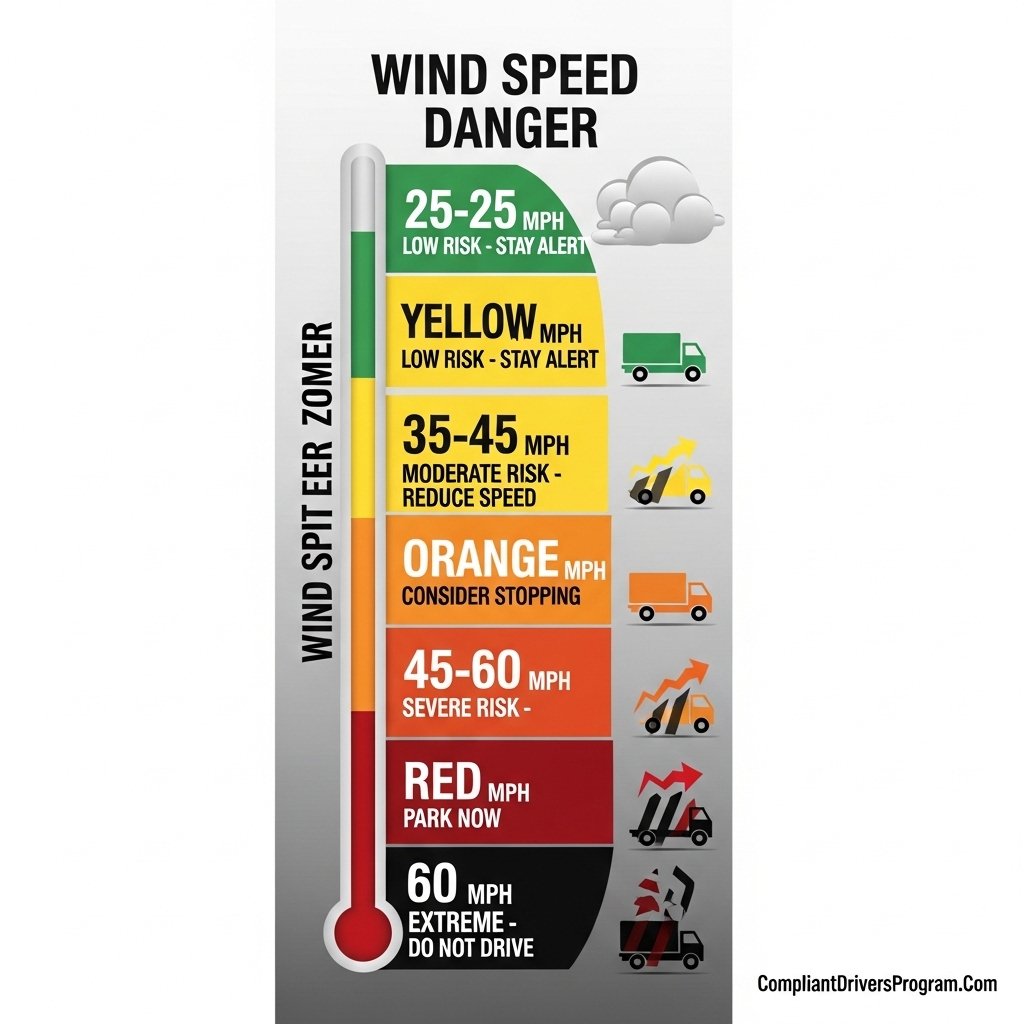
Above 60 mph winds, staying on the road is foolish. Even loaded trucks flip regularly in these conditions. No load is worth your life. Find safe parking immediately and wait for conditions to improve.
Pro Tip: Your trailer height matters as much as wind speed. A 13’6″ trailer catches way more wind than a flatbed. Always factor your trailer type into your decision.
Empty Trailers vs Loaded Trailers: The Surprising Truth
Quick tip: an empty trailer is actually more dangerous than a loaded one. Most new truckers don’t realize this. The physics seem backward, but they’re real. Let me explain why your empty trailer puts you at higher risk.
Weight keeps your truck planted on the road. A loaded trailer pushes down on the axles with 40,000+ pounds. This weight creates friction between your tires and the pavement. More friction means more resistance to wind pushing you sideways.
An empty trailer weighs maybe 10,000-15,000 pounds. That’s three to four times less weight holding you down. But here’s the key part. Your trailer’s surface area stays exactly the same. Same sail, way less anchor.
This is why high wind truck rollover prevention starts with knowing your load. Empty trailers flip at wind speeds 15-20 mph lower than loaded ones. A gust that fully loaded trucks handle easily can send an empty box tumbling across the highway.
If you’re bobtailing or hauling an empty trailer, take wind warnings extra seriously. Cut your acceptable wind speed threshold by at least 10 mph. And definitely avoid bridges and mountain passes when gusts are forecast.
Spotting Wind Trouble Before It Hits You
The best truck driver safety tips for wind focus on early detection. You want to know about dangerous conditions before you’re stuck in them. Smart drivers use multiple information sources to stay ahead. Here’s how to spot trouble coming.
Check weather apps before you start each day. Look specifically for wind advisory alerts along your route. Pay attention to timing because wind often peaks during afternoon hours. Morning departures can help you avoid the worst conditions.
Watch for natural wind indicators while driving. Trees bending, flags snapping, and dust blowing all tell you something. Other vehicles struggling to hold their lane is another warning sign. When you see a trucker pulled over, ask yourself why.
Know your danger zones along common routes. Open plains and valleys funnel wind into powerful streams. Bridges expose you to unblocked crosswind from every direction. Mountain passes create their own violent wind patterns. Learn where these spots are on routes you drive regularly.
The Federal Motor Carrier Safety Administration recommends checking weather forecasts before every trip. This simple habit takes two minutes and could save your life. Make it part of your pre-trip routine alongside your regular defensive driving for truckers practices.
High Wind Driving for Trucks: Complete Safety Guide
🌬️ Beaufort Reference: Wind Effects on Large Trucks
Your Complete Survival Plan for High Wind Driving
Most people don't know this: surviving high winds is about technique, not luck. Professional drivers use specific strategies to stay safe. These high wind driving tips for truckers come from veterans with millions of safe miles. Follow them exactly.
Slow down before you have to. Speed amplifies every wind effect on your truck. At 65 mph, a crosswind has much more impact than at 45 mph. Reducing speed gives you more reaction time and more control. Don't wait until you're struggling to slow down.
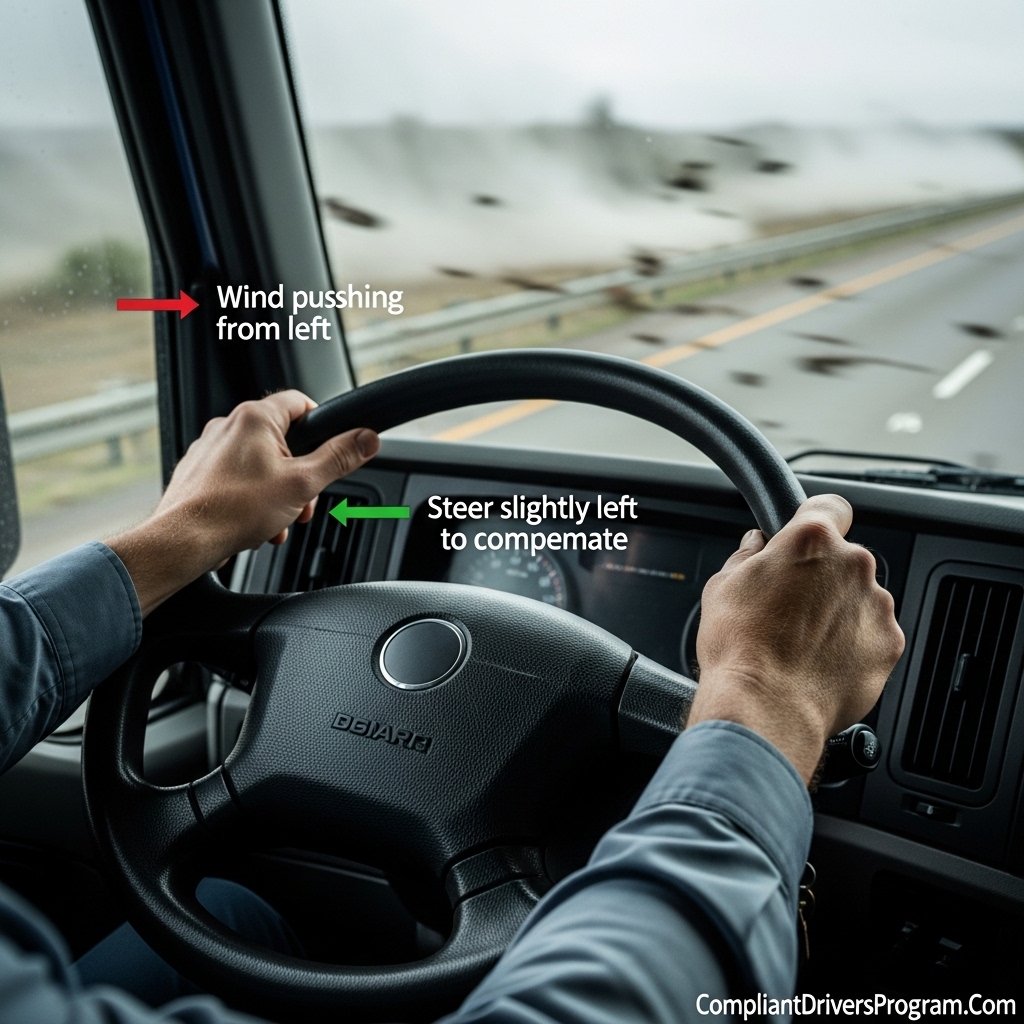
Grip the wheel firmly at nine and three. This position gives you maximum leverage against sudden gusts. Keep your elbows slightly bent so you can push or pull quickly. Never let the wheel spin through your hands.
Steer gently into the wind. When wind pushes from the left, angle your steering slightly left. This counteracts the push and keeps you tracking straight. Don't overcorrect because conditions can change instantly.
Increase your following distance dramatically. Give yourself four to six seconds behind other vehicles. This gives you space to react if they swerve or if you get pushed. It also reduces the turbulence you experience from their vehicle.
Stay in the right lane whenever possible. This gives you the shoulder as an escape route. It also means less distance to travel if you need to pull over quickly. Other drivers can pass you in left lanes.
Pro Tip: If possible, time your travel to avoid peak wind hours. Wind often builds through the day and calms after sunset. Early morning driving can help you avoid the worst conditions.
When Parking Beats Driving: Making the Smart Call
Here's the hardest part of wind safety trucking. Knowing when to stop takes guts. Your dispatcher wants that load delivered. Your paycheck depends on miles. But dead drivers don't make money. Waiting out bad conditions is sometimes the only smart choice.
Ask yourself these questions when conditions get rough. Can you hold your truck in your lane without fighting the wheel constantly? Can you see at least a quarter mile ahead clearly? Would you want your family member driving in these conditions?
If you answer no to any of these, find safe parking now. Truck stops, rest areas, and wide shoulders all work. Position your truck so wind hits the front, not the side. This minimizes your exposure to crosswind forces.
Communication matters when you stop. Call your dispatcher and explain the conditions clearly. Reference specific wind speeds and any wind advisory alerts in effect. Most companies have policies supporting drivers who make safety stops. Document everything in case questions come up later.
Your parking spot matters more than you might think. Avoid parking under trees or near signs that could blow down. Stay away from buildings that might create wind tunnels. Look for natural wind breaks like hills or large structures.
The Cargo Securement Rules require your load to stay secure in all conditions. If wind threatens your cargo, that's another reason to stop. Check your straps and tarps during any wind-related stop.
Recovery Moves When Wind Catches You Off Guard
Even careful drivers get surprised by sudden gusts. Knowing what to do in that moment makes all the difference. These emergency techniques could prevent a truck rollover wind disaster. Practice them mentally so they become automatic.
When a strong gust hits, resist the urge to brake hard. Hard braking can actually destabilize your truck further. Instead, ease off the accelerator gradually. Let your truck slow down naturally while you focus on steering.
If you feel your trailer starting to lift, steer into the wind direction. This angles your trailer to reduce the sail effect. At the same time, accelerate slightly if safe. Forward momentum can help keep your trailer tracking behind you.
Getting pushed toward another lane requires immediate action. Check your mirrors quickly and steer firmly back toward your lane. Use your horn to alert other drivers if necessary. Finding an escape route to the shoulder is often safer than fighting multiple lanes.
If rollover seems unavoidable, protect yourself. Hold tight to the steering wheel to avoid arm injuries. Brace your feet against the floor. Stay buckled because your seatbelt is your best friend in a rollover.
After any close call, pull over safely and collect yourself. Check your load and your truck for any damage. Report the incident to your company even if no accident occurred. Take time to calm down before continuing.
Dangerous Zones: Routes and Areas That Amplify Wind Risk
High wind driving trucks danger varies dramatically by location. Some places are simply more dangerous than others when wind blows. Learning these high-risk zones helps you plan safer routes. Here are the spots that deserve extra caution.
Bridges are the most dangerous places during high winds. You lose the protection of surrounding terrain completely. Wind hits from all directions with nothing to slow it down. Many bridges have wind restrictions that force trucks to detour during advisories.
Mountain passes create their own wind systems. Air flowing over peaks accelerates through valleys and gaps. Wind speeds in passes can be twice what valley stations report. Check Mountain Driving for Trucks resources for specific route information.
Open plains through Wyoming, Kansas, and Texas are notorious for wind. There's simply nothing to block wind for hundreds of miles. Trucks flip regularly on I-80 through Wyoming during winter months. The state has an excellent road condition website worth checking.
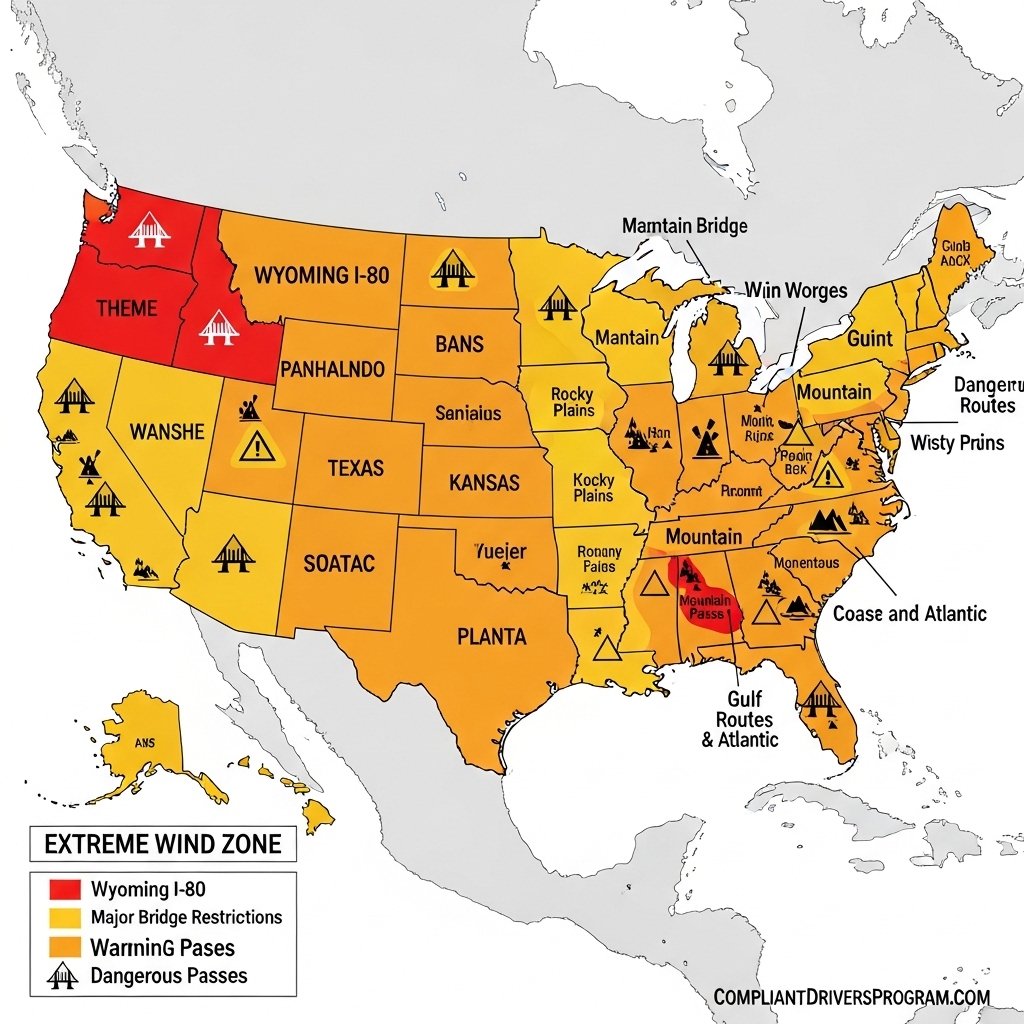
Coastal routes experience both predictable and storm-related winds. Normal afternoon sea breezes can reach 30-40 mph regularly. When storms approach, coastal wind speeds spike dramatically. Plan coastal driving for morning hours when possible.
Urban wind corridors surprise many drivers. Tall buildings create unpredictable wind patterns. You might have calm conditions that suddenly become violent between buildings. Downtown areas of major cities require extra vigilance on windy days.
Wind Speed Response Guide: Quick Reference
| Wind Speed | Risk Level | Recommended Action | Key Concerns |
|---|---|---|---|
| Under 25 mph | Low | Normal driving with awareness | Minor steering corrections |
| 25-35 mph | Moderate | Reduce speed 10-15 mph | Empty trailer sway begins |
| 35-45 mph | High | Reduce speed significantly, consider stopping | Rollover risk increases |
| 45-60 mph | Severe | Find safe parking immediately | Truck rollover wind common |
| Over 60 mph | Extreme | Do not drive under any circumstances | Survival priority only |
Gear and Technology That Actually Helps
Modern technology offers real help for windy conditions truck driving. Some tools are essential while others just add convenience. Smart investments in gear improve your safety significantly. Here's what actually works.
Weather apps with push notifications alert you to changing conditions. Set alerts for your route areas specifically. Apps like Weather Underground show wind forecasts hourly. The Best Trucking Apps article covers top options.
A quality dash cam captures any wind-related incidents for insurance purposes. It also helps prove you weren't at fault if wind causes problems. Check out recommendations in our Best Dash Cam for Truckers guide.
CB radio connects you with other truckers experiencing conditions ahead. Real-time reports from drivers in front of you beat any forecast. Someone might warn you about dangerous wind conditions before you hit them.
GPS apps with routing options help you avoid wind-prone areas. Some apps show real-time road conditions including wind closures. Truck GPS & Parking Apps reviews the best navigation options available.
Your truck's existing features help too. Use cruise control carefully because it can mask how hard you're working to maintain speed. Trailer sway indicators on newer rigs provide early warning. Pay attention to every warning your truck gives you.
Learning From Real Wind Accidents
Understanding how truck rollover wind accidents happen teaches valuable lessons. The patterns repeat across thousands of incidents. Study these causes so you don't become another statistic. Prevention starts with awareness.
Most wind-related rollovers happen to drivers who underestimate conditions. They think experience will carry them through. Then a sudden gust catches them off guard. By the time they react, physics has already won.
Speed plays a role in nearly every wind accident. Drivers maintaining highway speeds in marginal conditions have no margin for error. That single powerful gust overwhelms their ability to recover. Slower speeds would have given them the reaction time needed.
Empty trailer rollovers often happen on routes drivers run regularly. Familiarity breeds overconfidence. A driver who crossed that bridge a hundred times loaded forgets that empty changes everything. The bridge that felt stable before suddenly becomes a launching pad.
Fatigue contributes to many wind accidents too. Tired drivers have slower reaction times. Their grip on the wheel loosens without them realizing it. When that crosswind hits, they can't respond fast enough.
Combining Weather Hazards: Wind Plus Rain or Snow
High wind driving trucks gets even more dangerous when other weather factors combine. Wind rarely comes alone during storms. Rain, snow, and reduced visibility multiply your risks. Understanding these combinations helps you make better decisions.
Wind and rain together reduce your tire grip dramatically. Water on the road cuts friction while wind pushes against your trailer. This combination causes accidents at lower wind speeds than dry conditions. Reduce your wind tolerance threshold by 10 mph when rain falls.
Snow and wind create whiteout conditions that eliminate visibility. You can't see the road, other vehicles, or potential obstacles. When snow flies horizontally, find parking immediately. No delivery is worth driving blind.
Check out our guides on Winter Truck Driving and Rain & Fog Driving for detailed strategies on these combined conditions. Each weather type requires specific techniques that work together.
Temperature changes accompanying wind fronts affect road conditions too. A cold front bringing wind might also bring sudden icing. Roads that seemed fine an hour ago become skating rinks. Always think about what else wind conditions might bring.
FAQ Section
A: Most experts say 45-60 mph sustained winds require stopping. Empty trailers should stop at lower speeds around 35-40 mph.
A: Truck rollover wind incidents commonly occur above 40 mph for empty trailers. Loaded trailers typically flip at sustained speeds above 55-60 mph.
A: Check weather apps, DOT websites, and listen to CB radio. Wind advisory alerts typically mean sustained winds of 30-40 mph are expected.
A: Yes, bridges are the most dangerous places during high wind driving trucks situations. Many bridges have specific wind restrictions for commercial vehicles.
A: Position your truck facing directly into the wind. This minimizes crosswind exposure and reduces your trailer's sail effect.
A: Absolutely. Heavier loads provide more stability. Follow proper Cargo Weight Limits while maximizing weight within legal limits during windy conditions.
A: Reduce speed early, grip the wheel firmly, increase following distance, stay in the right lane, and stop when conditions exceed safe limits.
Taking Control of Your Wind Safety
You now have everything you need for safe high wind driving trucks operations. This knowledge separates professional drivers from amateurs. Wind will always be part of trucking life. How you handle it defines your career.
Remember these key points:
- Know your numbers and stop before 45-60 mph winds
- Empty trailers require extra caution and lower wind tolerances
- Bridges, passes, and open plains create the highest rollover risk
- Slowing down early gives you control and reaction time
- Waiting out dangerous conditions is always the right call
Your next step is simple. Check the weather before every trip from now on. Make wind awareness as automatic as checking your mirrors. Build habits that keep you safe mile after mile.
For more complete Truck Driver Safety Tips, explore our other guides. Each one helps you master another aspect of professional driving. Stay safe out there, and remember that arriving late beats not arriving at all.







![DOT Drug Test: What You Must Know in 2026 [Full Guide]](https://compliantdriversprogram.com/wp-content/uploads/2026/03/DOT-Drug-Test-150x150.jpeg)



Leave a Reply