
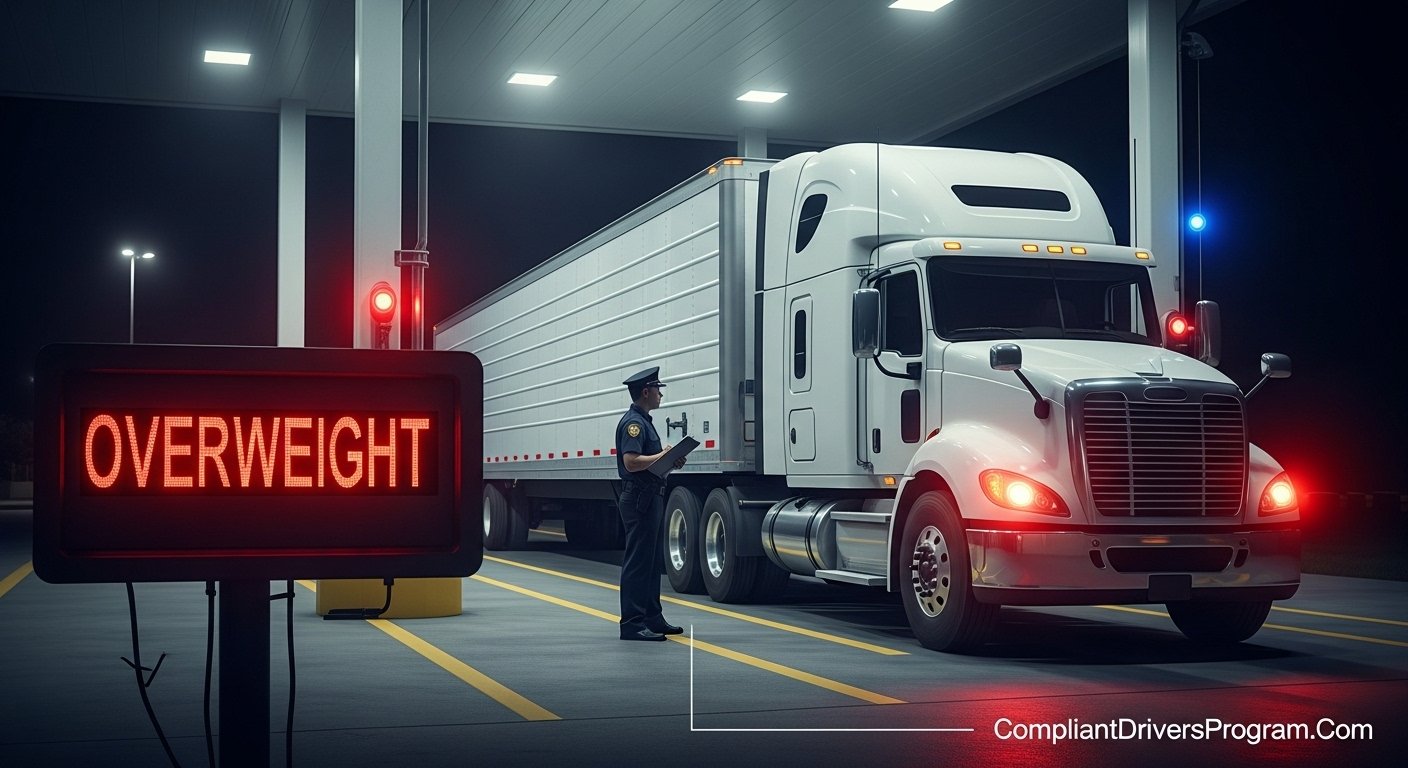
Every Pound Matters: Cargo Weight Limits for Trucks and the Overweight Fines That Can Crush Your Profits in 2026
A single overweight ticket can wipe out an entire load’s profit in seconds. That’s not an exaggeration. Some states charge $1 per pound for every pound you’re over the limit, and those numbers add up fast. If you haul freight for a living, understanding cargo weight limits trucks must follow is not optional. It’s the difference between making money and losing it at the scale house.
This guide breaks down federal and state truck weight limits, explains how overweight truck fines actually work, and shows you exactly what happens when you roll across a scale too heavy. You’ll learn about axle weight limits, the bridge formula, GVWR rules, and how to protect yourself from overweight penalties trucking companies deal with every day. Let’s get into it.
What Are Federal Cargo Weight Limits for Trucks?
The federal government sets the baseline for cargo weight limits trucks can carry on Interstate highways. These rules come from the Federal Highway Administration (FHWA). Every trucker and carrier in the country must follow them, no exceptions.
Here’s the basic breakdown of federal limits. A single axle can carry up to 20,000 pounds. A tandem axle group tops out at 34,000 pounds. The total gross vehicle weight for any truck on the Interstate system cannot exceed 80,000 pounds.
But gross weight alone doesn’t tell the whole story. The bridge formula plays a huge role too. This formula calculates how much weight you can carry based on the number of axles and the distance between them. It exists to protect bridges and road surfaces from concentrated loads that cause damage over time.
Your truck’s GVWR also matters a lot here. The manufacturer stamps this number on your vehicle, and it tells you the maximum safe operating weight. You can’t exceed your GVWR even if you’re under the federal Interstate limit. Think of it as two separate rules working at the same time.
How Axle Weight Limits Actually Work
Most drivers know the 80,000-pound gross weight rule. Far fewer understand how axle weight limits change everything about loading. You could be under 80,000 pounds total and still get a ticket for being overweight on one axle. This catches people off guard constantly.
Axle weight distribution is the real game. Your steer axle typically allows around 12,000 to 12,500 pounds. Your drive axles handle up to 34,000 pounds as a tandem group. And your trailer tandems also allow up to 34,000 pounds. Each axle group gets weighed separately at the scale.
Here’s where it gets tricky. Weight distribution depends on where you place your cargo inside the trailer. If you stack heavy freight toward the front, you overload your drive axles. Push everything to the back, and your trailer tandems get crushed. Smart loading means spreading weight evenly across all axle groups.
Pro Tip: Always get scale tickets before hitting the highway. Many truck stops have CAT scales where you can weigh each axle group for about $15. That small cost beats a $5,000 fine every single time.
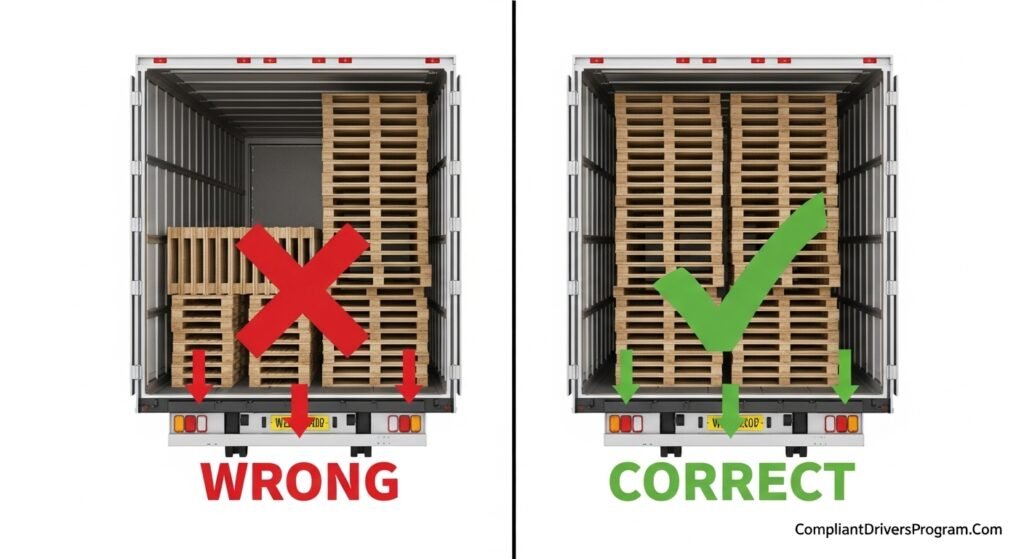
Sliding your trailer tandems forward or backward shifts weight between axle groups. Most experienced drivers learn this skill early, but newer drivers often forget about it. Moving tandems just a few holes on the rail can shift 500 pounds or more between your drives and trailer axles.
Truck Weight Limits by State: Why It Gets Complicated
Federal rules apply on Interstate highways, but truck weight limits by state can vary wildly on state roads, county roads, and local streets. Some states allow more weight than the federal standard. Others enforce stricter limits on certain roads, especially during spring thaw season.
Michigan stands out as the most generous state for weight. With the right axle configuration, trucks in Michigan can legally haul up to 164,000 pounds on certain state roads. That’s more than double the federal limit. Meanwhile, states like California enforce very strict weight rules and aggressively ticket overweight trucks.
Cargo weight limits for trucks by state also change based on the type of road you’re using. A road rated for heavy loads might allow 80,000 pounds, while a nearby county road limits you to 60,000 pounds. Missing a posted weight limit sign can cost you thousands in fines. Always plan your route with weight restrictions in mind.
Spring weight restrictions deserve special attention. Many northern states reduce weight limits during spring months when frozen roads start thawing. The ground gets soft, and heavy trucks cause serious damage during this period. States like Minnesota, Wisconsin, and North Dakota enforce these seasonal limits strictly.
If you’re crossing multiple states on a single trip, you need to check each state’s rules before departure. A load that’s perfectly legal in Texas might earn you a violation in Georgia. Your best resource for state-specific limits is the FMCSA’s size and weight resources page, which links to individual state regulations.
Overweight Truck Fines by State: What You’ll Actually Pay
Let’s talk money, because overweight truck fines can get absolutely brutal. The fines vary dramatically depending on which state catches you and how much weight you’re over. Some states use a flat fee system, while others charge per pound over the limit.
In many states, overweight truck fines by state 2026 start around $100 to $200 for being just slightly over the limit. But those fines climb fast. Going 5,000 pounds over in states like California or New York can cost you $1,000 or more per axle. Some states even impound your truck until you offload the excess weight.
Overweight penalties trucking companies face don’t stop at the ticket itself. Your CSA score takes a hit with every weight violation. That affects your insurance rates, your ability to get contracts, and your overall safety rating. One bad weigh station stop can follow you for years.
Here’s something most people don’t know. In several states, the driver AND the carrier both receive fines. The shipper can also face penalties if they loaded the freight beyond legal limits. Some states even hold the broker responsible if they knowingly arranged an overweight shipment. Everyone in the chain shares the risk.
| State | Fine for 1,000 lbs Over | Fine for 5,000 lbs Over | Fine for 10,000 lbs Over | Extra Penalties |
|---|---|---|---|---|
| California | $250+ | $1,000+ | $2,500+ | Possible impound |
| Texas | $150+ | $500+ | $1,500+ | Points on record |
| New York | $200+ | $1,200+ | $3,000+ | Court appearance |
| Florida | $100+ | $500+ | $1,000+ | Weight offload required |
| Illinois | $300+ | $1,500+ | $4,000+ | CDL points |
| Michigan | $200+ | $800+ | $2,000+ | Vehicle hold |
| Georgia | $150+ | $750+ | $2,500+ | Possible arrest |
These numbers represent approximate minimums. Actual fines can run much higher depending on the specific circumstances. Multiple violations on the same stop multiply the damage significantly.
The Bridge Formula Explained Simply
The bridge formula confuses a lot of drivers, but it doesn’t have to be complicated. Think of it this way. Bridges can only handle so much concentrated weight in one spot. The formula makes sure your weight spreads out over enough distance and enough axles to keep bridges safe.
The formula uses three things to calculate your maximum weight. First, it counts how many axles your truck and trailer have. Second, it measures the distance between the first and last axle in any group. Third, it plugs these numbers into a mathematical equation that spits out your maximum allowed weight.
Why should you care about this? Because you can fail the bridge formula even when your individual axle weights and gross weight are both legal. This happens most often with shorter wheelbase configurations. If your axles sit too close together, the formula reduces your maximum allowed weight below 80,000 pounds.
Most modern five-axle tractor-trailer combinations pass the bridge formula without issues. But specialty equipment, multi-axle configurations, and shorter trailers can run into trouble. When you’re running unusual equipment, double-check your bridge formula calculations before loading.
Truck Weight Limit CalculatorCargo Limits, Axle Ratings & Overweight Fine Estimator
| Axle / Group | Your Weight | Legal Limit | Status |
|---|
What Happens at the Weigh Station When You’re Overweight
Picture this scenario. You pull onto the scale, and the light turns red. An officer walks out and tells you you’re 3,000 pounds over on your drives. What happens next depends entirely on the state and how much you’re over.
In most cases, the officer writes you a citation for the overweight truck fines specific to that state. You’ll need to pay the fine, which might happen right there or through the court system later. The violation gets recorded against your DOT compliance record and your carrier’s safety profile.
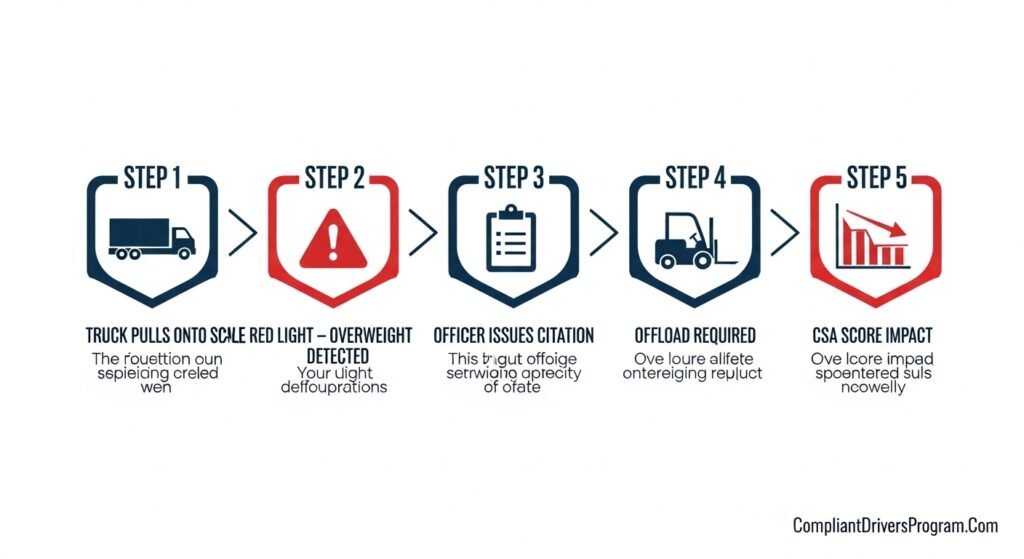
But the financial hit is just the beginning. Many states require you to offload the excess weight before they let you leave. That means calling for another truck, hiring a forklift, and potentially sitting at the scale for hours. Lost time means lost money, delayed deliveries, and angry customers.
If you’re significantly overweight, the consequences get much worse. Some states place your vehicle out of service until you fix the weight issue. Officers might also trigger a full DOT truck inspection while they have you stopped. That inspection can uncover additional violations that pile onto your problems.
How to Avoid Overweight Violations: Practical Steps
Avoiding overweight penalties trucking drivers face starts long before you reach the scale house. Smart planning, proper loading, and good habits keep you legal and keep your wallet full. Here are the steps that actually work.
First, always know your truck’s empty weight. Weigh your tractor and trailer empty at a certified scale and keep that scale ticket in your cab. When a shipper tells you a load weighs 42,000 pounds, you can quickly add that to your empty weight and know if you’ll be legal. Simple math saves you from expensive mistakes.
Second, watch your weight distribution during loading. Talk to the dock workers about where they’re placing the heaviest pallets. Request that heavy freight goes in the center of the trailer, not stacked at one end. If you’re hauling freight on a flatbed, check out these cargo securement rules for proper loading techniques.
Third, get weighed after every pickup. Don’t trust the shipper’s weight estimates. Bills of lading frequently show incorrect weights, sometimes by thousands of pounds. A $15 scale stop catches errors before a $5,000 enforcement stop catches you.
Pro Tip: If your load is slightly over and you can’t remove weight, look into getting an oversize and overweight permit before moving the freight. Many states offer single-trip overweight permits that cost far less than the fine.
Overweight Permits: When You Need One and How to Get One
Sometimes you genuinely need to haul more than the standard limits allow. That’s where an overweight permit saves the day. These permits give you legal permission to exceed normal cargo weight limits trucks must follow, but they come with specific conditions.
Every state has its own overweight permit process. Some states let you apply online and get approved within hours. Others require multiple days of processing time. The cost ranges from $20 for a simple single-trip permit to several hundred dollars for annual permits covering multiple trips. Check your state’s DOT website or use a trip permits guide to navigate the process.
Overweight permits usually come with route restrictions. The state tells you exactly which roads you can use, and you must stick to that route. They might also restrict your travel to certain hours, require escort vehicles, or mandate special signage on your truck. Breaking permit conditions counts the same as having no permit at all.
Here’s a detail many carriers miss. You need a separate permit for every state you pass through, not just the origin and destination states. A load moving from Ohio to Virginia might need permits from Ohio, West Virginia, and Virginia. Missing one state in the chain leaves you exposed to full fine amounts in that jurisdiction.
Weight Violations and Your Safety Record
Overweight truck fines hurt your bank account today, but the safety record damage hurts you for years. Every weight violation gets reported to the FMCSA’s Safety Measurement System. That system feeds into your CSA scores, and high CSA scores trigger interventions from the federal government.
Weight violations fall under the Vehicle Maintenance BASIC category in the CSA system. Points from these violations stay on your record for 24 months. Multiple violations in that window can push your scores into intervention territory. That means more frequent inspections, compliance reviews, and potential operating authority issues.
Your CSA score affects more than just government attention. Insurance companies check CSA scores when setting your premiums. Shippers and brokers look at your scores when deciding who gets their freight. A bad safety record from weight violations can literally cost you business opportunities.
If you do receive a weight violation, consider whether you can appeal the DOT fine. Some violations get reduced or dismissed on appeal, especially if you can prove the shipper provided incorrect weight information. Document everything related to the load, including bills of lading, shipper communications, and your own scale tickets.
Special Cargo Types and Their Weight Challenges
Certain types of freight create unique weight challenges that deserve extra attention. Liquid loads shift during transit, changing your axle weight distribution as you drive. A tanker that weighed perfectly at the shipper might show overweight axles after the liquid sloshes forward during braking.
Dense commodities like steel, concrete, and machinery fill your weight limit long before they fill your trailer’s volume. You might load three pallets and already hit 44,000 pounds of freight. Drivers hauling these materials need to calculate weight per pallet carefully and sometimes leave space empty to stay legal.
Hazardous materials add another layer of complexity. Not only do you need to follow regular truck weight limits, but hazmat cargo securement rules add specific requirements for how you load and distribute hazardous freight. Getting hazmat loads wrong creates both weight violations and hazmat violations simultaneously.
Flatbed loads present their own problems because the cargo sits in the open where officers can visually estimate weight. A truck stacked high with lumber or steel beams practically invites a weigh station pull-in. Make sure you secure cargo on flatbed trailers properly and keep your weight documentation ready for inspection.
Technology That Helps You Stay Legal
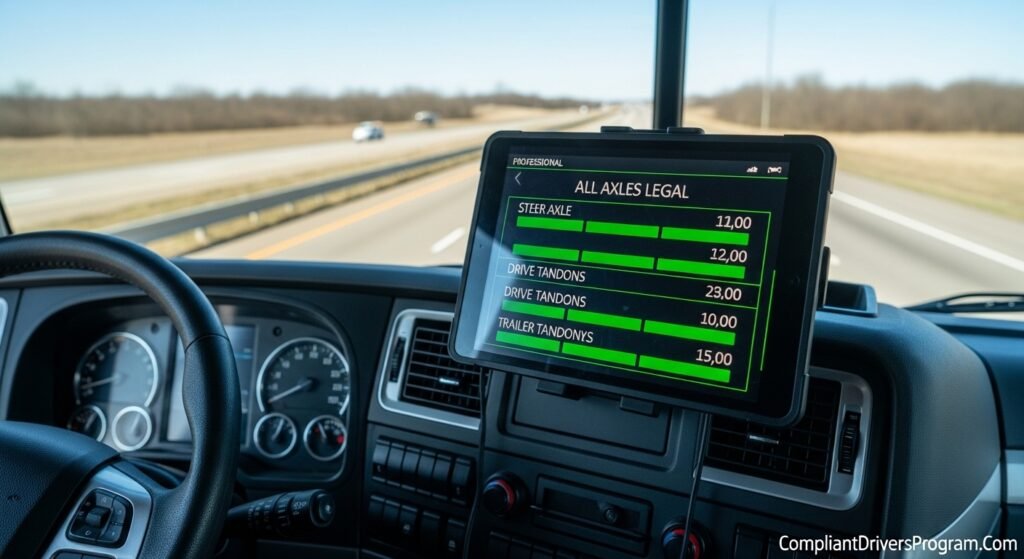
Modern technology makes managing cargo weight limits trucks must follow much easier than it used to be. On-board scales give you real-time weight readings for each axle group without stopping at a truck stop scale. These systems cost between $500 and $3,000 but pay for themselves quickly in avoided fines.
Weigh station bypass programs like PrePass and Drivewyze let pre-approved trucks skip many scale stops entirely. These programs check your safety record, registration, and credentials electronically as you approach. If everything looks good, you get a green light and keep rolling. This saves time and reduces your exposure to random inspections.
Route planning apps now include weight restriction data for many roads. These apps flag low-weight bridges, seasonal restrictions, and posted weight limits along your planned route. Using one of these apps costs almost nothing compared to the fine amounts you’ll face for accidentally using a restricted road.
Load planning software helps dispatchers and drivers calculate weight distribution before the truck even arrives at the shipper. You enter your equipment specs, the freight dimensions and weight, and the software shows you exactly where to place each item. This eliminates guesswork and keeps every axle group within legal limits.
FAQ Section
A: Federal law sets the limit at 80,000 pounds gross weight. Single axles max out at 20,000 pounds, and tandem axles allow 34,000 pounds.
A: Fines range from $100 for minor overages to $10,000 or more for significant violations. Each state sets its own fine amounts and penalty structure.
A: Yes, most states offer single-trip overweight permits. You must apply before moving the freight, and the permit specifies your approved route and conditions.
A: Weight violations impact your CSA scores and carrier safety record. Some states also add points to your CDL, which can affect your driving privileges.
A: The bridge formula calculates maximum weight based on axle count and spacing. You can fail this formula even when your gross weight and individual axle weight readings are legal.
A: Many states fine both the driver and carrier. Some states also penalize the shipper who loaded the freight beyond legal truck weight limits.
A: States update truck weight limits and penalties regularly. Check your state’s DOT website annually for current rules, especially regarding seasonal restrictions.
Your Next Move: Stay Legal and Stay Profitable
Knowing your cargo weight limits trucks must follow protects your CDL, your safety record, and your income. Here’s what to remember from this guide:
- Federal limits cap trucks at 80,000 pounds gross, 20,000 per single axle, and 34,000 per tandem
- Overweight truck fines range from a few hundred dollars to over $10,000 depending on the state and overage amount
- Always weigh your truck after loading and check all axle weight groups individually
- Get overweight permits when you legitimately need to exceed standard limits
- Protect your CSA score by avoiding weight violations that stay on your record for two years
Your smartest move right now is to weigh every single load before hitting the road. Make it a habit that never breaks. That one simple step keeps you legal, keeps you profitable, and keeps you moving.







![DOT Drug Test: What You Must Know in 2026 [Full Guide]](https://compliantdriversprogram.com/wp-content/uploads/2026/03/DOT-Drug-Test-150x150.jpeg)



Leave a Reply