

Your last safety meeting probably ended with half your drivers scrolling through their phones. Don’t feel bad about it. This happens in trucking companies across the country every single day. The problem isn’t your drivers or even your content. It’s the outdated approach most fleets still use in 2026.
Here’s what changes everything about safety meeting topics truckers actually respond to. The industry has shifted dramatically since 2024, and your training methods need to catch up. According to the Federal Motor Carrier Safety Administration’s 2025 report, fleets with modern driver safety programs now see up to 70% fewer accidents than those using traditional approaches.
This guide delivers 47 ready-to-use meeting topics, proven driver safety incentive ideas, and complete frameworks for building a safety culture that lasts. You’ll discover what’s working right now in 2026, what’s become outdated, and how to measure real results. Let’s get into the strategies that move the needle today.
The 2026 Reality: Why Old Safety Approaches No Longer Work
Something shifted in the trucking industry over the past two years. Driver expectations changed dramatically after 2024. Today’s truckers want interactive, relevant, and technology-enhanced training experiences. Reading from a manual simply won’t cut it anymore.
The National Safety Council’s 2025 study revealed that driver engagement drops by 60% when meetings exceed 12 minutes. Yet many companies still run 45-minute sessions packed with information nobody remembers. Your drivers tune out because you’re overloading them with content that feels disconnected from their daily reality.
Behavior based safety trucking programs have evolved significantly since 2023. Modern approaches use real-time telematics feedback, AI-powered coaching, and gamification elements that appeal to drivers of all ages. Companies stuck in 2020-era training methods struggle to compete for talent.
The good news is catching up doesn’t require massive budgets. Small changes to your trucking safety training approach can produce immediate results. Start by understanding what today’s drivers actually need and want from safety programs.
Pro Tip: Run a quick anonymous survey asking drivers what safety topics matter most to them. You’ll likely discover gaps between what you’re teaching and what they want to learn.
Building Modern Behavior Based Safety Trucking Programs
Behavior based safety trucking has matured significantly heading into 2026. Early programs focused mainly on observation and feedback. Today’s best programs integrate multiple data sources to create personalized coaching experiences for each driver.
Your program should start with identifying specific high-risk behaviors in your fleet. Current industry data from 2025 shows that following distance violations, hard braking events, and phone use remain the top three preventable risk factors. Once you know your problem areas, you can target your training dollars effectively.
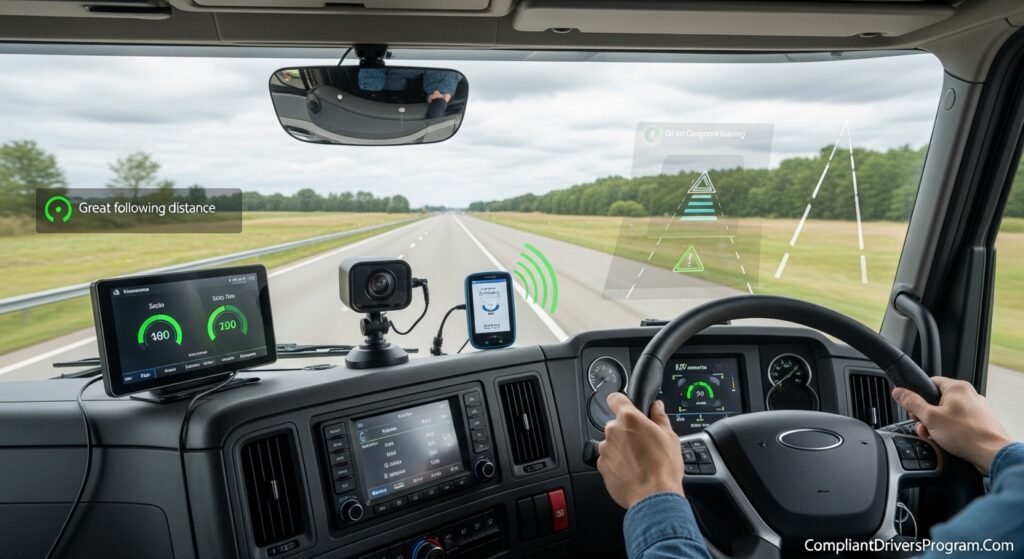
Modern behavior based safety trucking programs leverage telematics data that most fleets already collect. Driver-facing cameras, now standard in over 65% of commercial fleets according to 2025 surveys, provide coaching opportunities that didn’t exist five years ago. Use this technology to help drivers improve rather than just catch them making mistakes.
Your fleet safety program should incorporate peer mentorship alongside technology. Pair your safest drivers with those who need improvement. This creates accountability and knowledge transfer that computers alone cannot provide.
The most successful fleets in 2026 combine technology with human connection. They use data to identify problems and people to solve them. This balanced approach builds trust while driving measurable behavior modification across the entire organization.
Driver Safety Programs: Meeting Topics Generator
15 High-Impact Safety Meeting Topics Truckers Care About in 2026
Finding safety meeting topics truckers actually engage with requires understanding current challenges. These 15 topics address what drivers face on roads today. Each one sparks real discussion and creates lasting behavior change.
Topic 1: Electric and Autonomous Vehicle Interactions
Roads in 2026 feature more electric vehicles and semi-autonomous cars than ever before. Drivers need to understand how these vehicles behave differently. Cover stopping distances, lane-keeping patterns, and visibility challenges specific to EV designs.
Topic 2: Extreme Weather Preparedness
Climate patterns have intensified, making weather events less predictable. Discuss recent severe weather incidents in your operating areas. Review updated company protocols for when to pull over versus push through.
Topic 3: Mental Health and Road Stress
The trucking industry finally started addressing driver mental health openly in 2024. Continue this conversation by discussing stress management techniques. Share resources your company offers and reduce stigma around asking for help.
Topic 4: Advanced Driver Assistance Systems
Most 2024-2026 model trucks include sophisticated ADAS features. Many drivers don't fully understand how these systems work or their limitations. Training on proper use prevents over-reliance and confusion.
Topic 5: Cybersecurity on the Road
Connected trucks face growing cybersecurity threats in 2026. Drivers need to understand basic digital hygiene. Cover secure WiFi use, phishing awareness, and protecting ELD systems from tampering.
Check out defensive driving for truckers for additional training resources.
15 More Meeting Topics That Reduce Accidents Immediately
Continuing with safety meeting topics for truck drivers, these options address persistent challenges that still cause accidents in 2026. Mix these with technology-focused topics for a balanced training calendar.
Topic 6: Updated Hours of Service Compliance
Regulations continue evolving based on fatigue research. Review the latest changes that took effect in 2025. Help drivers understand not just the rules but the science behind rest requirements.
Topic 7: Pedestrian and Cyclist Awareness
Urban deliveries increasingly involve navigating around vulnerable road users. Cities have added more bike lanes and pedestrian zones since 2024. Cover blind spot management and low-speed maneuvering techniques.
Topic 8: Cargo Theft Prevention
Cargo theft increased 27% between 2024 and 2025 according to CargoNet data. Drivers are your first line of defense against theft. Discuss parking choices, route security, and what to do if followed.
Topic 9: Emergency Response Updates
Review your company's updated emergency protocols. Cover new communication tools and reporting procedures. Practice scenarios so drivers know exactly what to do when things go wrong.
Topic 10: Roadside Inspection Preparation
CSA scores matter more than ever for carrier ratings in 2026. Help drivers understand what inspectors look for. Cover pre-trip inspection points that catch common violations early.
Understanding OSHA trucking safety requirements helps align your training with federal expectations.
Topic 11: Construction Zone Navigation
Infrastructure spending has increased road construction nationwide. Cover updated speed limits, lane shift patterns, and worker awareness. Share current construction areas on your most-traveled routes.
Topic 12: Pharmaceutical and Medical Disclosure
New medications hit the market regularly, some affecting driving ability. Review your company's disclosure requirements and DOT medical guidelines. Stress the importance of honest communication about prescriptions.
Topic 13: Social Media and Distraction Policies
Smartphone use while driving remains a leading accident cause in 2026. Cover updated company policies and legal consequences. Discuss mounting solutions and designated break habits.
Review more about distracted driving trucks policies and prevention.
Topic 14: Fuel Economy and Safe Driving Connection
Show drivers how smooth driving improves both safety and efficiency. Cover acceleration patterns, following distances, and speed management. This appeals to drivers who take pride in their craft.
Topic 15: Customer Interaction Safety
Loading docks and delivery locations present unique hazards. Discuss assessing unfamiliar sites and refusing unsafe work conditions. Empower drivers to prioritize their safety over delivery pressure.
17 Advanced Topics for Your Experienced Drivers
Veteran drivers in 2026 need different training than newcomers. These advanced topics challenge experienced professionals while showing respect for their expertise. They also address emerging risks that even seasoned truckers haven't faced before.
Topics 16-22: Technology Integration Challenges
AI-powered dispatch systems now coordinate most routing decisions. Drivers must understand when to trust these recommendations and when human judgment should override. Cover scenarios where technology fails or provides dangerous guidance.
Platooning technology has moved from testing to early commercial deployment in 2026. Even drivers not directly involved need to understand how platoons behave on highways. Cover safe passing techniques and maintaining appropriate distances.
Predictive maintenance alerts require driver action and verification. Train drivers on interpreting dashboard warnings from modern diagnostic systems. Help them distinguish urgent issues from routine notifications.
Topics 23-27: Regulatory and Industry Changes
Insurance requirements tightened significantly in 2025. Drivers should understand how their individual performance affects company premiums. This creates personal investment in safe driving outcomes.
Cross-border procedures continue evolving with new trade agreements. Review updated documentation requirements and inspection protocols. Cover electronic manifest systems now mandatory at most crossings.
Environmental compliance has expanded beyond traditional emissions. Idle reduction requirements, refrigeration unit standards, and route optimization expectations affect daily operations. Keep drivers current on sustainability initiatives.
The Smith System Driving methodology remains foundational for advanced driving training in 2026.
Creating Driver Safety Incentive Programs for 2026
Driver safety incentive programs look different in 2026 than they did just a few years ago. With the ongoing driver shortage, incentives now serve double duty as retention tools. The best programs combine immediate rewards with long-term recognition that builds careers.
Your program needs crystal clear criteria that every driver understands completely. Vague goals like "be safe" generate frustration and accusations of favoritism. Specific targets like "zero preventable accidents, under 5 hard braking events monthly, and 100% on-time pre-trip submissions" give drivers concrete objectives.
Current driver surveys show that recognition matters as much as cash for most truckers. Public acknowledgment during meetings, features in company communications, and peer respect create motivation that lasts. Many drivers work harder for pride than for bonus checks.
Driver safety incentive program ideas should include both individual and team elements. Individual awards recognize personal excellence and top performers. Team goals build camaraderie and create positive peer pressure that reinforces your safety culture organically.
Pro Tip: Let drivers help design your incentive program from the beginning. When they create the rules, they buy into the system emotionally. This simple step increases participation by 40-50% according to 2025 fleet management surveys.
Proven Incentive Ideas Working in 2026
These driver safety incentive program ideas come from fleets seeing the best results right now. Each idea has been tested and refined based on what motivates today's trucking workforce.
Tiered Quarterly Safety Bonuses
Structure bonuses that increase each consecutive safe quarter. Start at $300 for the first clean quarter in 2026 rates. Increase to $400, then $500, with an annual bonus of $1,500 for four consecutive quarters. This rewards consistency and creates meaningful income opportunities.
Points-Based Marketplace Systems
Drivers earn points for safe behaviors, meeting attendance, and positive customer feedback. Modern platforms let drivers redeem points for merchandise, experiences, gift cards, or extra PTO. The variety appeals to different motivations across your workforce.
Safety Champion Recognition
Highlight one outstanding driver monthly with premium parking, a branded jacket, and $150 bonus. Feature their photo and safety tips prominently across company channels. This visibility motivates others to earn the same recognition.
Team Competition Challenges
Divide drivers into competing teams tracking collective safety scores. Winning teams earn group experiences like sporting events, dinners, or adventure outings. Team pressure keeps everyone accountable to each other.
Milestone Anniversary Awards
Celebrate safe driving anniversaries with escalating rewards. Five years clean earns $750 in 2026 dollars. Ten years earns $2,500 plus special recognition. These long-term incentives improve retention significantly.
Technology Adoption Bonuses
Reward drivers who embrace new safety technology and achieve high coaching scores. This accelerates adoption of driver-facing cameras and telematics systems. It also shows you value continuous improvement.
Drivers at best trucking companies consistently cite strong incentive programs as major retention factors.
2026 Safety Program Cost Comparison
| Program Type | Annual Cost Per Driver | Implementation Time | Effectiveness Rating | Best For |
|---|---|---|---|---|
| Basic Safety Meetings | $250-$450 | 2-4 weeks | Medium | Small fleets starting fresh |
| Behavior Based Programs | $600-$950 | 8-12 weeks | High | Growing fleets with telematics |
| Full Incentive Programs | $1,200-$2,800 | 12-16 weeks | Very High | Established fleets improving metrics |
| AI-Enhanced Training | $1,800-$3,500 | 16-20 weeks | Very High | Tech-forward large fleets |
| Comprehensive Combined | $2,500-$5,000 | 20-30 weeks | Highest | Industry-leading organizations |
Return on investment typically ranges from 350% to 600% when factoring reduced insurance costs, fewer accidents, lower turnover, and CSA score improvements. Most fleets recover their investment within 12-15 months in 2026 market conditions.
Measuring Safety Program Success in 2026
Modern driver safety programs track more metrics than ever before. Technology enables real-time measurement that previous generations of fleet managers couldn't imagine. Use these data points to prove your program works.
Track accident frequency rates per million miles as your primary outcome metric. Industry average in 2025 was 0.87 preventable accidents per million miles. Top performers achieve rates below 0.35. Know where you stand and set improvement targets.
Monitor telematics scores for hard braking, speeding, following distance, and distraction events. These leading indicators predict accidents before they happen. Improving these numbers typically precedes accident rate improvements by 60-90 days.
Review near-miss reporting volume as a safety culture indicator. Healthy cultures generate more near-miss reports because drivers feel safe sharing. Declining reports often signal disengagement or fear of punishment.
Track meeting attendance and engagement scores if your platform measures participation. Drivers who engage with training consistently outperform those who don't. Identify disengaged drivers for additional coaching.
Consider connecting safety performance to safe driver discount opportunities that benefit both company and drivers.
Avoiding Common Mistakes That Destroy Programs
Well-designed driver safety programs still fail when companies make these avoidable errors. Learn from others' mistakes to protect your investment and your people.
Inconsistent Rule Enforcement
Nothing kills program credibility faster than selective enforcement. When high performers get passes while others face consequences, resentment spreads quickly. Apply rules consistently regardless of who violates them.
Punishment-Only Approaches
Fear-based programs create hiding and dishonesty. Drivers conceal problems instead of reporting them. Balance accountability with genuine recognition and rewards for positive behaviors.
Ignoring Driver Input
Your drivers know road conditions better than any office-based manager. When you dismiss their feedback, you lose critical intelligence. Create multiple channels for honest input and act visibly on suggestions.
Cookie-Cutter Training
Night drivers face different challenges than day drivers. Regional differences affect weather and terrain training needs. Customize your approach rather than forcing identical content on everyone.
Infrequent Recognition
Monthly awards aren't enough to maintain daily motivation. Find reasons to celebrate small wins weekly or even daily. Frequent positive reinforcement builds lasting behavior modification.
Technology Worship
New tools can't replace human leadership and connection. Technology supports your program but doesn't run it. Maintain personal relationships alongside digital systems.
Step-by-Step: Launching Your 2026 Safety Program
Ready to build a modern driver safety programs that works today? Follow this process that leading fleets use successfully. Each phase builds foundation for the next.
Phase 1: Baseline Assessment (Week 1-2)
Pull your accident data, insurance reports, CSA scores, and telematics history. Survey drivers about current training effectiveness and desired topics. Document exactly where you're starting.
Phase 2: Goal Setting (Week 3)
Define specific, measurable success metrics. Set 90-day quick wins alongside 12-month transformation goals. Make goals ambitious but achievable based on industry benchmarks.
Phase 3: Program Design (Week 4-6)
Build your meeting calendar with diverse safety meeting topics truckers want. Design your incentive programs with driver input. Plan your technology investments and training approaches.
Phase 4: Trainer Preparation (Week 7-8)
Ensure your safety meeting leaders know how to engage adults effectively. Practice facilitation skills and scenario-based discussions. Strong delivery makes average content excellent.
Phase 5: Launch Event (Week 9)
Roll out your program with energy and clear communication. Explain the reasons behind every element. Generate genuine excitement about improvements coming.
Phase 6: Continuous Improvement (Ongoing)
Review metrics weekly and make monthly adjustments. Celebrate wins loudly and address problems quickly. Never stop learning and evolving.
Supplement your program with additional truck driver safety tips resources.
Building Sustainable Safety Culture Beyond 2026
Safety culture outlasts any individual program or manager. Building this culture requires consistent commitment over years, not weeks. But once established, it perpetuates itself through peer influence.
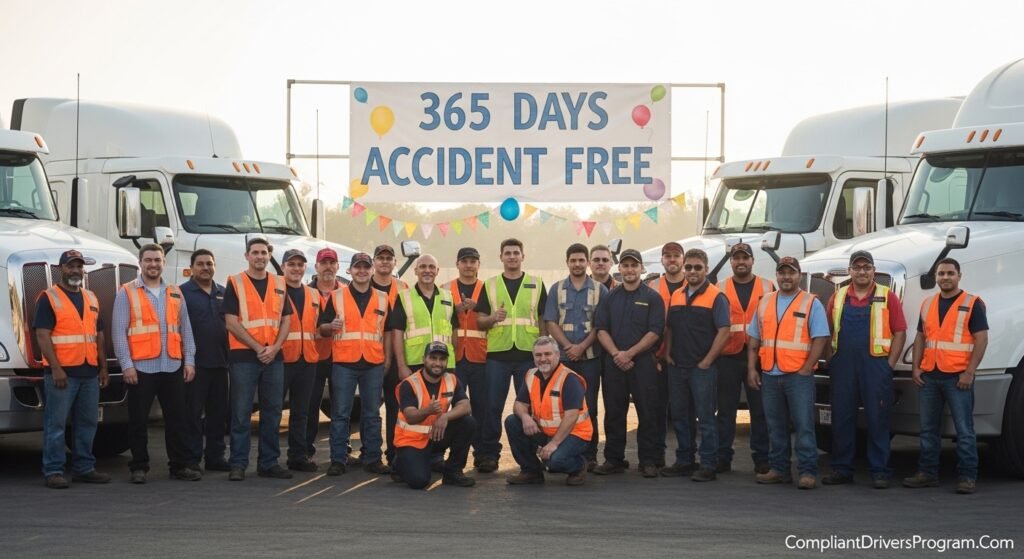
Leadership visibility determines everything else. When executives and managers demonstrate safety commitment daily, drivers follow that example. Words without matching actions destroy credibility instantly. Walk the talk consistently.
Peer accountability emerges naturally in strong cultures. Drivers hold each other responsible because they care about their teammates. This happens organically in healthy environments but requires intentional cultivation elsewhere.
New driver onboarding shapes whether newcomers strengthen or weaken your culture. Invest heavily in the first 90 days with structured training and mentorship. Pair new hires with your safest veteran drivers.
Career path connection links safety performance to advancement opportunities. Drivers who demonstrate safety excellence become trainers, mentors, and eventually supervisors. This creates aspirational motivation beyond immediate incentives.
Understanding compensation standards from resources like the truck driver salary guide helps you structure competitive safety bonus packages.
Frequently Asked Questions
A: Weekly 10-12 minute focused sessions produce better results than longer monthly meetings. Short, frequent touchpoints keep safety awareness high without overwhelming busy drivers.
A: Most fleets budget $1,200-$2,800 per driver annually for comprehensive programs. This investment typically returns 350-600% through accident reduction and insurance savings.
A: Involve them as trainers and mentors. Ask for their expertise on meeting topics. Recognition of their experience transforms reluctant participants into program champions.
A: Track accidents per million miles as your primary outcome. Use telematics scores and near-miss reports as leading indicators. Compare against industry benchmarks for context.
A: Most fleets notice behavior score improvements within 45-60 days. Significant accident reduction typically appears within four to six months of consistent execution.
A: Use both approaches together. Individual rewards recognize personal excellence. Team incentives build accountability and strengthen your overall safety culture.
A: Driver-facing cameras with AI coaching, mobile-friendly training platforms, and real-time telematics dashboards deliver the strongest ROI for most fleets today.
Moving Forward With Confidence
Building effective driver safety programs requires ongoing commitment, not one-time effort. Every improvement you make protects drivers, reduces costs, and strengthens your company's reputation. The investment in quality safety meetings, incentive programs, and behavior modification pays dividends for years.
Remember these key points:
- Keep safety meetings short, frequent, and focused on topics drivers actually face in 2026
- Combine driver safety incentive programs with genuine recognition for maximum motivation
- Use behavior based safety trucking approaches with modern technology to measure and improve actual driving habits
- Build sustainable safety culture through consistent leadership, peer accountability, and career path connections
Start where you are with what you have. Choose three safety meeting topics truckers in your fleet need most urgently. Design one simple incentive rewarding safe behavior this quarter. Build momentum from there.
Your drivers deserve protection on every mile. Your company deserves freedom from preventable accident costs. Your customers deserve confidence in professionals moving their freight safely. Take one step this week toward the program your fleet deserves. That single step separates companies that improve from those that just talk about it.







![DOT Drug Test: What You Must Know in 2026 [Full Guide]](https://compliantdriversprogram.com/wp-content/uploads/2026/03/DOT-Drug-Test-150x150.jpeg)



Leave a Reply