

Trucking Safety Training That Actually Saves Lives and Money in 2026
Every 12 minutes, a large truck crash happens somewhere in the United States. That stat alone should stop every fleet owner in their tracks. Yet thousands of trucking companies still run bare-bones training that barely checks the boxes. If your drivers hit the road without proper trucking safety training, you’re gambling with lives, your license, and your bank account.
This guide walks you through everything you need to build a fleet safety program that works in the real world. You’ll learn what topics to cover, how to train different vehicle types, and the best practices top fleets use right now. Whether you run five trucks or five hundred, the steps here will help you cut accidents, lower insurance, and keep your drivers coming home safe.
What Is Trucking Safety Training and Why Should You Care?
Trucking safety training is the structured process of teaching drivers how to operate commercial vehicles without putting themselves or others at risk. It covers everything from pre-trip checks to emergency maneuvers. A solid training program goes way beyond handing someone a CDL study guide and wishing them luck.
Think of it this way. A pilot doesn’t fly a 747 after reading a pamphlet. Your drivers shouldn’t haul 80,000 pounds down the interstate without proper preparation either. Good safety training trucking programs combine classroom lessons, behind-the-wheel practice, and ongoing refresher courses throughout the year.
Here’s the thing most people miss. Training isn’t a one-time event. The best trucking safety programs treat learning as a continuous cycle. They update content as regulations change, accidents happen, and new technology hits the market. This mindset separates companies that thrive from those that constantly fight lawsuits and FMCSA violations.
🚛 Trucking Safety Program Builder
✅ Your Safety Program Analysis
Personalized 2026 trucking safety roadmap below
| Category | Score | Status |
|---|
🔥 Top Priority Actions
💡 Personalized Recommendations
The Real Cost of Skipping Proper Training
Let's talk numbers because money speaks louder than slogans. The average cost of a large truck crash with injuries runs about $337,000 according to the Federal Motor Carrier Safety Administration. A fatal crash? That figure jumps past $7.6 million when you factor in legal fees, settlements, and lost productivity.

Now compare that to the cost of a solid fleet safety program. Most companies spend between $1,500 and $5,000 per driver annually on training. That includes online courses, in-person sessions, and simulator time. The math is simple. Spend a few thousand now or risk millions later.
Insurance savings alone often cover training costs. Carriers with documented trucking safety programs typically see 10-20% lower premiums. Some insurers even require proof of truck driver safety training before they'll write a policy. So training doesn't just save lives. It directly protects your bottom line every single month.
Beyond the dollars, there's the human cost nobody likes to discuss. Every crash affects families, communities, and your own team's morale. Drivers who feel safe and supported stick around longer. High turnover already plagues this industry, and a strong safety culture gives people a reason to stay.
How to Build a Fleet Safety Program From Scratch
Wondering how to build a fleet safety program that actually holds up? You don't need a massive budget or a dedicated safety department to get started. You need a clear plan, consistent follow-through, and the willingness to hold everyone accountable.
Step 1: Assess Your Current Risks
Start by pulling your accident and incident reports from the past two years. Look for patterns. Are most crashes happening during backing? At intersections? Late at night? Your data tells you exactly where your training program should focus first. Don't guess when you have real numbers sitting in a filing cabinet.
Talk to your drivers too. They know the dangers they face daily better than anyone sitting in an office. Quick anonymous surveys work great for this. Ask what situations make them most nervous and where they feel least prepared. Their answers will surprise you and shape a much stronger fleet safety management strategy.
Step 2: Set Clear Safety Policies
Every fleet needs a written safety policy that spells out expectations. This document should cover speed limits, phone use, hours of service, drug testing, and what happens when someone breaks the rules. Keep the language simple. If your drivers need a lawyer to understand your policy, you've already failed.
Your safety policy also needs teeth. That means consistent enforcement across the board. The top driver and the newest hire follow the same rules. When your team sees that leadership takes safety seriously, they will too. That's how you build a real safety culture instead of just hanging a poster in the break room.
Step 3: Design Your Training Curriculum
Your curriculum should cover both required topics and company-specific needs. FMCSA mandates certain areas like hours of service, cargo securement, and hazmat handling. Beyond those, your accident data from Step 1 tells you what else to add. Maybe your fleet struggles with blind spot truck accidents or winter driving. Build your program around your actual problems.
Mix your delivery methods for best results. Some topics work well as online modules drivers can complete on their phones. Others need hands-on practice in a parking lot. Manager training is often overlooked but critical. Your supervisors need to know how to coach, document, and lead by example every single day.
Step 4: Schedule and Track Everything
A training program without a schedule is just a wish list. Set monthly topics and stick to them. Many successful fleets run weekly 15-minute safety talks plus quarterly deep-dive sessions. Use a tracking system so you know exactly who completed what and when. This documentation protects you during audits and lawsuits.
Digital platforms make tracking much easier today. Several online learning management systems cater specifically to trucking. They send reminders, track completions, and generate reports automatically. This takes the administrative burden off your safety team and ensures nothing falls through the cracks during busy seasons.
Step 5: Review and Improve Constantly
Your program should evolve every quarter. Review new accident data, driver feedback, and regulation changes. The fleet safety program best practices always include a formal review cycle. What worked six months ago might not work today, especially with trucking safety training programs 2026 standards already taking shape.
Essential Topics Every Program Must Cover
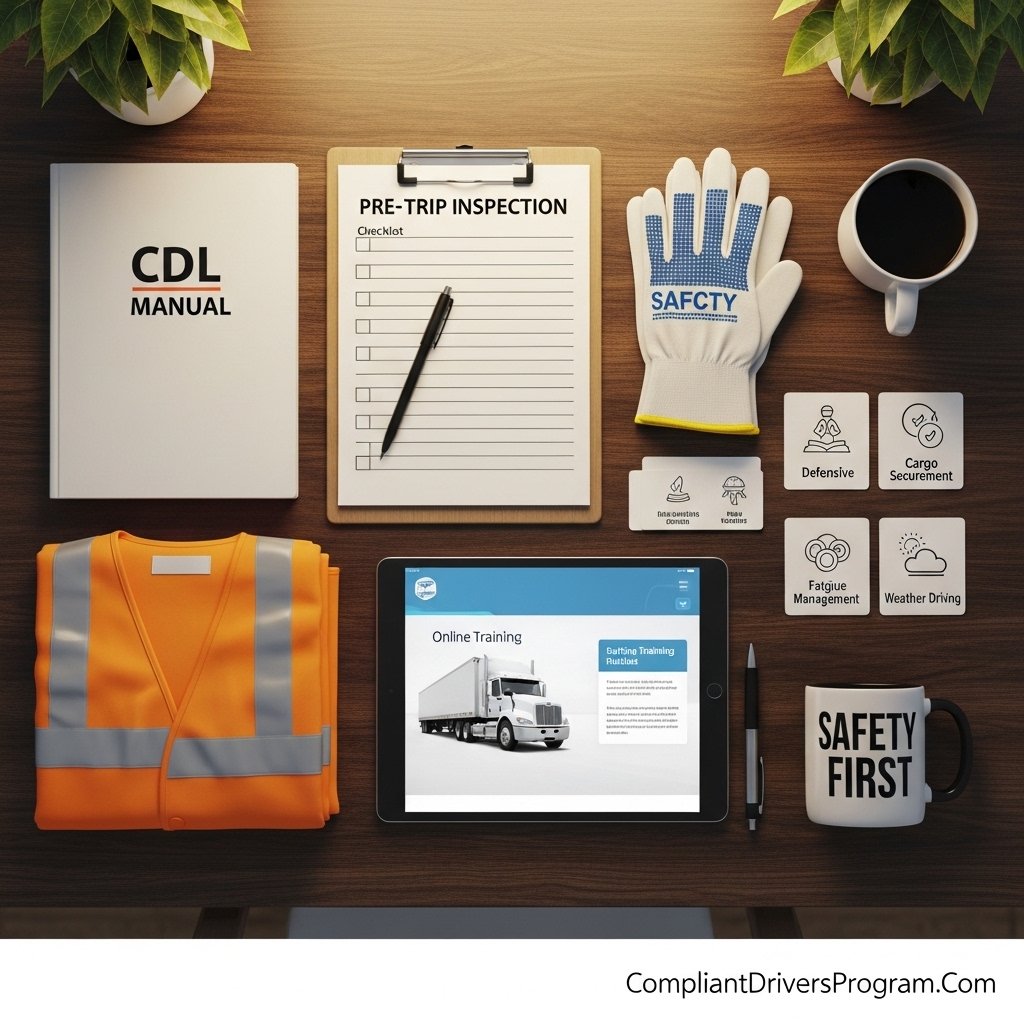
Not sure what your safety training for trucking companies should include? Here are the core areas you can't afford to skip. Each one addresses a real cause of crashes, injuries, or compliance violations that affect fleets daily.
Defensive Driving Skills
This is the backbone of any truck driver safety training effort. Defensive driving for truckers teaches drivers to anticipate hazards, maintain safe following distances, and manage speed for conditions. Programs like the Smith System driving method give drivers a proven framework they can use on every trip.
Defensive driving isn't about being slow or timid. It's about being smart and prepared. Drivers who master these techniques consistently avoid the crashes that catch reactive drivers off guard. This single topic probably prevents more accidents than any other element in your entire training program.
Vehicle Inspections
Every driver should know how to perform a thorough pre-trip inspection checklist and document findings properly. Pre-trip and post-trip inspections catch mechanical problems before they cause breakdowns or crashes. They also keep you compliant during a DOT truck inspection.
Teach drivers what to look for on tires, brakes, lights, coupling devices, and fluid levels. Make the inspection process hands-on during training rather than just showing slides. When drivers physically touch and check each component, the habit sticks much better than when they simply read about it.
Cargo Securement
Improperly secured loads cause thousands of accidents every year. Your training should cover weight distribution, proper tie-down methods, and load-specific requirements. Different cargo types need different approaches, and your drivers need to know the differences before they hit the highway.
Fatigue Management
Drowsy driving kills. Your compliance training should go beyond hours-of-service rules and teach drivers how to recognize fatigue symptoms. Cover sleep hygiene, nutrition, caffeine timing, and when to pull over no matter what the dispatcher says. Check out these truck driver safety tips for more practical advice on this topic.
Distracted Driving Prevention
Phone use behind the wheel remains one of the biggest killers on American roads. Your safety training trucking curriculum needs a strong module on distraction. Cover not just phones, but eating, adjusting GPS devices, and reaching for fallen objects while driving.
Weather and Road Conditions
Rain, ice, fog, and high winds demand different driving techniques. Many new drivers have never operated a commercial vehicle in severe weather. Hands-on training in a controlled environment builds confidence and competence before nature throws a curveball at your team.
Training Needs by Vehicle Type
Not every vehicle in your fleet needs the same training approach. A driver hopping into a box truck for local deliveries faces different challenges than someone running a 53-foot trailer cross-country. Smart program development accounts for these differences.
| Vehicle Type | Key Training Focus | Common Risks | Recommended Hours |
|---|---|---|---|
| Box truck | Overhead clearance, backing, residential driving | Low-clearance strikes, pedestrian contact | 8-12 hours |
| Pallet truck / Fork truck | Load handling, warehouse safety, pedestrian zones | Tip-overs, struck-by incidents | 6-8 hours |
| Bucket truck | Aerial safety, electrical hazards, stabilizer use | Falls, electrocution, tip-overs | 12-16 hours |
| Semi-trailer | Highway driving, coupling, wide turns | Jackknifing, rollover, blind spots | 40+ hours |
Fork truck and pallet truck operators often get forgotten in fleet safety management planning. But warehouse injuries send thousands of workers to emergency rooms each year. OSHA trucking safety requirements apply to these vehicles too, so don't overlook them in your overall program.
Bucket truck training deserves special attention because the risks include electrocution and falls from height. These are high-consequence events where a single mistake can be fatal. Specialized employee training for aerial lift operators should follow OSHA and ANSI standards closely.
Online vs. In-Person Training: What Works Best?
This debate pops up in every safety training for trucking companies conversation. The honest answer? You need both. Each format has strengths that the other can't match, and combining them gives you the best results for your investment.
Online training works great for knowledge-based topics like regulations, company policies, and hazmat awareness. Drivers can complete modules at their own pace during downtime. Modern platforms use video, quizzes, and scenario-based learning that keep attention better than old-school PowerPoints. They also create automatic records for your compliance training files.
In-person training shines for hands-on skills. You can't learn backing techniques from a computer screen. Yard exercises, ride-alongs with experienced drivers, and simulator sessions build muscle memory that online courses simply can't replicate. Monthly safety meetings also create space for drivers to share experiences and learn from each other.
Pro Tip: Run your knowledge-based modules online and save your in-person time for skills practice and group discussion. This hybrid approach cuts training costs by roughly 30% while actually improving driver performance. Many fleets using this method report 15-25% fewer preventable accidents within the first year.
Building a Safety Culture That Lasts
Here's where most companies drop the ball. They build a decent training program and then wonder why nothing changes. The missing piece is almost always safety culture. Culture is what drivers do when nobody's watching, and it starts at the top of your organization.

Your leadership team must walk the talk every day. When a manager skips a safety meeting or ignores a vehicle defect, every driver notices. That single action tells your team that safety is optional. On the flip side, when leaders participate in training, reward safe behavior, and respond quickly to concerns, the culture shifts fast.
Recognition programs work wonders for reinforcing good habits. Celebrate drivers who go a full year without a preventable accident. Share positive inspection results in company communications. Some fleets offer quarterly bonuses tied to safety metrics. These small investments create a competitive spirit around safety that no amount of lecturing can match.
Employee training should also include reporting procedures that feel safe and confidential. Drivers who fear punishment for reporting near-misses or equipment problems will stay quiet until something breaks or someone gets hurt. Anonymous reporting systems remove that fear and give you early warnings before small issues become catastrophic events.
Fleet Safety Program Best Practices for 2026 and Beyond
The trucking industry changes fast. What counted as cutting-edge five years ago now feels outdated. If you want your fleet safety program best practices to stay current, you need to keep evolving. Here are the trends shaping trucking safety training programs 2026 and beyond.
Telematics and dashcam footage now feed directly into training programs. Instead of generic examples, coaches can review a driver's actual performance and provide targeted feedback. This personalized approach fixes bad habits faster than any classroom lecture ever could. Drivers respond better when they see their own footage instead of a stranger's mistakes.
Predictive analytics are helping fleet managers spot risky drivers before accidents happen. These systems analyze patterns in hard braking, speeding, following distance, and hours driven. When the data flags a concern, you can intervene with additional truck driver safety training before the situation turns dangerous.
Virtual reality simulators are dropping in price and gaining popularity. They let drivers practice emergency maneuvers, adverse weather driving, and hazardous scenarios without any real-world risk. Several major carriers now use VR as a standard part of their program development, and the technology keeps getting more realistic each year.
Driver wellness programs are becoming a core part of fleet safety management. Sleep apnea screening, mental health resources, and fitness coaching all reduce crash risk. A healthy driver is a safer driver. Companies that invest in wellness see fewer accidents, lower healthcare costs, and better retention rates across the board.
Common Mistakes That Wreck Your Safety Program
Even well-meaning companies make errors that undermine their entire fleet safety program. Knowing these pitfalls helps you avoid them before they cost you money, drivers, or worse.
The biggest mistake is treating training as a check-the-box exercise. When drivers sense that nobody actually cares about the content, they tune out completely. Make every session relevant, practical, and worth their time. If you're bored delivering it, they're definitely bored receiving it. Keep the energy up and the content real.
Another common error is inconsistent enforcement. If your star driver gets a pass on seatbelt use while a rookie gets written up, you've destroyed your credibility. Fair and consistent discipline protects your safety culture and your legal standing. Document every coaching conversation and follow your written safety policy without exceptions.
Failing to update your curriculum is the third big trap. Regulations change. New vehicle technology rolls out. Road conditions shift with construction and population growth. Your training program needs quarterly reviews to stay accurate and effective. Stale training creates overconfident drivers who rely on outdated information when it matters most.
FAQ
A: Review your program quarterly and update content whenever regulations change, new accident patterns emerge, or you add new vehicle types to your fleet.
A: Look for programs combining online modules, hands-on skills practice, telematics-based coaching, and regular refresher courses tailored to your fleet's specific risks.
A: Most companies spend $1,500 to $5,000 per driver annually. This includes course materials, instructor time, technology platforms, and administrative tracking.
A: No. Online training handles knowledge-based topics well, but drivers need in-person practice for vehicle operation, inspection skills, and emergency maneuvers.
A: Start with free resources from FMCSA, focus on your highest-risk areas first, use peer-to-peer coaching, and add paid modules gradually as your budget allows.
A: OSHA covers general workplace safety including loading docks, warehouse operations, fork truck and pallet truck use, and hazard communication. FMCSA handles on-road commercial vehicle requirements.
A: Yes. Fleets with structured trucking safety programs consistently report 20-40% fewer preventable crashes compared to companies relying on informal training alone.
Your Next Move Starts Today
Building a strong trucking safety training program doesn't happen overnight, but every day you wait is another day your drivers face preventable risks. The steps in this guide give you a clear path forward regardless of your fleet size or budget.
Here's what to remember:
- Start with your own accident data and driver feedback to target your biggest risks first
- Combine online learning with hands-on practice for the strongest results
- Build a safety culture from leadership down, not just from a policy manual
- Review and refresh your program every quarter to stay ahead of changes
Pick one section of this guide and take action on it this week. Talk to your drivers at your next safety meeting about what they need most. The best program is the one you actually start.







![DOT Drug Test: What You Must Know in 2026 [Full Guide]](https://compliantdriversprogram.com/wp-content/uploads/2026/03/DOT-Drug-Test-150x150.jpeg)



Leave a Reply