

Hours of Service Rules 2026: The Only Guide Truckers Actually Need to Stay Legal and Safe
You just pulled into a truck stop after a brutal 500-mile run. Your eyes feel heavy, your back aches, and you still have another load waiting tomorrow morning. But wait, can you even legally drive tomorrow? Did you track your hours right? Will that roadside inspector slap you with a massive fine?
These questions keep thousands of truckers up at night. The hours of service rules exist to protect you and everyone else on the road. Yet they confuse even experienced drivers who have been hauling freight for decades. The regulations seem complicated because they involve multiple time limits working together.
Here is the good news. You are about to learn everything about DOT hours of service in plain English. This guide covers the current HOS rules trucking regulations for 2026. You will understand exactly how much you can drive, when you must rest, and how to avoid costly violations. Let us break it down together.
What Are Hours of Service Rules and Why Do They Exist?
The service hour regulations control how long commercial drivers can operate their vehicles. The Federal Motor Carrier Safety Administration created these rules decades ago. Their main purpose focuses on preventing accidents caused by truck driver fatigue.
Think about it this way. A tired driver becomes a dangerous driver. Studies show that drowsy driving impairs you similar to alcohol intoxication. After 18 hours without sleep, your reaction time matches someone with a 0.05% blood alcohol level. The legal hours limits prevent drivers from pushing beyond safe boundaries.
These regulations apply to most commercial motor vehicles. You must follow them if you drive a vehicle weighing over 10,000 pounds. They also apply to vehicles designed to carry 16 or more passengers. Anyone hauling hazardous materials in reportable quantities falls under these rules too.
The FMCSA Hours of Service Rules form the foundation of trucking safety regulations. Violating them puts your CDL, your career, and lives at risk. Understanding them protects everything you have worked to build.
Breaking Down the Core Driving Time Limits for 2026
Most people get confused by all the different hour limits. Let me simplify the main rules you need to know about trucker driving hours. Each limit serves a specific purpose in the overall duty cycle system.
The 11-Hour Driving Limit
You can drive a maximum of 11 hours after taking 10 consecutive hours off duty. This represents your actual behind-the-wheel driving time limit. Once you hit 11 hours of driving, you must stop. No exceptions, no extensions, no creative workarounds.
Here is the thing most new drivers miss. This 11-hour clock only counts actual driving. Loading freight, doing paperwork, or sitting in traffic with your engine off does not count against it. However, all those activities do count against another important limit.
The 14-Hour On-Duty Window
Your 14-hour window starts the moment you begin any work activity. This includes driving, loading, fueling, inspecting, or any other job-related task. You cannot drive after the 14th hour, even if you have driving time remaining.
Quick example to make this clear. Say you start work at 6 AM. Your 14-hour window closes at 8 PM. Even if you only drove 8 hours total, you cannot drive after 8 PM. The 14 Hour Rule and 11 Hour Limit work together to limit your total exposure to fatigue.
Pro Tip: Your 14-hour clock never pauses. Taking a 3-hour nap in your cab does not extend it. Only a full 10-hour off-duty period resets both clocks.
Understanding the 60/70 Hour Weekly Limits
Beyond daily limits, federal regulations cap your total working hours over multiple days. Most trucking operations fall into one of two categories based on how often they operate.
The 60-Hour/7-Day Rule
Companies that do not operate vehicles every day of the week use this limit. You cannot drive after accumulating 60 on-duty hours in any 7 consecutive days. This rolling window updates daily as older hours drop off.
The 70-Hour/8-Day Rule
Fleet operations running seven days a week follow the 70 Hour Rule Trucking standard instead. You cannot drive after reaching 70 on-duty hours within any 8 consecutive days. Most long-haul operations fall under this category.
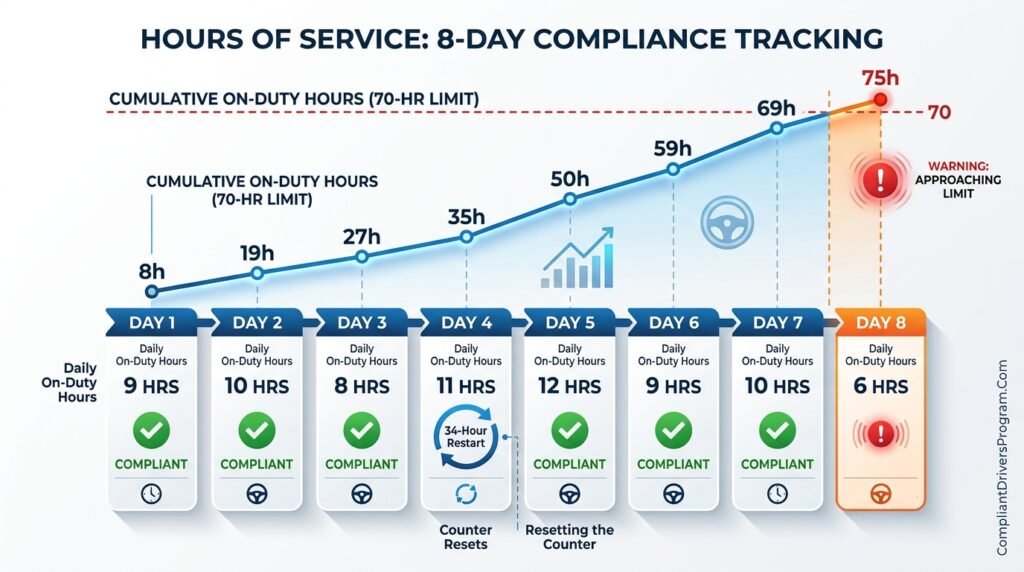
Tracking these hours requires careful attention to your logbook or ELD recording. Every minute of on-duty time counts against your weekly limit. Missing this detail leads to violations that carry serious penalties.
The 34-Hour Restart That Resets Everything
Feeling buried under accumulated hours? The 34 Hour Restart Rule offers drivers a way to wipe the slate clean. Taking 34 consecutive hours off duty resets your 60 or 70-hour clock completely.
This restart provision helps drivers who have worked several hard days in a row. Instead of waiting for hours to naturally roll off, you can take an extended break. After 34 hours off, your weekly available hours return to the maximum.
Most drivers plan their restarts around weekends or during slow freight periods. Smart planning means you always have maximum hours available when good loads appear. The restart works best when you coordinate it with your dispatcher in advance.
Here is something many drivers overlook. You can use the restart provision at any time. You do not need to exhaust your available hours first. Sometimes taking an early restart keeps you fresher and more productive overall.
Mandatory Rest Breaks Every Driver Must Take
The 30-minute rest breaks requirement catches many drivers off guard. You must take a 30-minute break before driving beyond 8 hours of consecutive driving time. This rule applies to property-carrying drivers specifically.
You can satisfy this break requirement several ways. Sitting in your truck without performing any work counts. Sleeping in your sleeper berth counts. Even having lunch at a truck stop satisfies the requirement. The key is stopping all work activities for a full 30 minutes.
Pro Tip: Plan your 30-minute break around meal times or fuel stops. This turns a regulatory requirement into productive time. You eat, stretch, and check your rig all while satisfying compliance rules.
The Sleeper Berth Rules offer additional flexibility. You can split your required 10-hour off-duty period using the sleeper berth provision. This option helps team drivers and those dealing with difficult scheduling situations.
How ELD Recording Changed Hours of Service Compliance
Paper logs became mostly obsolete when the ELD Mandate Guide requirements took full effect. Electronic Logging Devices now automatically record your driving time and duty status. This technology changed compliance enforcement dramatically.
Your ELD connects to your truck engine and records movement automatically. When the vehicle moves, the device logs driving time. This makes falsifying records nearly impossible compared to the old paper system. Inspectors can now review your actual driving history with complete accuracy.
Choosing the right device matters for your daily experience. The Best ELD Devices combine reliability with user-friendly interfaces. Owner-operators often prefer options listed in the Cheapest ELD for Owner Operators guide to manage costs effectively.
Many drivers also use Trucking Log Book Apps alongside their ELDs. These apps help with trip planning, fuel tracking, and managing paperwork. The right technology stack makes compliance feel automatic rather than burdensome.
Exceptions That Provide Flexibility When You Need It
The standard hours of service rules do not apply equally to every situation. The FMCSA built several HOS Exceptions for Truckers into the regulations. Understanding these exceptions helps you work legally in unusual circumstances.
The Adverse Driving Conditions Exception
Bad weather, road closures, or unexpected traffic can trap you unexpectedly. This exception extends your driving time and 14-hour window by up to 2 hours. You can only use it when conditions arise after you begin driving. Planning to drive through a forecasted storm does not qualify.
The Short-Haul Exception
Drivers operating within a 150 air-mile radius from their work reporting location qualify for special treatment. You do not need an ELD if you meet certain requirements. You must return to the same location within 14 hours. This exception helps local delivery drivers significantly.
The Personal Conveyance Rule
Moving your truck for personal reasons does not count as on-duty time in specific situations. Driving to a restaurant, hotel, or safe parking location qualifies. However, moving closer to your next load destination does not qualify. The distinction matters for proper logbook entries.
The Real Cost of HOS Violations in 2026
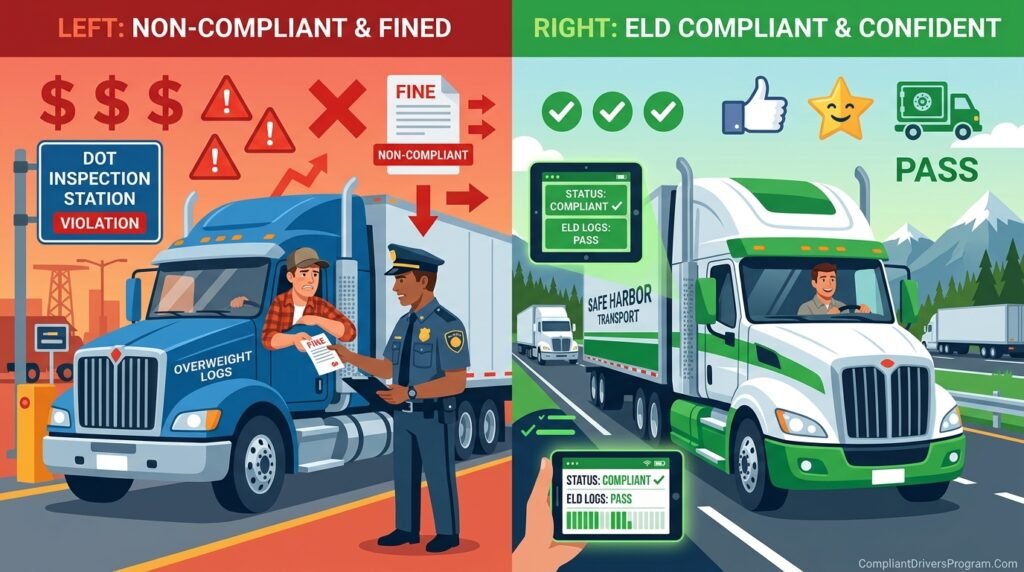
Violating the hours of service rules carries steep financial consequences. The DOT Fines Complete Guide outlines penalties that can reach thousands of dollars. Both drivers and carriers face separate fines for the same violation.
Current ELD & HOS Violation Fines start around $16,000 per violation for carriers. Drivers face personal fines up to $4,100 for each offense. Serious violations can result in being placed out of service immediately. Your truck sits until you regain legal hours.
The Log Book Violation Fines hit equally hard for falsification. Intentionally recording false hours constitutes a federal offense. Penalties include criminal prosecution in egregious cases. Your CDL and entire career hang in the balance.
Beyond direct fines, violations affect your CSA scores permanently. Poor scores reduce your employability with reputable carriers. Some insurance companies refuse coverage for drivers with violation histories. The ripple effects extend far beyond the initial fine amount.
| Violation Type | Driver Fine | Carrier Fine | Out of Service |
|---|---|---|---|
| Driving over 11 hours | Up to $4,100 | Up to $16,000 | Yes |
| 14-hour window violation | Up to $4,100 | Up to $16,000 | Yes |
| No valid ELD | Up to $1,600 | Up to $16,000 | Possible |
| False log entries | Up to $16,000 | Up to $16,000 | Yes |
| No 30-minute break | Up to $1,600 | Up to $16,000 | No |
Understanding How to Appeal DOT Fines helps if you receive an unfair citation. The appeals process requires documentation and often legal assistance. Prevention always costs less than fighting violations after the fact.
Fighting Fatigue Beyond Just Following the Rules
Following the hours of service rules represents the legal minimum for safe driving. Smart drivers go beyond simple compliance to manage truck driver fatigue proactively. The Truck Driver Fatigue Guide covers this topic extensively.
Your sleep quality matters as much as sleep quantity. The Sleep Tips for Truck Drivers resource explains how to maximize rest in challenging environments. Blackout curtains, white noise machines, and temperature control make huge differences.
According to research from the National Institute for Occupational Safety and Health, commercial drivers face elevated fatigue risks compared to other workers. Irregular schedules disrupt natural circadian rhythms. Managing these challenges requires intentional effort beyond just legal compliance.
Practical Steps to Master HOS Compliance Daily
Knowing the rules differs from applying them consistently. Here are specific actions that keep you legal every single day.
Start Every Shift Right
Check your available hours before accepting any load. Know exactly how much driving time remains on your 11-hour clock. Verify your 14-hour window start time. Confirm your position against the 60 or 70-hour limit. This takes two minutes and prevents disasters.
Plan Your Stops Strategically
Map out fuel stops, rest areas, and potential parking spots before departure. Know where you can safely take your 30-minute break. Identify backup locations in case your first choice is full. Good planning eliminates last-minute stress and rule violations.
Communicate With Your Dispatcher
Share your available hours clearly with dispatch. Refuse loads that cannot be completed legally. Document any pressure to violate regulations. Reputable carriers support drivers who prioritize compliance. Companies that push violations face severe consequences themselves.
Double-Check Your ELD Entries
Review your ELD recording before signing off each day. Correct any errors while details remain fresh. Ensure your duty status changes reflect actual activities. Accurate records protect you during inspections and audits.
Staying Updated on DOT Regulations Going Forward
The DOT hours of service rules evolve over time. Regulatory changes, new interpretations, and enforcement priorities shift regularly. Staying current protects your career and compliance standing.
The DOT Compliance For Trucking resource covers broader regulatory requirements beyond just HOS. The DOT Regulations for Truck Drivers page provides comprehensive guidance on all FMCSA requirements.
Following official FMCSA announcements ensures you learn about changes directly from the source. Industry associations and trucking publications also track regulatory developments closely. Building these information sources into your routine keeps surprises away.
Frequently Asked Questions About Hours of Service Rules
A: You can drive up to 11 hours maximum after taking 10 consecutive hours off duty. This limit applies within your 14-hour on-duty window.
A: Exceeding limits results in fines up to $4,100 for drivers. You may be placed out of service until you regain legal hours.
A: No. Your 10 hours off must be consecutive. Short breaks during your shift do not contribute toward this requirement.
A: Yes, sleeper berth provisions allow splitting into a 7/3 combination. Specific rules apply to how you divide this time.
A: Property-carrying drivers must take a 30-minute break before driving beyond 8 consecutive hours of driving time.
A: They apply to vehicles over 10,000 pounds, those carrying 16+ passengers, or transporting hazardous materials in reportable quantities.
A: Taking 34 consecutive hours off duty resets your 60 or 70-hour weekly limit completely back to zero.
Your Next Steps Toward Perfect HOS Compliance
Mastering the hours of service rules protects your license, your income, and your safety. The regulations seem complex initially but become second nature with practice. Every professional trucker learns to work within these boundaries effectively.
Here are your key takeaways from this guide:
- The 11-hour driving limit and 14-hour window work together to cap daily operations
- Weekly limits of 60 or 70 hours control cumulative fatigue over multiple days
- The 34-hour restart provision offers a complete reset when you need it
- ELDs made compliance automatic but require your attention to duty status accuracy
- Violations carry fines reaching thousands of dollars plus career consequences
Your one clear next step starts tomorrow morning. Before you turn that key, check every hour limit that affects your day. Make this five-minute review a permanent habit. Consistent attention to trucker driving hours keeps you legal, safe, and profitable for years to come.
This article provides general information about federal hours of service regulations. Specific situations may require consultation with compliance professionals or legal counsel. Regulations may change, so verify current requirements through official FMCSA sources.
HOS Calculator Tool







![DOT Drug Test: What You Must Know in 2026 [Full Guide]](https://compliantdriversprogram.com/wp-content/uploads/2026/03/DOT-Drug-Test-150x150.jpeg)



Leave a Reply