

Ever feel like the road owns your schedule? You start a long haul full of energy. Then bam—rules force you to park before the job’s done. That’s FMCSA hours of service kicking in.
These rules keep highways safe from tired drivers. They limit your driving time each day and week. You’ll learn every detail here for 2026, including new pilots.
Stick with me. You’ll master FMCSA hours of service explained step by step. Get tips no one else shares. Plus, dodge fines that wreck your wallet.
What Are FMCSA Hours of Service?
FMCSA hours of service track your on-duty and driving time. They apply to you if you drive trucks over 10,001 pounds. Or if you haul passengers in big rigs.
The Federal Motor Carrier Safety Administration sets them. They fight driver fatigue head-on. Crashes drop when you rest enough.
Here’s the thing: rules split time into driving, on-duty, and off-duty. You log it all with ELDs now. Miss a log, and trouble finds you fast.
Most people don’t know this: property haulers follow slightly different caps than passenger drivers. Know your type to stay legal. Check DOT Regulations for Truck Drivers for basics.
Why Do These Rules Matter to You?
Fatigue causes one in four truck crashes. FMCSA hours of service cut that risk big time. They make sure you get real rest between runs.
You push hard to meet deadlines. But tired eyes miss stops and signs. These rules protect your family waiting at home too.
Think about costs: a wreck means hospital bills and lost work. Safe driving pays your bills better. Compliance boosts your safety rating for better jobs.
Quick tip: share these rules with your dispatcher. It saves arguments and keeps runs smooth.
Core Rules: 11-Hour Driving Limit
You drive no more than 11 hours after 10 consecutive off-duty hours. That’s your fresh start each day. Hit 11, and you park—no exceptions.
Driving time means wheels turning with you behind them. Waiting to load doesn’t count as driving. But it eats your duty clock.
Pro tip: track from midnight if you restart wrong. It resets everything clean. See 14 Hour Rule and 11 Hour Limit for examples.
Real example: you fuel up at dawn after 10 off. Drive till afternoon maxes 11 hours. Smart planning hits destinations on time.
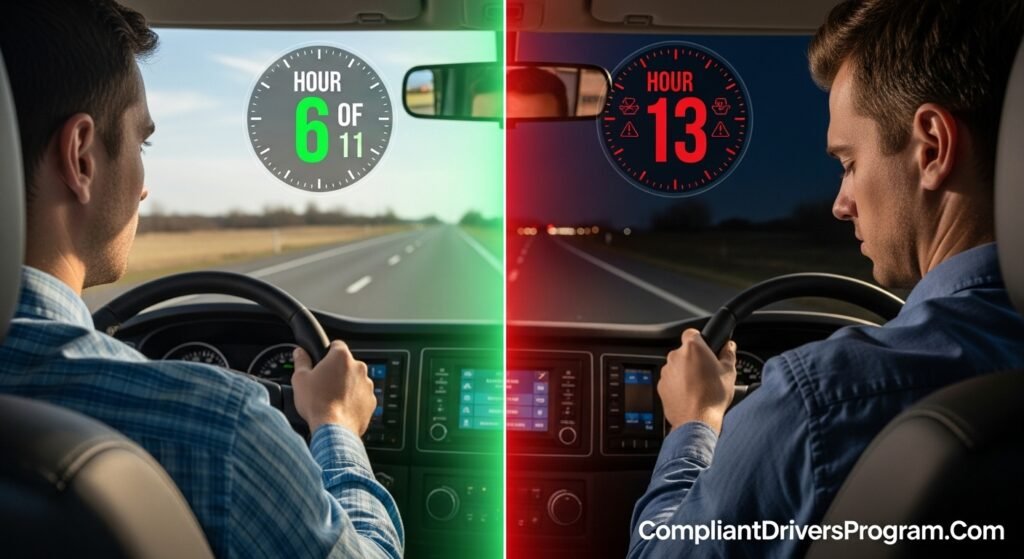
The 14-Hour Duty Window Deep Dive
Start your 14-hour clock at your first on-duty task. No driving after it ends, even with drive time left. Lunch breaks don’t pause it.
Say you inspect at 5 AM. Drive stops by 7 PM sharp. Off-duty lunch counts inside the window fully.
Most drivers mess this up: yard moves count as on-duty. Log them right to avoid log fights.
Pro Tip: Set phone alarms for your window end. It prevents oops moments at night.
New in 2026 pilots: pause this window up to 3 hours for breaks. Over 500 drivers test it now. Watch for approval soon.
Mandatory 30-Minute Break Details
Hit 8 hours of driving? Pull over 30 minutes minimum. You can stay on-duty if not driving. Fuel stop chats count fine.
Split the break: 15 now, 15 later. Total hits 30 to reset. It gives flex on busy days.
Here’s the thing: no break means no more driving that window. Plan it early to max miles.
Example: morning drive 4 hours, break 30 at truck stop. Afternoon push adds full 8 more. You’re legal all day.
Weekly Caps: 60 vs 70 Hours
Choose your company’s rule: 60 hours in 7 days or 70 in 8. Property carriers pick one. Stick to it all year.
On-duty means any work: fueling, loading, waiting. It all adds up fast over weeks.
Hit cap? Go off duty 34 hours to reset. Track rolling 7 or 8 days backward.
Dive deeper into the 70 Hour Week RuleTrucking.
Full Guide to 34-Hour Restart
Grab 34 straight off-duty hours anywhere. It resets your weekly clock fully. No need for two off-duty periods like old rules.
Mix in sleeper berth time now. Just log it separate. You restart multiple times a week if needed.
Quick tip: take it Friday night to Sunday night. Fresh Monday hauls beat tired ones.
Most people don’t know this: railroads got exemptions to add 6 weekly hours. You might qualify too. Learn at 34 Hour Restart Rule.
Sleeper Berth Options for Teams
Team drivers split rest: at least 8 in berth plus 2 off-duty. Or 7 plus 2. Neither eats your 14-hour window.
Your bunk must meet size rules: 6 feet long, 2 feet wide. No cab seats count.
New pilot tests 6/4 or 5/5 splits for 2026. It could change team runs big.

Pro Tip: Switch drivers during sleeper time. Keep wheels turning legally. Full info at Sleeper Berth Rules.
Short-Haul and Local Driver Breaks
Stay within 150 air miles of start? You’re short-haul. Get 14-hour day without ELD if back same day.
Log time sheets weekly instead. No daily duty limits if under 12 hours total.
Oilfield drivers claim 24-hour resets too. Know your radius cold.
Adverse Driving and Emergency Exemptions
Bad weather or traffic? Add up to 2 hours to your limits once. Log the reason clear.
Disasters suspend all rules. Hurricanes or floods activate it. FMCSA posts waivers online.
Railroad emergency? Extend 14 to 17 hours. Add 6 weekly hours. Max 300 miles from wreck. Runs through 2030.
Check every option at HOS Exceptions for Trucker.
2026 Updates and Pilot Programs
FMCSA runs pilots now for more flex. One pauses 14-hour rule 30 minutes to 3 hours daily. Great for traffic jams.
Sleeper berth tests new splits: 5/5, 6/4 hours. Teams gain big if approved.
Oversize haulers renewed exemptions too. Watch FMCSA site for final rules by summer.
Pro tip: join pilot if eligible. Shape future rules yourself.
ELD Rules You Can’t Ignore
ELDs log auto—no fudging paper. Mandated since 2017 for most. Fines soar for tampering.
Ghost logs or edits trigger audits. Use certified devices only. Train dispatch on reads.
Quick tip: sync with apps for alerts. Nightly reviews spot issues early.
Boost your setup with DOT Compliance for Trucking Companies.
Fines Breakdown and Real Costs
First violation? Up to $1,691 per day. Drive 4 hours over? $4,957 jumps. Egregious past 3 hours? $16,352 max.
Drivers pay personally too. CSA scores tank your job hunts. Repeat hits? Permits yanked.
Out-of-service: 10 hours minimum wait. Lost pay hurts worst.
Stay clean via FMCSA Fines and Penalties.
Step-by-Step Compliance Plan
Map routes with breaks at hour 8. Note start times daily. Use GPS for air miles.
Log off-duty breaks right away. Review ELD at every stop. Weekly totals check Sunday night.
Mock DOT stops: pull over, show logs. Practice cuts stress.
Full strategies at Hours of Service Rules.
Driver Categories Comparison
Health Impacts of HOS Rules
Rest fights sleep debt buildup. You cut heart risks 30% with steady off time. FMCSA backs studies.
Poor sleep ups wreck odds 6 times. Rules force recovery you need. Eat well during breaks too.
Most people don’t know this: caffeine crashes hurt worse after long hauls. Hydrate smart instead.

Tech Tools for Easy Tracking
Apps like KeepTruckin alert window ends. Pair with ELD for live views. Dispatch sees real-time.
Dash cams prove breaks if questioned. GPS tracks miles accurate.
Pro tip: free FMCSA apps teach logs. Practice off-road first.
Common Mistakes and Fixes
Forgetting 30-minute break mid-day. Fix: timer from drive hour one.
Wrong restart timing. Fix: count 34 from last on-duty minute.
ELD glitches? Fix: keep paper backup ready. Report faults same day.
Training Your Dispatcher
Show them your log sample weekly. Explain window math simple. Set no-run-if-over alerts.
Team meetings cover exemptions. It aligns whole fleet safe.
Winter Driving HOS Tips
Snow adds adverse hours wisely. Shorter days squeeze windows. Plan noon restarts.
Cold starts eat inspection time. Log smart to fit all.
FAQ
A: Limit drive to 11 after 10 off, in 14-hour day. 60/70 weekly. 34 resets all. Log ELD strict.
A: Core same, pilots test pauses and sleeper tweaks. Full limits hold till changes.
A: Stop fatigue crashes, mandate rest. Saves lives daily per data.
A: Test 14-hour pauses, new splits. Could add flex by fall if safe.
A: 17-hour days, +6 weekly for wrecks. 300-mile max. 5 years valid.
A: Yes, split ok, on-duty fine. Resets after 8 drive hours.
- Nail 11/14 daily limits every run.
- Log ELD perfect to skip $16k fines.
- Grab 34-hour resets weekly smart.
- Test 2026 pilots if you qualify.
Grab your logbook now. Match it to these rules. Head to FMCSA summary page. Safe miles ahead—you got this.







![DOT Drug Test: What You Must Know in 2026 [Full Guide]](https://compliantdriversprogram.com/wp-content/uploads/2026/03/DOT-Drug-Test-150x150.jpeg)



Leave a Reply