
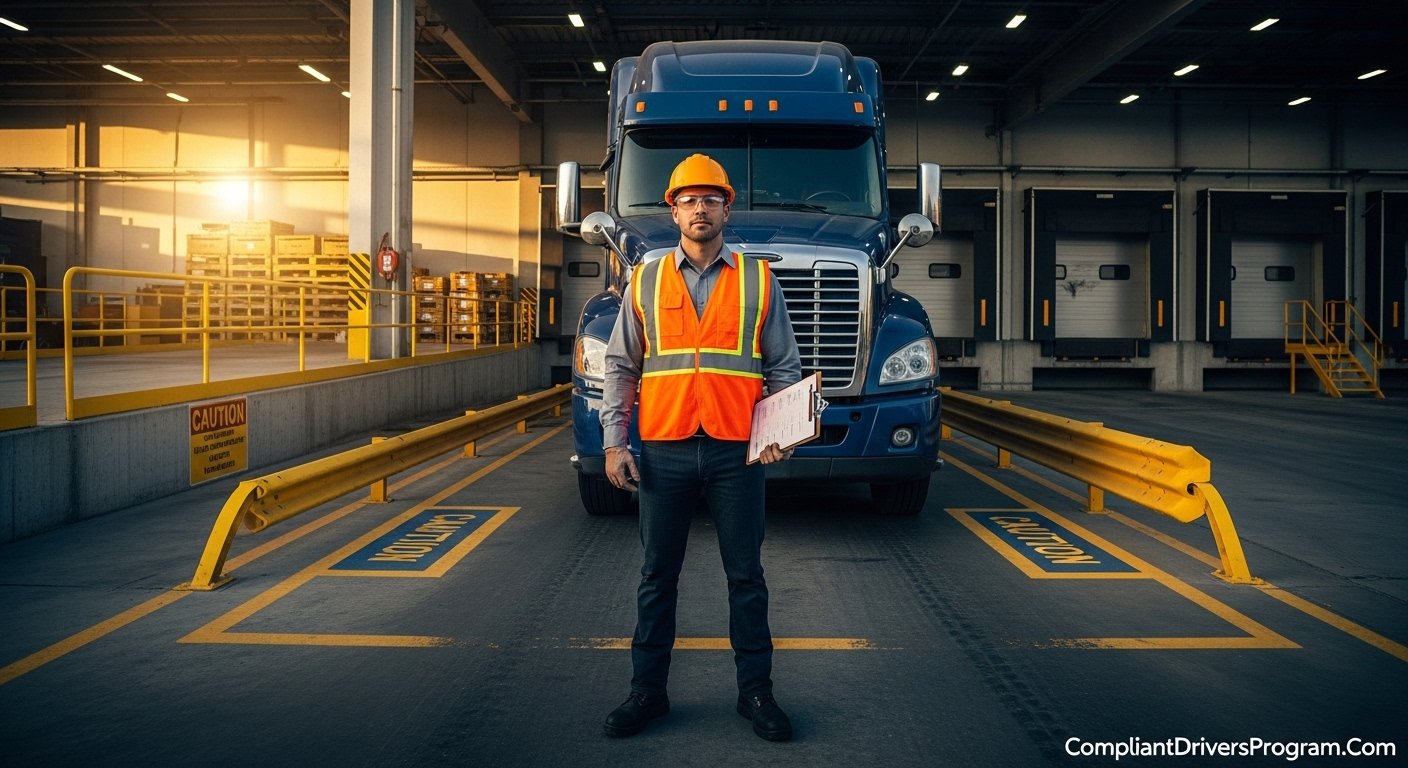
OSHA Trucking Safety Requirements: The No-Nonsense Guide That Keeps Drivers Alive and Companies Penalty-Free
A single OSHA trucking safety violation can cost your company over $16,000 per incident. That number jumps to $161,000 or more for willful violations. These aren’t just numbers on paper. They hit your bottom line hard and fast.
But here’s what really matters. Every year, hundreds of truck drivers lose their lives on the job. Thousands more suffer serious injuries at loading dock areas, during cargo handling, and on the road. Most of these incidents happen because someone skipped a safety step or didn’t know the rules existed.
You’re about to get a clear breakdown of every OSHA requirement trucking companies must follow. You’ll learn the exact training your drivers need, the gear they must wear, and the steps that keep your fleet out of trouble. Whether you run two trucks or two hundred, this guide covers what you actually need to know.
What Does OSHA Actually Cover for Trucking Companies?
Most people think OSHA only deals with factories and construction sites. That’s a common mistake. OSHA covers almost every workplace in the United States, and that includes trucking operations. From the warehouse floor to the cab of your truck, OSHA has rules you must follow.
The Occupational Safety and Health Administration sets standards for workplace safety across all industries. For trucking, OSHA focuses on hazards that drivers and warehouse workers face daily. These include slips, falls, chemical exposure, and equipment-related injuries. OSHA doesn’t regulate the actual driving part on public roads. That job belongs to the FMCSA.
Here’s where it gets tricky. OSHA regulations drivers must follow apply whenever they step out of their truck. Loading and unloading cargo, walking on a loading dock, handling hazardous materials, and using equipment all fall under OSHA. So while the FMCSA rules handle hours of service and road safety, OSHA handles everything else around the worksite.
Think of it this way. FMCSA keeps drivers safe on the highway. OSHA keeps them safe everywhere else. Both agencies can fine your company if you break their rules. Smart fleet managers pay attention to both.
Trucking Safety Compliance Checker
📊 OSHA Compliance Assessment Results
Based on your selections · 2026 OSHA Trucking Safety Standards
| Category | Score | Status |
|---|
The Top OSHA Hazards That Hit Trucking Companies Hardest
You might wonder what OSHA inspectors actually look for when they visit a trucking operation. They don’t just walk around randomly. They target specific hazards that cause the most injuries and deaths in the industry. Knowing these hazards helps you fix problems before an inspector finds them.
Slips, Trips, and Falls at Loading Docks
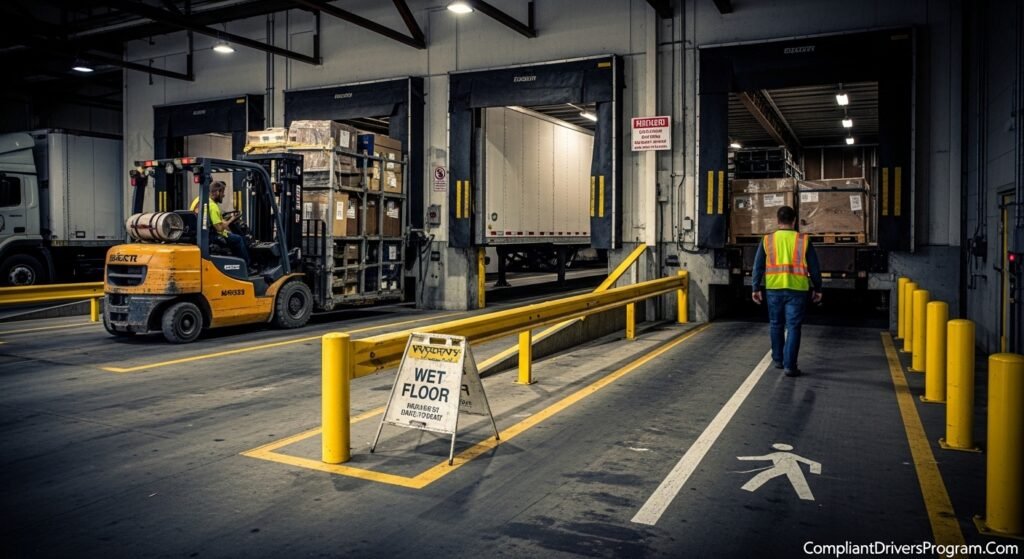
Loading dock injuries make up a huge chunk of trucking workplace incidents. Drivers climb in and out of trailers dozens of times per day. Wet surfaces, uneven dock plates, and missing handrails create fall risks everywhere. OSHA requires employers to keep walking surfaces clean, dry, and free of obstacles.
Falls from truck beds and trailer heights cause broken bones, head injuries, and worse. OSHA standard 1910.28 requires fall protection for anyone working at heights of four feet or more in general industry. That means your drivers need proper access points and guardrails when working on elevated surfaces. OSHA safety rail kits that fit in pickup truck beds can help smaller operations meet these requirements without spending a fortune.
Struck-By and Caught-Between Hazards
Forklifts, pallet jacks, and moving trucks create serious struck-by hazards around warehouses. OSHA reports that struck-by incidents rank among the top four causes of workplace death every year. Drivers walking near active forklift safety zones face real danger if operators don’t see them. Clear traffic lanes, warning signs, and high-visibility vests all reduce this risk.
Caught-between hazards happen when dock doors close on workers or when trailers shift during loading. Trailer restraint systems and dock locks prevent unexpected trailer movement. OSHA expects employers to use these devices and train workers on proper lockout procedures. A few hundred dollars in equipment can prevent a tragedy.
Hazard Communication and Chemical Exposure
Many trucking companies haul chemicals, cleaning agents, or industrial materials. OSHA’s hazard communication standard (HazCom) requires employers to inform workers about every chemical they might contact. This means keeping Safety Data Sheets on site and making sure drivers can access them. You must also label every container properly.
Even if your trucks don’t haul chemicals, your drivers might encounter them at customer locations. Diesel fuel, battery acid, and cleaning solvents all count as hazardous materials under OSHA rules. Proper PPE like gloves, goggles, and respirators must be available when needed. Check out our guide on hazmat cargo securement for more details on handling dangerous goods safely.
Trucking Safety Training That OSHA Actually Requires
Let’s talk about trucking safety training because this is where most companies fall short. OSHA doesn’t just suggest training. They mandate it. And they expect you to document every session, every attendee, and every topic covered. Missing training records can trigger fines just as fast as missing safety equipment.
General Safety Orientation
Every new driver and warehouse worker needs a general safety orientation before they start work. This orientation must cover your company’s specific hazards, emergency procedures, and reporting requirements. You can’t just hand someone a manual and call it done. OSHA expects interactive training where workers can ask questions and demonstrate understanding.
Your orientation should also cover your company’s workplace safety trucking policies. Where are the fire extinguishers? How do workers report injuries? What’s the evacuation plan? These basics save lives and keep you compliant. A solid fleet safety program builds this training into every new hire’s first day.
Forklift and Powered Industrial Truck Training
Here’s the thing. OSHA standard 1910.178 requires formal training for anyone who operates a forklift or powered industrial truck. This isn’t optional, and it isn’t a one-time event. Operators need initial training, a practical evaluation, and refresher training every three years. They also need retraining after any accident or near-miss.
Many trucking companies let drivers operate forklifts without proper certification. This creates massive liability and guaranteed OSHA fines. Forklift safety training must include truck inspection procedures, load capacity limits, and safe operating practices. Keep all training certificates on file for at least three years.
Hand Truck and Manual Material Handling
Hand truck safety OSHA requirements focus on proper lifting techniques and equipment use. Drivers who load and unload their own freight face back injuries, muscle strains, and joint problems. OSHA expects employers to train workers on safe lifting methods and provide mechanical aids when loads exceed safe manual limits.
Pro Tip: OSHA recommends keeping manual lifts under 50 pounds whenever possible. For anything heavier, provide dollies, hand trucks, or other mechanical assistance. Document this policy in your safety manual and train every driver on it.
Hazard Communication Training
Every worker who might contact hazardous chemicals needs HazCom training. This training must explain how to read Safety Data Sheets, understand warning labels, and use proper PPE. OSHA updated the HazCom standard to align with the Globally Harmonized System (GHS), so make sure your training materials reflect current requirements.
PPE Requirements Every Trucking Operation Must Follow
Personal protective equipment sits at the bottom of OSHA’s hierarchy of controls. That means you should try to eliminate hazards first, then use engineering controls, then administrative controls. PPE comes last because it only protects the person wearing it. But when you can’t remove a hazard completely, proper PPE becomes essential.
What PPE Do Truck Drivers Need?
The answer depends on what hazards your drivers face. At minimum, most trucking operations require high-visibility vests when drivers work near moving vehicles. Steel-toed boots protect feet during loading and unloading. Gloves shield hands from sharp edges, chemicals, and extreme temperatures.
Hard hats become necessary at construction sites and certain industrial facilities. Safety glasses protect against flying debris during cargo securement. If your drivers haul or handle chemicals, you might need respirators, chemical-resistant gloves, and splash-proof goggles. Always match the PPE to the specific hazard your driver faces.
OSHA requires employers to conduct a hazard assessment for each job task. This assessment identifies what PPE workers need and when they need it. Document this assessment in writing and update it whenever job conditions change. The National Institute for Occupational Safety and Health offers free resources to help you conduct these assessments properly.
Who Pays for PPE?
OSHA’s rule on this is crystal clear. Employers must provide required PPE at no cost to workers. You can’t deduct PPE costs from paychecks or require drivers to buy their own safety gear. The only exceptions are everyday items like steel-toed boots that workers can also wear off the job. Even then, many companies choose to cover these costs as a goodwill gesture.
Loading Dock Safety Rules You Can’t Afford to Ignore
Loading dock areas rank among the most dangerous spots in any trucking operation. Forklifts, heavy cargo, dock levelers, and vehicle traffic all create overlapping hazards. OSHA doesn’t have a single “loading dock standard.” Instead, multiple standards apply to different dock hazards. Let’s break them down.
Dock Plate and Leveler Safety
Dock plates and levelers bridge the gap between the truck and the warehouse floor. OSHA requires these devices to support the intended load weight, including the weight of any forklift crossing them. Workers must secure dock plates before use and inspect them for damage regularly. A failed dock plate can drop a loaded forklift several feet.
Trailer Restraint and Chocking
Before anyone enters a trailer to load or unload, you must secure that trailer. Wheel chocks, trailer restraints, or dock locks prevent the trailer from pulling away during operations. OSHA considers an unsecured trailer a serious hazard. Drivers and dock workers need training on proper restraint procedures for every load.
This connects directly to proper cargo securement rules that apply once the freight sits inside the trailer. Getting cargo loaded safely means nothing if the trailer rolls away during the process. Make trailer restraint a mandatory step in your dock procedure checklist.
Pedestrian and Vehicle Traffic Separation
Smart companies paint clear lanes that separate foot traffic from forklift and truck traffic. OSHA expects employers to establish and enforce traffic patterns around loading docks. Mirrors at blind corners, warning lights at dock doors, and speed limits for powered equipment all reduce collision risks. Post these rules on signs that everyone can see.
How OSHA Inspections Work for Trucking Companies
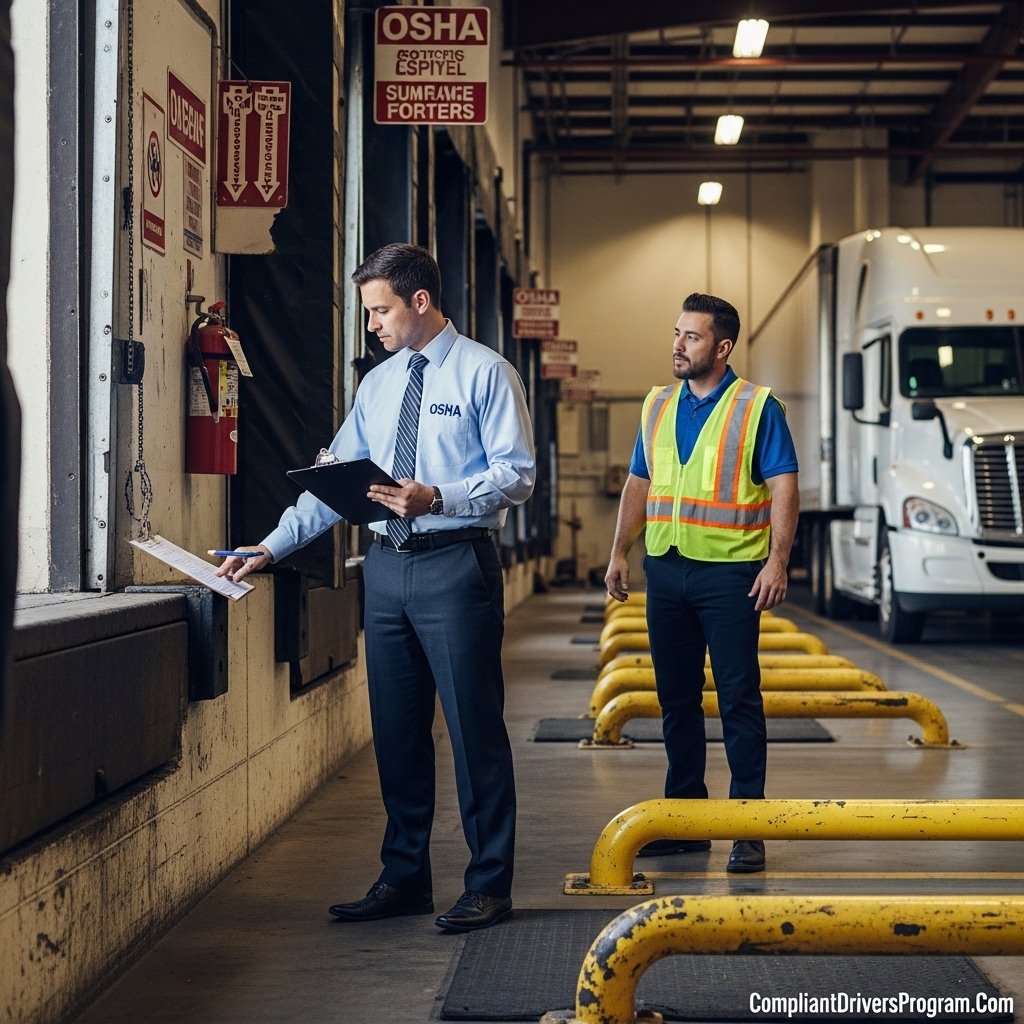
OSHA inspectors can show up at your facility without warning. They prioritize inspections based on imminent danger situations, fatal accidents, employee complaints, and targeted industry programs. Trucking and warehousing operations appear regularly on OSHA’s target lists because of high injury rates.
During an inspection, the compliance officer will walk through your facility, interview workers, and review records. They’ll check training documentation, injury prevention logs, OSHA 300 forms, and equipment maintenance records. They’ll also observe work practices in real time. If a driver skips a safety step during the inspection, you’ll hear about it.
You have the right to accompany the inspector during the walkaround. Use this opportunity to ask questions and understand their concerns. If they find violations, you’ll receive citations with proposed penalties and deadlines for correction. Contest deadlines are strict. You typically get only 15 business days to challenge a citation.
Pro Tip: Keep an “inspection-ready” binder at your front desk. Include your OSHA 300 log, training records, hazard assessments, written safety programs, and emergency action plans. When an inspector arrives, you’ll look organized and prepared.
Building an OSHA-Compliant Safety Program From Scratch
Starting a safety program feels overwhelming, but you can break it into manageable steps. OSHA actually encourages small and mid-size companies to use their free consultation program. This program sends safety experts to your facility at no cost. They identify hazards and help you fix them without issuing fines.
Step 1: Conduct a Workplace Hazard Assessment
Walk through every area where your workers operate. Look at the loading dock, parking lot, maintenance shop, and office spaces. Note every hazard you see. Wet floors, missing guardrails, damaged equipment, and poor lighting all count. Write everything down and prioritize fixes based on severity.
Step 2: Write Your Safety Policies
Put your safety rules in writing. Cover topics like PPE requirements, emergency procedures, accident reporting, and hazard communication. Keep the language simple so every worker can understand it. A confusing safety manual helps nobody. Review your truck driver safety tips to make sure you cover road-related hazards too.
Step 3: Train Everyone and Document It
Train every worker on your safety policies before they start work. Use hands-on demonstrations, not just PowerPoint slides. Record the date, topics covered, trainer name, and each attendee’s signature. Store these records for at least five years. Trucking safety training documentation protects you during inspections and lawsuits.
Step 4: Inspect and Improve Regularly
Safety programs only work when you maintain them. Schedule monthly safety inspections of your facility. Hold weekly safety meetings with your drivers. Review accident reports and near-misses to find patterns. Update your program whenever conditions change or new hazards appear. The best programs evolve constantly.
Common OSHA Violations in Trucking and Their Real Costs
Let’s look at what actually gets trucking companies in trouble. These violations show up repeatedly in OSHA inspection reports. Knowing them helps you avoid making the same mistakes.
| Violation Type | Average Fine (2024) | How to Avoid It |
|---|---|---|
| Missing Fall Protection | $16,131 per instance | Install guardrails and provide access equipment |
| No HazCom Program | $16,131 per instance | Create written program, train all workers |
| Forklift Training Gaps | $16,131 per instance | Certify all operators, keep records |
| Missing PPE Hazard Assessment | $16,131 per instance | Document assessments for each job task |
| No OSHA 300 Log | $16,131 per instance | Maintain injury and illness records |
| Willful Violations | $161,323 per instance | Fix known hazards immediately |
These fines add up fast. A single inspection with four serious violations could cost you over $64,000. Repeat violations within five years can double or triple those amounts. Investing in safety always costs less than paying penalties.
What About OSHA Safety Requirements for Trucking Companies With Small Fleets?
OSHA safety requirements for trucking companies apply regardless of fleet size. Whether you own one truck or a thousand, the same standards protect your workers. However, companies with ten or fewer employees in certain low-hazard industries may qualify for partial recordkeeping exemptions. Trucking generally doesn’t qualify for these exemptions because of its higher hazard classification.
Small fleet owners often struggle with safety program costs. Here’s some good news. OSHA’s free on-site consultation program exists specifically for small businesses. You can request a confidential visit from a safety expert who will identify hazards and suggest fixes. They won’t issue fines or report you to enforcement. Contact your state’s OSHA consultation program to schedule a visit.
Even with limited resources, small companies can build solid safety programs. Start with the basics. Train your drivers, provide proper PPE, and keep your paperwork current. Explore our driver safety programs for ready-made training topics that save you time and effort.
Connecting OSHA Compliance With DOT and FMCSA Requirements
Your safety obligations don’t stop with OSHA. OSHA trucking regulations overlap with DOT and FMCSA rules in several areas. Understanding where these agencies intersect helps you build one program that satisfies everyone.
FMCSA handles driver qualifications, hours of service, vehicle inspections, and road safety. OSHA handles workplace hazards, chemical safety, and equipment operation at fixed locations. DOT covers hazardous materials transportation. All three agencies expect you to train your workers and document that training.
The smart approach builds a single safety management system that covers all three agencies. Your DOT compliance for trucking checklist should include OSHA requirements alongside FMCSA rules. When you train drivers on cargo securement, include OSHA’s material handling standards. When you cover hazmat procedures, address both DOT shipping rules and OSHA’s HazCom standard.
Companies that treat safety as one unified program instead of separate compliance checklists perform better in every category. Their drivers get hurt less often, their insurance costs drop, and they pass inspections more easily. It takes effort to build this kind of program, but the payoff is massive.
FAQ
A: No. OSHA covers workplace hazards at facilities, loading docks, and worksites. The FMCSA regulates driver safety on public roads and highways.
A: Companies must provide PPE, train workers on hazards, maintain injury records, follow hazard communication standards, and keep work areas safe from recognized dangers.
A: Initial training happens before work begins. Forklift training needs refreshing every three years. HazCom training updates whenever new chemicals enter the workplace.
A: Yes. OSHA can conduct unannounced inspections and issue citations with fines on the same visit. Serious violations carry penalties starting at $16,131 each.
A: OSHA generally covers employees, not self-employed individuals. However, owner-operators working at customer facilities must follow that facility’s OSHA-required safety rules.
A: Requirements vary by hazard. Common items include high-visibility vests, steel-toed boots, gloves, hard hats, and safety glasses. Employers must pay for required PPE.
A: Several safety equipment manufacturers sell portable rail systems designed for pickup trucks. Look for OSHA-compliant fall protection systems rated for your specific truck bed dimensions.
Your Next Move Starts Today
OSHA trucking safety compliance isn’t something you can figure out later. Every day without a proper safety program puts your drivers at risk and your company’s finances on the line. The rules exist for one reason. They keep people alive.
Here’s what to take away from this guide:
- OSHA covers every workplace hazard your drivers face outside their cab
- Training, documentation, and proper PPE form the foundation of compliance
- Fines start at $16,131 per serious violation and climb fast for repeat offenders
- Free OSHA consultation programs help small companies get compliant without penalties
Start by reviewing your current safety program against the requirements in this article. Fix the biggest gaps first, then build from there. Your drivers deserve a safe workplace, and your company deserves protection from preventable fines. Take action today and make safety part of your daily operation, not just a binder on a shelf.





![DOT Drug Test: What You Must Know in 2026 [Full Guide]](https://compliantdriversprogram.com/wp-content/uploads/2026/03/DOT-Drug-Test-150x150.jpeg)



Leave a Reply