
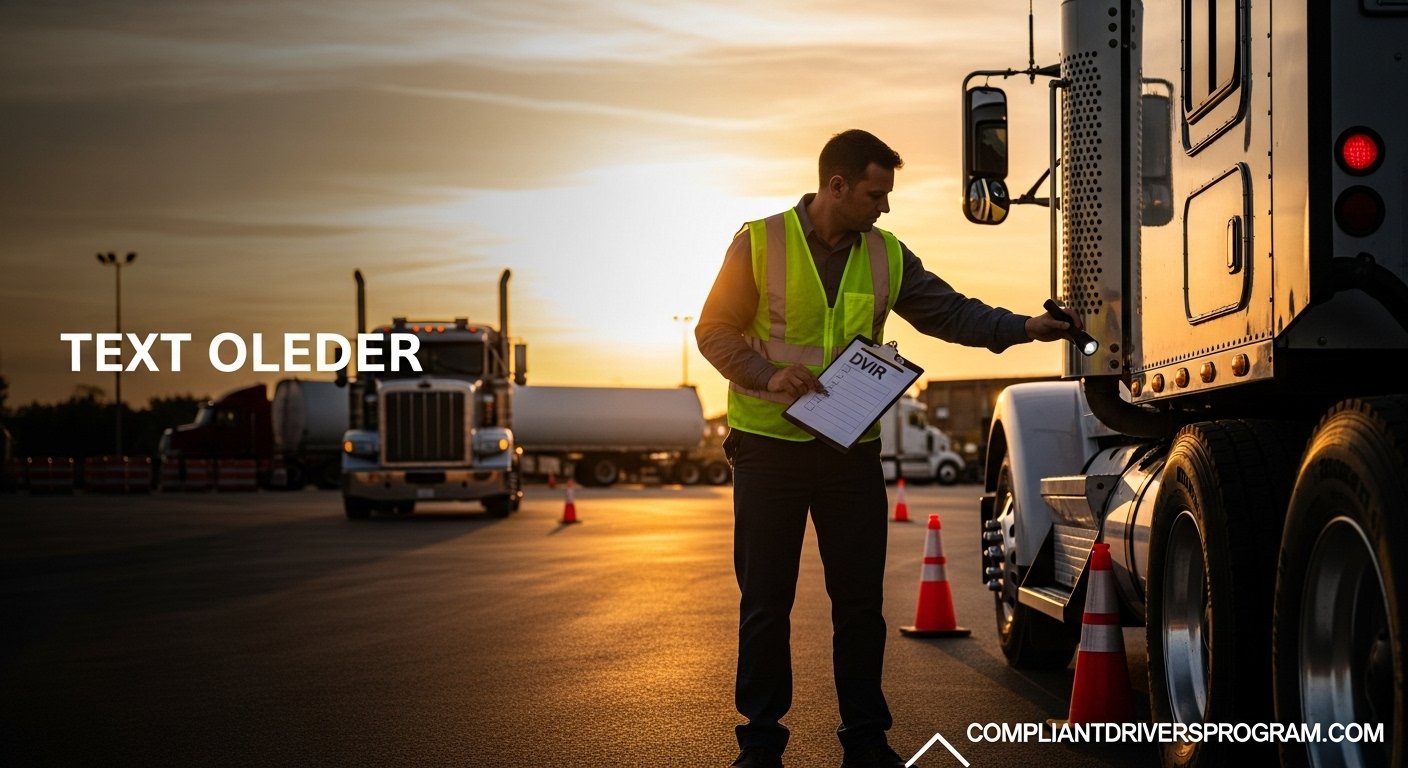
Ever had a tire blowout on the highway because you skipped a quick check? You know that sinking feeling when something goes wrong mid-trip. Post trip inspections save you from that mess.
You’ll learn exactly what DOT demands for your post trip inspection. We’ll cover DVIR requirements, checklists, and tips no one else shares. Stick with me, and you’ll drive safer and dodge those nasty fines.
What is Post Trip Inspection?
Here’s the thing: a post trip inspection means you check your truck after each day’s drive. You look for damage or issues that popped up on the road. This keeps your rig ready for tomorrow.
DOT rules say you do this every day you drive a commercial vehicle. It’s not optional – skip it, and you risk big trouble. Most drivers rush it, but you won’t after this.
You’ll note defects on a driver vehicle inspection report, or DVIR. That written report tells your boss what needs fixing. Simple habit, huge payoff in safety.
Why Post Trip Matters
Quick tip: post trip inspections catch problems before they turn deadly. A loose brake line might not show until after your shift. You spot it now, and no one’s hurt tomorrow.
FMCSA data shows proper checks cut accidents by spotting wear early. Fines for skipping hit $1,000 to $10,000 per violation. Don’t let that drain your wallet.
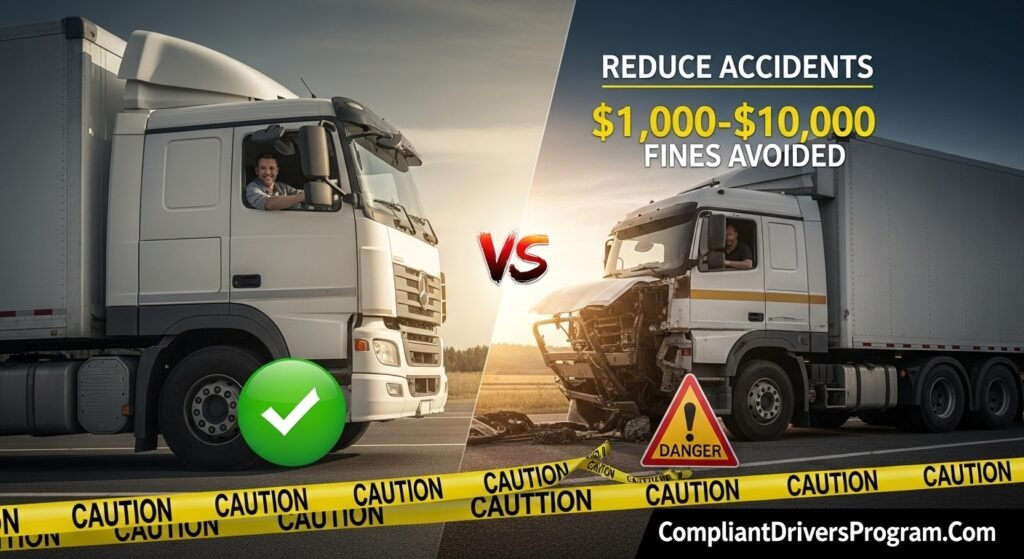
You stay compliant with carrier requirements too. Safe trucks mean happy dispatchers and steady paychecks. Most people don’t know this: it logs as on-duty time, not driving.
Is It DOT Required?
Most people don’t know this: yes, DOT requires post trip inspections. Federal rule 49 CFR 396.11 says do it at day’s end or when you drop a trailer. No exceptions for truck drivers.
You’ll submit a DVIR if you find defects. Carriers must repair them before next use. Ignore this, and DOT pulls your license fast.
Pro Tip:
Check every vehicle you drove that day. Multi-trailer hauls? Inspect each one separately.
DVIR Requirements Explained
DVIR stands for driver vehicle inspection report. You fill it out daily with pre and post trip inspections. It lists defects, your signature, and repair status.
DOT demands a written report for issues like bad lights or low fluids. Keep it with maintenance records for audits. Fines start at $500 for missing DVIRs.
Carriers set their own rules too, but DOT trumps all. Use paper forms or apps – both work if complete. Learn more in our Vehicle Inspection Report guide.
Pre Trip vs Post Trip
Ever wonder why both matter? Pre trip inspection checklist happens before you roll out. You confirm everything works from cold start.
Post trip focuses on what the road did to your truck. Tires wear, lights crack – you catch it here. Do Pre Trip Inspection: Checklist first every morning.
Together, pre and post trip inspections form your daily routine. Skip one, and DOT violations stack up. See our DOT Truck Inspection for full details.
Step-by-Step Post Trip Checklist
Ready to nail your post trip inspection? Park safely, set brakes, and walk around your rig. Start at the front – check headlights and signals. Feel the tires for heat from drags.
Move to brakes – listen for air leaks, test slack adjusters. Peek under for fluid drips or loose parts. Windshield wipers? Swipe them to test rubber.
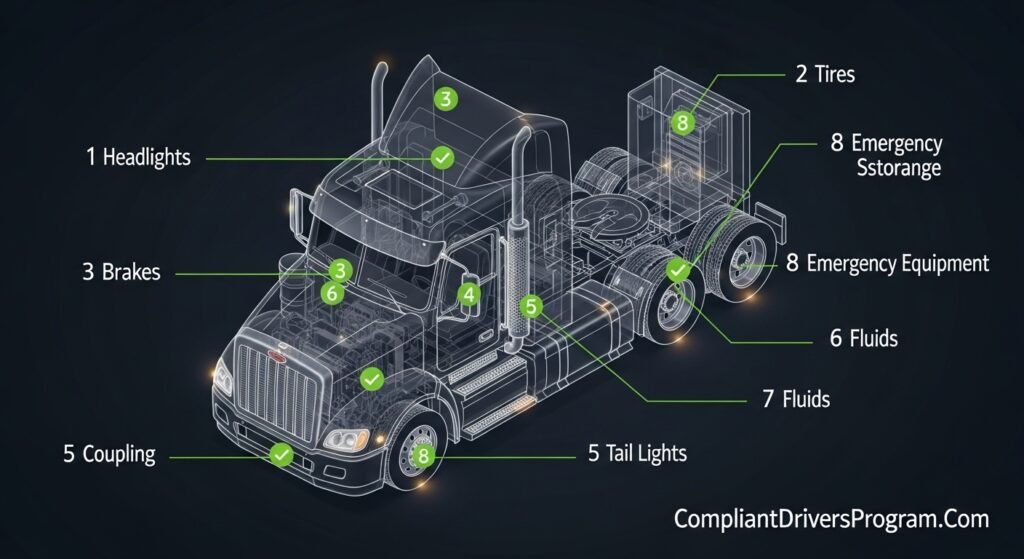
Climb up for coupling gear – fifth wheel pins tight? Secure loads, check chains. End at rear lights and reflectors. Takes 20-30 minutes if you focus.
Lights | Test all turn signals, brakes, hazards
Tires | No cuts, even tread, proper air (100-110 PSI)
Brakes | No grease leaks, drums cool
Fluids | Oil, coolant, power steering full
What Items to Include
What items should a post trip inspection include? Steering box for play, suspension for cracks. Emergency gear like extinguisher and triangles ready?
Don’t miss rims for dents or lug nuts loose. Mirrors clean, no blind spots. Horn blasts clear. These details keep you out of Out of Service Violations.
Pro Tip:
Use a flashlight at night. Spots oil slicks or damage you miss in dark.
According to FMCSA, cover 20+ parts minimum. Add your carrier requirements for extras like load seals.
How to Complete DVIR
Grab your DVIR form or app. Note vehicle number, date, miles. List defects clearly – “left rear tire low tread.” Sign it.
Hand it to maintenance next day. They note repairs and sign back. You review before pre trip. Simple loop keeps DOT happy.
For DVIR requirements for truck drivers, check status daily. Unfixed issues? Park the truck. See DOT Regulations for Truck for more rules.
Common Mistakes to Avoid
You ever rush your post trip and miss a flat? Most drivers do. Slow down – DOT levels 1-3 violations come from sloppy checks. Fines up to $20,000 for repeats.
Skip written reports? Big no. Verbal “it’s fine” won’t save you in audit. Always document, even no defects.
Ignore small stuff like wiper fluid? It snowballs to tickets. Pro habit: photo issues for proof. Ties to DOT Fines.
Costs and Fines
Expect zero cost for the inspection itself. Time? 30 minutes daily. Apps like KeepTruckin save 10 minutes over paper.
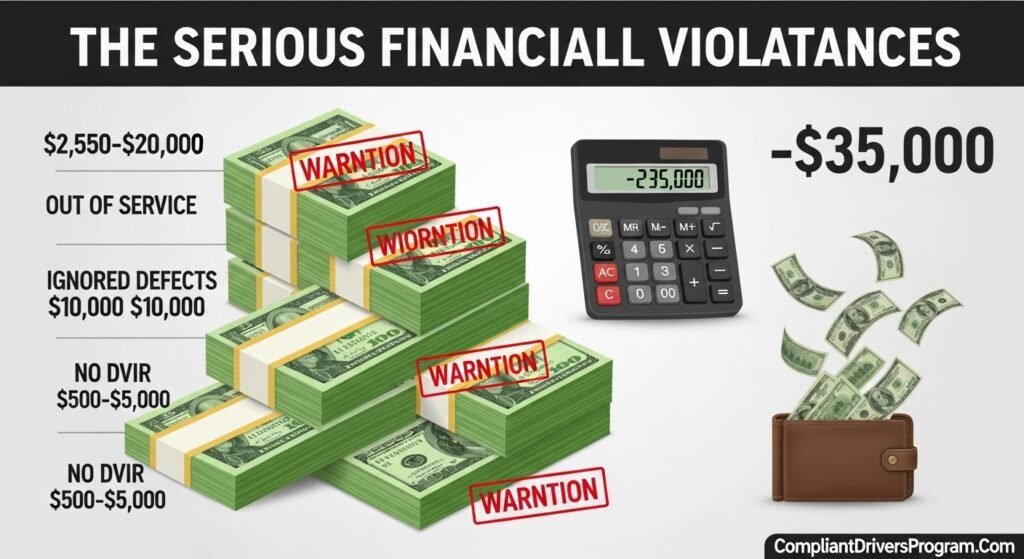
Fines hurt: $1,500 average for no DVIR. Out-of-service? Lose paydays. Repairs from ignored defects? $500-$5,000 easy.
Insight others miss: carriers pay repair tracking fees yearly. Your good DVIRs cut their costs 20%. Win for everyone.
| Violation | Fine Range | Time Impact | Best Prevention |
|---|---|---|---|
| No DVIR | $500-$5,000 | 1-7 days | Daily written report |
| Defect Ignored | $1,000-$10,000 | Vehicle down 3-5 days | Full checklist |
| Out of Service | $2,500-$20,000 | 10+ days no pay | Photo defects |
Pro Tips for Success
Quick tip: inspect in same order every time. Builds muscle memory, cuts errors 50%. Park facing light for better views.
Tie it to Truck Driver Safety Tips. Gloves on for hot parts, chocks for safety. Apps remind you – free ones work great.
Most miss this: review last DVIR before post trip. Ensures old fixes hold. Links to fewer Truck Accident Prevention.
Tools You Need
Flashlight, tire gauge, gloves – basics under $20. Digital DVIR apps? $10/month, auto-syncs to boss.
Paper forms from FMCSA free download. Pick what fits your rig. No excuses.
Insight: use phone voice notes for quick logs. Transcribe later. Saves handwriting time.
FAQ
A: Yes, under 49 CFR 396.11. Do it daily after driving or dropping trailers. Fines apply if skipped.
A: Lights, brakes, tires, fluids, coupling, emergency gear. Full list in FMCSA rules. Document all.
A: Written report with defects, signature, vehicle ID. Submit if issues found. Repair before reuse.
A: Note date, miles, problems. Sign and give to maintenance. Review fixes next day.
A: End of day for each vehicle driven. Log defects on DVIR. No defects? Still note “OK.”
- Nail your post trip inspection with a 20-minute checklist daily.
- Always file DVIRs – they shield you from $1,000+ fines.
- Spot defects early to prevent breakdowns and accidents.
- Review pre trip fixes before next haul.
Grab your DVIR form today. Run that post trip inspection tonight. You’ll sleep better knowing your truck’s solid. Safe drives ahead!






![DOT Drug Test: What You Must Know in 2026 [Full Guide]](https://compliantdriversprogram.com/wp-content/uploads/2026/03/DOT-Drug-Test-150x150.jpeg)



Leave a Reply