
Ever wondered what would happen if one of your company trucks got in an accident, and it wasn’t covered? That’s not a situation any business owner wants to face. Whether you own five vans or fifty trucks, commercial fleet insurance helps protect both your vehicles and your bottom line.
Here’s the thing: finding the right coverage can feel overwhelming. With so many options and price differences between states, how do you decide what’s right for your business? In this guide, you’ll learn how commercial truck fleet insurance works, what it costs, and how to get reliable commercial fleet insurance quotes that actually fit your needs.
🚛 Fleet Insurance Calculator
Get Instant Cost Estimates for Your Commercial Fleet
| Cost Breakdown | Amount |
|---|
🔑 Money-Saving Tips
What Is Commercial Fleet Insurance?
Let’s start simple. Commercial fleet insurance covers two or more business vehicles under one policy. Instead of buying separate insurance for every truck, car, or van, you can combine them into one plan. That means less paperwork, easier renewals, and usually, lower costs.
This insurance protects vehicles used for business purposes like deliveries, client visits, or job-site travel. Whether your business runs heavy-duty trucks or small delivery vans, business fleet insurance can protect you from accidents, thefts, or damage.
It’s also more customizable. You can adjust your coverage for different types of vehicles, like semis, vans, or company cars, and for drivers with different experience levels.
Why Fleet Insurance Matters for Every Business
Running multiple vehicles without proper insurance is risky, and expensive. One accident could cost thousands in repairs, cause delivery delays, and raise your out-of-pocket expenses. That’s why a solid fleet coverage plan is essential.
Here are a few big reasons you should care:
- Saves money long-term: Multi-vehicle policies often give volume discounts.
- Easier management: One policy for your entire fleet means simpler billing and claims.
- Keeps your business running smoothly: Quick claim handling helps you get vehicles back on the road.
- Builds trust: Some clients and partners only work with insured companies.
If your business operates commercial trucks, check out our guide on Semi Truck Insurance to see how big rigs fit under fleet policies.
How Does Fleet Insurance Work?
Here’s the breakdown: once you insure your fleet, every vehicle on that plan gets protection under shared terms. The policyholder (your business) manages everything, from adding or removing vehicles to renewing coverage.
Most commercial fleet insurance companies let you choose between:
- Any driver policy: Covers all employees approved to drive your vehicles.
- Named driver policy: Only specific people listed on the policy are covered.
If you have high turnover, like in delivery or construction, a flexible “any driver” option might be best.
Pro Tip:
Always review driver records before adding them to your fleet plan. Insurance companies reward safe driving histories with lower premiums.
What’s Included in Fleet Coverage?
A good fleet coverage policy includes the same basic protections as personal auto insurance, but with extras designed for business use. Here’s what’s usually covered:
- Liability insurance: Covers damage or injury to others if your driver causes an accident. Learn more about Liability Insurance for Cars.
- Collision coverage: Pays for repairs to your own vehicles after a crash.
- Comprehensive coverage: Protects from theft, fire, or vandalism (see more on Comprehensive Insurance).
- Uninsured motorist coverage: Helps if your vehicle is hit by someone without proper insurance.
You can also add extras like breakdown assistance, rental coverage, or roadside help, especially helpful if your fleet operates across states.
How Much Does Commercial Fleet Insurance Cost?
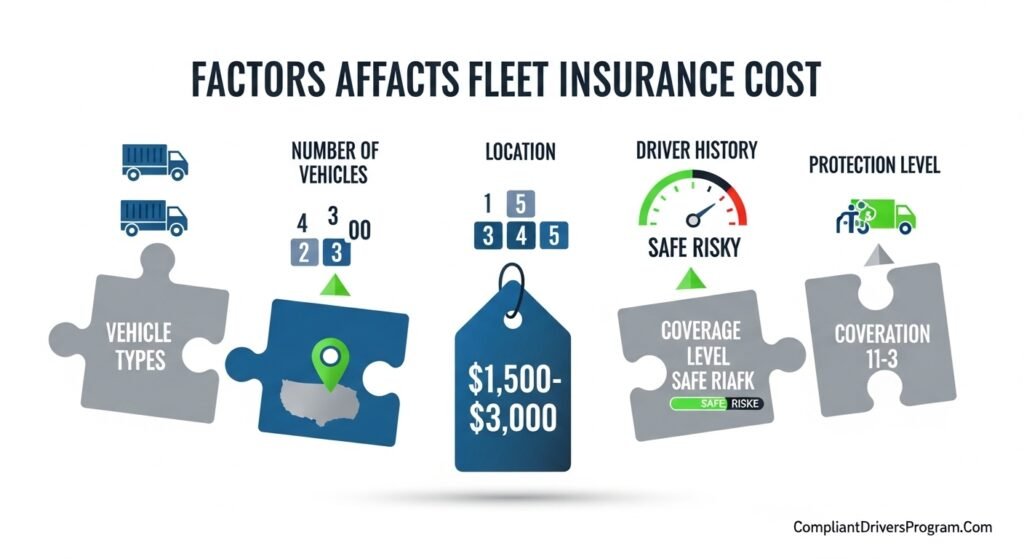
Now, let’s talk money. The average commercial fleet insurance cost in the U.S. ranges between $1,500 and $3,000 per vehicle per year. However, several factors affect what you’ll pay:
- Type of vehicles (trucks usually cost more than vans)
- Number of vehicles you insure
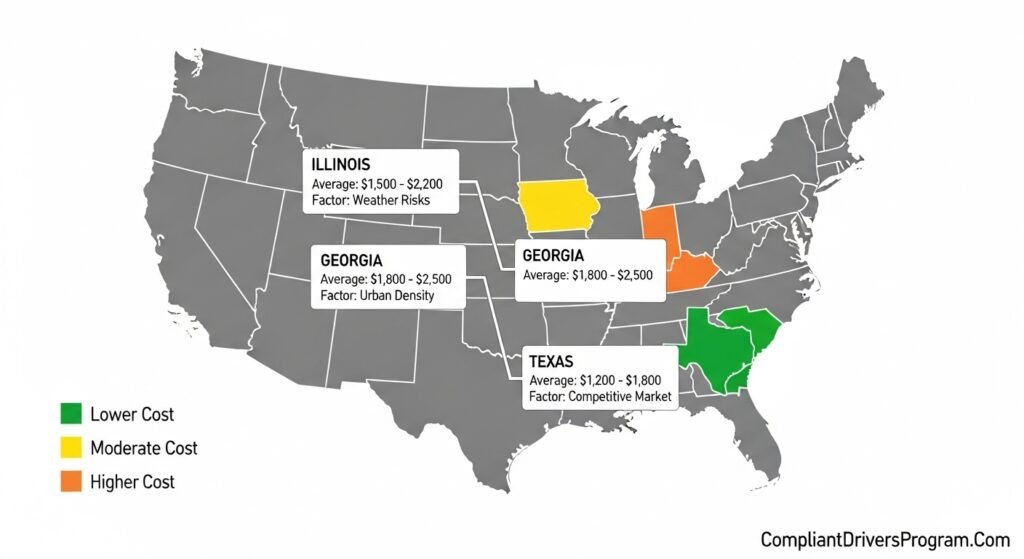
- States where you operate (Illinois and Georgia often have very different rates)
- Driving history of your employees
- Type of coverage you choose
In Illinois, for example, small fleets average around $1,800 per vehicle yearly. In Georgia, rural routes can bring costs down, but city routes, especially around Atlanta, run higher due to accident risk.
You can easily find your estimated cost by using the Fleet Insurance Calculator.
Need a deeper dive into pricing factors? Check out our guide on Commercial Auto Insurance Cost.
How to Get the Best Commercial Fleet Insurance Quotes
When getting commercial fleet insurance quotes, don’t just compare prices, compare coverage and service. Cheap isn’t always best when it comes to reliability.
Here’s how to find a great deal:
- Gather vehicle data – Know your VINs, mileage, and vehicle usage.
- Check driver records – Clean histories can save you serious money.
- Compare multiple insurers – Use brokers to find the best fleet discounts.
- Bundle where possible – Combine with other business policies for bigger savings.
According to the Insurance Information Institute (2025), companies that regularly review quotes save up to 20% annually on premiums.
Best Fleet Insurance Companies in the U.S.
Choosing the right provider matters as much as the coverage. Here are some of the best fleet insurance companies known for their reliability and service:
| Company | Best For | Average Annual Cost per Vehicle | States Covered |
|---|---|---|---|
| Progressive | Small fleets | $1,800–$2,400 | Nationwide |
| Munich Re | Large fleets & global coverage | $2,000–$3,200 | Nationwide + international |
| State Farm | Local small businesses | $1,500–$2,100 | Most states |
| GEICO Commercial | Short-distance delivery | $1,400–$1,900 | Nationwide |
Many large insurers like Munich Re also have unique risk management options for fleets. If you’re curious, evaluate the insurance company Munich Re on commercial fleet insurance to see how their Munich Re commercial fleet insurance offerings compare globally.
Commercial Fleet Insurance for Delivery Drivers
Do delivery drivers need special insurance? Absolutely, especially those working for food delivery apps or courier services. Standard personal car insurance often won’t cover commercial use.
The best insurance for food delivery drivers usually includes hired & non-owned auto coverage. This protects your business if employees use personal vehicles for deliveries.
If you run a delivery-based company, explore Delivery Driver Insurance for specifics on policy types and cost breakdowns.
On average, delivery driver insurance cost ranges between $250 and $500 per month, depending on your coverage level and state.
Fleet Insurance in Different States
Commercial fleet insurance rates vary widely by state. Why? Because accident risk, traffic volume, and local regulations differ.
- Illinois: Costs are moderate; expect strong competition between insurers.
- Georgia: Busy cities mean higher premiums; rural routes are cheaper.
- Texas: Offers flexible policies for mixed-use fleets, popular for trucking businesses.
For multi-state operations, check your DOT Number requirements through DOT Number Deactivation to ensure your vehicles meet federal compliance.
Cost Comparison Table
| Coverage Type | Cost Range (Per Vehicle/Year) | Best For |
|---|---|---|
| Basic Liability Only | $1,000–$1,500 | Small local fleets |
| Full Coverage (Liability + Collision + Comprehensive) | $1,800–$3,000 | High-value fleets |
| Delivery Fleet Coverage | $2,000–$3,500 | Delivery and courier services |
| Customized Coverage (Any Driver + Add-ons) | $2,500–$4,000 | Large fleets with multiple drivers |
Quick Tips to Save on Commercial Fleet Insurance
Here’s how smart business owners cut costs without cutting coverage:
- Regularly train drivers on safety and accident prevention.
- Install GPS tracking and dashcams to monitor driving behavior.
- Review and update your policy annually.
- Ask about telematics discounts—insurers often reward safer drivers.
Keeping detailed maintenance logs also helps. Many insurers check your upkeep record before determining rates.
FAQs
A: It covers multiple business vehicles under one policy, making it cheaper and easier to manage.
A: Expect between $1,500 and $3,000 per vehicle yearly, depending on coverage and location.
A: Yes. Standard car insurance doesn’t cover commercial deliveries.
A: Compare multiple insurers and use tools like the Fleet Insurance Calculator to check pricing.
A: Progressive, Munich Re, and GEICO are top-rated for reliability and savings.
Final Thoughts
Here’s what you should remember:
- Commercial fleet insurance isn’t optional—it’s essential if you run even a few business vehicles.
- Always shop and compare quotes from multiple providers.
- Use the Fleet Insurance Calculator to estimate and adjust your policies.
- Keep your drivers trained and vehicles maintained. That’ll save you money in the long run.
If you’re ready to explore more options, check out related guides like Commercial Vehicle Insurance and Van Insurance for Business.
This article is for information only. Please consult a licensed insurance agent before purchasing a policy.







![DOT Drug Test: What You Must Know in 2026 [Full Guide]](https://compliantdriversprogram.com/wp-content/uploads/2026/03/DOT-Drug-Test-150x150.jpeg)



Leave a Reply