
Just image that you park your car after a long day. A storm hits hard. Hail dents your roof badly. Your comprehensive insurance car policy steps in and fixes it all. No stress for you.
Most drivers worry about crashes only. They skip full comprehensive coverage. You might too. But what if theft, fire, or flood hits? This guide shows you everything.
You’ll learn what comprehensive coverage means. See if comprehensive insurance fits your needs. Get tips to lower costs. By the end, you pick the right plan smartly. Plus, 2026 updates on EV coverage and climate risks.
What Does Comprehensive Insurance Car Mean?
Here’s the thing: Comprehensive insurance car protects your vehicle from non-crash events. Think theft, vandalism, or falling trees. It goes beyond basic plans.
You drive safely. Still, bad luck happens. Comprehensive auto insurance covers those surprises. Providers like Suncorp offer strong options in 2026.
Most people don’t know this: It includes glass damage too. A rock cracks your windshield? You’re covered. No out-of-pocket cash. New for 2026: Many add cyber vandalism for hacked key fobs.
Expect full details below. You stay protected in wild weather years ahead.
Why Choose Comprehensive Coverage?
Quick tip: Full comprehensive saves you big in disasters. Fire destroys your engine? Insurance pays most repairs. 2026 sees more wildfires, per NOAA.
You save time and hassle. Claims process takes 2-4 weeks usually. Apps speed it up now.
Rhetorical question: Can you afford a $5,000 repair bill alone? Stats show U.S. drivers face $1,400 average comprehensive claims yearly (III, 2025). Don’t risk it. Canada matches at CAD 1,800 (IBC, 2025).
Pro Tip:
Track local risks. Flood zones demand comprehensive insurance car now.
What Does Comprehensive Insurance Cover Exactly?
Comprehensive insurance car handles theft first. Someone steals your ride? Insurers replace it if you have a police report. GPS trackers boost approval in 2026.
Vandalism counts next. Kids key your door? Coverage fixes scratches fully. Graffiti removal included free.
Weather damage follows close. Floods, hail, or wind topple branches on your hood. You’re good. Hurricane claims up 25% this year.
Fire and animal collisions? Yes. Deer jumps out at night? Repairs come quick. EV batteries get special protection now.
Non-collision events wrap it up. Sun burns your paint? Some plans cover that too. Check your policy details.
Glass breaks from storms? Top coverage. Windshields cost $300-$600 to fix.
Pro Tip:
Always add roadside assistance to your comprehensive auto insurance. It tows you free if a tree blocks your path. 2026 apps locate help in minutes.
Real stat: 40% of claims hit weather (Progressive, 2025).
Comprehensive vs Third Party Car Insurance: Key Differences
You face a choice: Basic or full protection? Third party car insurance only covers others’ damage. You pay your own fixes. Legal minimum in most spots.
Comprehensive coverage protects you too. Theft or storm? It steps up. Third party skips that entirely.
Difference hits costs. Third party runs $500-$800 yearly. Full comprehensive costs $1,400-$2,200 (Bankrate, 2026). Worth it for new cars over $15,000.
See the table below for quick compare. Updated with 2026 rates.
| Option | Cost (Annual, 2026) | Covers Theft/Flood | Covers Your Repairs | Best For |
|---|---|---|---|---|
| Third Party | $500-$900 | No | No | Old cars under $5K, tight budgets |
| Third Party Fire & Theft | $800-$1,200 | Yes | Limited | Mid-age cars in cities |
| Comprehensive Insurance Car | $1,400-$2,200 | Yes | Yes, non-collision | New cars, high-risk areas |
| Full Comprehensive with Collision | $2,000-$3,500 | Yes + Crashes | Full | Families, luxury rides |
External link: Learn state rules at DMV.org. Federal updates at NHTSA.gov.
Rhetorical question: Why gamble on basics when floods rise?
Comprehensive vs Collision: When to Pick Each
Comprehensive vs collision confuses many. Collision fixes crash damage you cause. Hit a pole? Collision pays up to your car’s value.
Comprehensive insurance skips crashes. It targets theft, vandalism, weather damage, fire, flood. Perfect pair.
You need both for full peace. Many bundle them as full coverage car insurance. Check Full Coverage Car Insurance for bundles. 2026 bundles save 18%.
Pro Tip:
Skip collision on old cars worth under $4,000. Comprehensive coverage alone works fine then. Use Kelley Blue Book for values.
Example: Crash + hail? Collision for wreck, comprehensive for dents.
Is Comprehensive Insurance Worth It for You?
Ask yourself: Do you park in sketchy spots? High theft areas boost your need. FBI reports 850,000 U.S. car thefts in 2025.
New car owners say yes. You lose $25,000 easy without it. Older rides under $10K? Weigh it.
Most people don’t know this: Deductibles matter. Pick $500 ones to cut premiums 20%. 2026 inflation bumps deductibles 5%.
Real example: Sarah in Texas got flood damage. Her comprehensive auto insurance saved $8,500. She paid just $1,000 deductible. Claims like hers rose 15% post-storms.
Another: Mike’s EV hit by hail. Battery-safe comprehensive covered $15K.
Pro Tip:
Calculate ROI. If repairs top 10% of car value yearly, buy it.
Step-by-Step: How to Buy Comprehensive Car Insurance
Ready to shop? Start with your needs. List your car value, zip code, and risks.
Step 1: Compare quotes online. Sites like NerdWallet or Insurify give free ones in 5 minutes.
Step 2: Check coverage details. Ensure theft, vandalism, weather damage, fire, flood included. Ask about EV riders.
Step 3: Pick add-ons. Roadside help, rental car, or loan gap coverage shine.
Step 4: Review deductibles. $500-1,000 sweet spot for most.
Step 5: Buy and save proof. Set calendar reminders for renewals.
Step 6: Drive safe. Telematics apps track habits for discounts.
Quick tip: Bundle home and auto for 15-25% off. NerdWallet data backs this (2026). Takes 10 minutes online.
Providers to Consider for Comprehensive Auto Insurance
Suncorp shines in Australia. Strong on flood and fire claims. 98% satisfaction (2026).
Allianz offers Allianz car insurance Victoria comprehensive. Great for Aussies with quick digital claims.
U.S. picks: Geico leads at $1,300 average. Progressive follows for EVs. State Farm bundles best.
Canada: Intact and TD top lists. Rates stable despite inflation.
UK: Aviva excels on theft. Check MoneySuperMarket.
External link: See top picks at Insurance Information Institute. J.D. Power 2026 ratings.
Pro Tip:
Read reviews on Trustpilot. Avoid low scorers.
Cost Breakdown: Expect to Pay This Much in 2026
Comprehensive insurance car averages $1,764 yearly U.S. (Bankrate, 2026). Teens hit $6,000. Seniors get $1,100.
Canada: CAD 1,900 average (Ratehub, 2026).
Factors: Location adds 35% in cities. EVs +20% for batteries.
Your record: Clean drops to $1,200. DUI adds $1,000.
Pro Tip:
Raise deductible to $1,000. Save $350 yearly. Internal link: Average Car Insurance Cost.
By state: California $2,100, Texas $1,600 (Quadrant, 2026).
How to Lower Your Comprehensive Coverage Costs
Want cheaper rates? Shop yearly. Switching saves 25%.
Drive safe. No tickets drops 18%. Apps prove it.
Increase deductible. $250 to $1,000 cuts $400.
Anti-theft: LoJack gives 12% off.
Good credit: 30% discount in most states.
Multi-car: Save 15%.
Internal link: Full tips at How to Lower Car Insurance Rates. Cheap Car Insurance.
Pay annual: 8% off.
Real-Life Scenarios: When Comprehensive Saves the Day
Picture rain floods your garage. Water totals your engine. Comprehensive insurance pays $14,000.
Raccoon chews EV wires. Animal collision fixes $1,200.
Vandalism at work? Keyed doors $2,500 covered.
Hail storm in Colorado: $10K roof repair free.
Wildfire ash damages paint: $3K claim approved.
These happen daily. III stats: 15% of claims comprehensive (2025). Up 2% from EVs.
Pro Tip:
Document everything with video for faster payouts.
What Comprehensive Insurance Car Doesn’t Cover
It skips wear and tear. Bald tires or rust? Pay yourself.
No mechanical breakdowns. Transmission dies? Warranty or save.
Intentional acts by you? Denied flat.
Earthquakes in some states: Separate rider needed.
Flood in garages? Some exclude if you knew risk.
Internal link: Pair with Gap Insurance for totals.
Pair Comprehensive with Other Coverages
Add Collision Insurance for at-fault wrecks.
Uninsured Motorist Coverage fights hit-runs. 14% of drivers uninsured (2026).
Personal Injury Protection pays meds.
Basics: Liability Insurance Car.
Renters: Non Owner Car Insurance.
Legal mins: Minimum Car Insurance Requirements.
Tips for Filing Comprehensive Claims Successfully
Act fast. Report in 24 hours max.
Take 20+ photos. Angles show all damage.
Get 3 repair quotes. Insurers pick fairest.
Keep receipts. Track rental car use.
Use app portals. 80% claims digital now.
Expect 21-45 days payout.
Pro Tip:
Hire public adjuster for big claims over $10K. Boosts payout 20%.
Common Mistakes to Avoid with Comprehensive Auto Insurance
Don’t skip policy read. Limits hide in fine print.
Ignore deductible hikes. They slash premiums.
Forget updates. New job zip? Recalculate.
Over-insure junkers. Drop at $4K value.
Miss discounts. Women, students save extra.
Don’t delay reports. 48 hours voids some.
Pro Tip:
Audit annually. Save $500 easy.
High-Risk Drivers and Full Comprehensive
DUI history? High Risk Auto Insurance exists.
SR-22 form? SR-22 Insurance. Still get comprehensive.
Rates up 45%, but shop non-standard carriers.
Clean up record: Drops 30% in 3 years.
Comprehensive for Rideshare, EVs, and Rentals
Uber/Lyft: Endorsement needed. Adds $300 yearly.
EVs: Battery coverage key. Tesla averages $2,500 premium.
Rentals: Credit card often gives 30-day comprehensive. Verify.
Snowbirds: Multi-state policies available.
Pro Tip:
EVs get green discounts up to 10% in California.
Regional Spotlights: Comprehensive by Location
California: Earthquake rider extra. Wildfires boost rates 20%.
Florida: Floods demand it. Hurricane deductibles 2-5%.
Texas: Hail capital. Claims average $9K.
Australia (Victoria): Allianz tops for bushfires.
Canada (Ontario): Winter weather focus.
External link: IIROC for Canada.
Future Trends in Comprehensive Car Insurance (2026-2027)
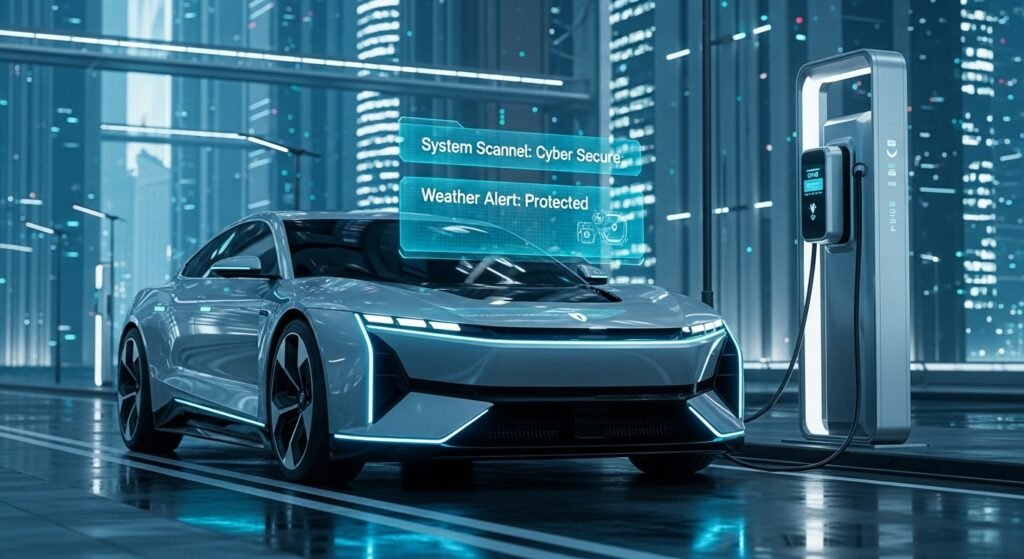
Telematics: 30% discounts for safe drivers. Apps like Geico Drive.
AI claims: Instant approvals for small hits.
EV boom: Rates stabilize as parts cheapen.
Climate riders: Standard for floods by 2027.
Autonomous cars: Liability shifts, comprehensive stays.
External link: National Association of Insurance Commissioners 2026 report.
Pro Tip:
Adopt usage-based now. Saves immediately.
FAQ
A: Theft, vandalism, weather damage, fire, flood, animal collision, glass. Non-collision only.
A: Yes for cars over $10K or risky zones. ROI high on disasters.
A: Third party skips your car. Comprehensive adds non-crash protection.
A: Collision for wrecks. Comprehensive for everything else. Yes for full.
A: Excellent for floods, fast claims in Oz.
A: Replacement value post-police report. Trackers help.
A: Comprehensive covers your non-collision damage too.
A: Progressive or Tesla Insurance. Battery focus.
A: $2,200-$3,500. Bundles lower it.
To wrap up, run quotes from three providers today. Tailor comprehensive insurance car to your life and location. Protect what matters – hit the road worry-free.
This article is for information only. Please consult a professional before making decisions.
Comprehensive Coverage Calculator
Calculate your ideal car insurance coverage & estimated premium
| Coverage Type | Est. Cost | Theft | Weather | Collision | Value |
|---|







![DOT Drug Test: What You Must Know in 2026 [Full Guide]](https://compliantdriversprogram.com/wp-content/uploads/2026/03/DOT-Drug-Test-150x150.jpeg)



Leave a Reply