
Let’s face it: losing your license feels scary, but it doesn’t mean you’ve lost all options. You can still get insurance suspended license coverage, protect your car, and work toward getting back on the road.
Most people don’t realize you can even plan ahead so your future insurance rates don’t stay sky-high for years. In this easy guide, you’ll learn how suspended license insurance works in 2026, what SR-22 really means, how non owner policy coverage helps, and how to lower your costs even if your record looks risky.
You’ll also see how license reinstatement works, what to expect if your license suspended for no insurance, and answers to questions like “can insurance tell if your license is suspended” and “can my license be suspended for unpaid insurance claim”.
What Does Insurance for a Suspended License Mean?
Basic Idea of Suspended License Insurance
When people say suspended license insurance, they usually mean a policy you get while your license is not valid. You still can’t drive, but you maintain coverage for:
- Meeting state financial responsibility rules
- Keeping your car protected while parked
- Preparing for fast license restoration later
This can be a standard policy with an SR-22 filing or a non owner policy if you don’t own a car.
Suspended vs Revoked License
A suspension is temporary, while a revocation is more serious. With a suspension, you usually can:
- Complete some steps such as classes or fees
- Carry insurance with an SR-22
- Apply for full reinstatement after a set period
With revocation, you often need to start over, like a new driver. That’s when insurance with revoked license gets even harder, and you may need high-risk auto options like those discussed in High Risk Auto Insurance.
Why Suspended License Insurance Matters in 2026
Newer Systems Catch Lapses Faster
Most people don’t know this, but states now use near real-time systems to track your coverage. If your policy ends and you don’t replace it quickly, your registration or license can be flagged within days, not weeks. That means you can’t risk gaps in your no license insurance coverage.
Quick tip: always start your new policy before your old one ends. Even one day without coverage can cause trouble in some states.
Avoiding Future Rate Spikes
Insurers in 2026 heavily track:
- Lapses in coverage
- Suspension reasons
- Claims and tickets
If you let your policy cancel while your license is suspended, your future suspended license and car insurance rates can double compared to drivers who stayed insured. Keeping coverage during a suspension is one of the best ways to protect your future wallet.
Main Reasons Licenses Get Suspended (And How That Affects Insurance)
Serious Driving Violations
These often trigger both suspension and high-cost suspended license insurance:
- DUI or DWI
- Reckless driving
- Street racing
- Leaving the scene of an accident
If your issue is DUI-related, you’ll likely need special coverage similar to what’s discussed in Insurance After DUI.
Financial and Administrative Reasons
You can also lose your license due to:
- Unpaid tickets or court fines
- Missed child support
- Not appearing in court
- License suspended for no insurance after a crash
In some states, if you lose a lawsuit from an accident and don’t pay the judgment, you may wonder, “can my license be suspended for unpaid insurance claim?” In many cases, yes—your license stays suspended until the judgment is paid or a payment plan is arranged.
Step-by-Step: How to Get Insurance with a Suspended License
Step 1: Confirm Why and How Long Your License Is Suspended
Start by checking your DMV or licensing agency record. You need to know:
- Exact reason for the suspension
- Suspension length
- Whether an SR-22 is required
- Any extra requirements for license reinstatement
This helps you choose the right suspended license insurance option.
Step 2: Ask About SR-22 or Similar Filings
Many drivers will need an SR-22 form, which is simply proof that you carry the required liability limits. Your insurer sends this form to the state. If your case is serious or DUI-related, your state might require higher limits or special forms.
You can learn more about forms and costs at SR-22 Insurance Cost by State, which gives you a feel for what different states expect.
Step 3: Decide If You Need an Owner or Non-Owner Policy
Here’s how to choose:
- You own a car and keep it: consider a policy with comprehensive and maybe collision.
- You own a car but won’t drive it: you might still want parked-car coverage.
- You don’t own a car: a non owner policy may be enough to satisfy your SR-22 requirement and help with license restoration.
For details, check Non Owner Car Insurance, which explains how these policies work for people without vehicles.
Step 4: Shop High-Risk or “Second Chance” Insurers
Most standard companies don’t love suspensions. But you can look at:
- Non-standard or high-risk insurers
- Companies focused on second-chance coverage
Guides like Second Chance Auto Insurance explain how to find companies that work with drivers rebuilding after suspensions, DUIs, or multiple tickets.
Pro Tip: Get at least three to five Car Insurance Quotes. High-risk rates can vary a lot between companies, even with the same record.
Step 5: Keep Coverage Active Until Reinstatement Is Complete
Most states require an SR-22 for about three years after you’re eligible again. If you cancel or miss a payment, the insurer tells the state, and your license reinstatement timeline may restart.
So when you ask, “can I get insurance with suspended license?”, the real plan is not just getting it—but keeping it.
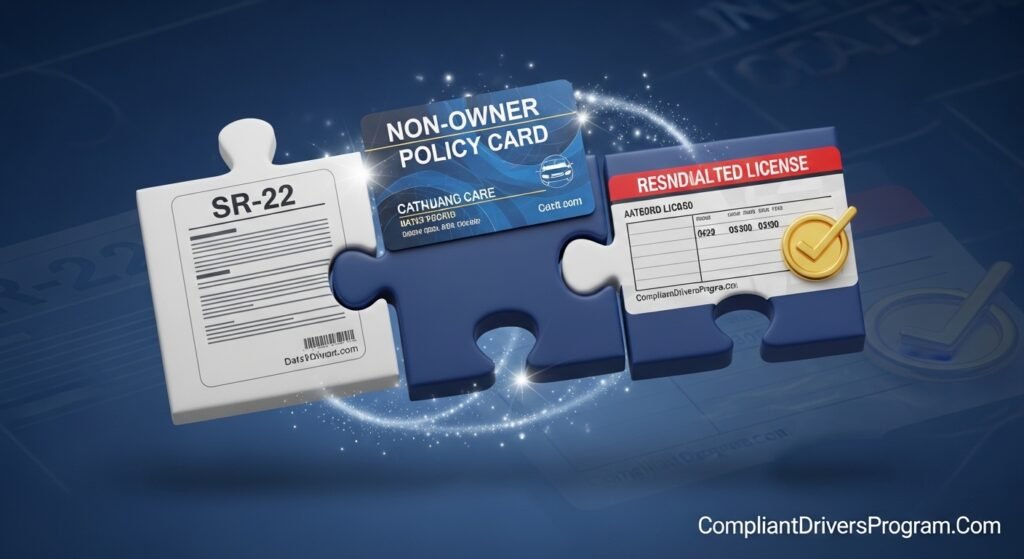
How SR-22, Non-Owner Policies, and Reinstatement Work Together
SR-22 and Reinstatement
Think of SR-22 as a promise to the state that you’ll stay insured. To reach full license restoration, you usually must:
- Keep the SR-22 on file for the required years
- Avoid lapses in coverage
- Finish any classes, treatment, or court steps
- Pay all reinstatement and court fees
You can read more about how SR-22 works in guides like SR-22 Insurance.
Non-Owner Policy Benefits
A non owner policy is a strong tool when:
- You don’t own a car in 2026
- You only borrow cars or use rentals
- You just need to satisfy insurance requirements for suspended license
With this setup, you pay lower premiums than full coverage on a car, while still moving closer to full license reinstatement.
How to Insure a Car with a Suspended License
Option 1: List a Licensed Primary Driver
Most people use a spouse, partner, or family member with a valid license as the main driver on the policy. You can stay on the policy as an excluded driver while still being the owner on the title.
This works well when:
- Your car is still used daily
- Someone else needs to drive it
- You’re focused on keeping coverage active for future license restoration
Option 2: Store the Car and Adjust Coverage
If nobody will drive the car during your suspension, you might:
- Keep comprehensive-only coverage for theft, fire, storms, or vandalism
- Remove collision and liability if allowed and if the car is fully off the road
Just be careful if you still owe money. Lenders often demand full coverage on financed cars, which is why guides like Cheap Car Insurance and High Risk Auto Insurance matter when choosing limits that fit your budget.
Can Insurance Tell If Your License Is Suspended?
Many drivers ask, “can insurance tell if your license is suspended?” The answer is yes. Insurers in 2026 regularly:
- Pull your motor vehicle report
- Use electronic systems to check status
- Confirm eligibility when adding drivers or filing SR-22
If you try to hide a suspension, the company can cancel or deny a claim later. Always be honest about your status when applying for no license insurance or any policy.
Can Your License Be Suspended for Not Having Insurance?
If you’re wondering, “can your license be suspended for not having insurance?”, the answer in many states is also yes. Common triggers include:
- Getting caught driving without insurance
- Causing an accident while uninsured
- Failing to provide proof of coverage after a citation
If your license suspended for no insurance, many states will require you to:
- File an SR-22
- Carry suspended license insurance for a set period
- Pay reinstatement and possibly civil penalty fees
This is why keeping at least basic Liability Insurance Car coverage is so important, even when money is tight.
Can My License Be Suspended for Unpaid Insurance Claim?
You might also ask, “can my license be suspended for unpaid insurance claim?” In many places, if:
- You’re at fault in a crash
- There’s a judgment against you
- You don’t pay the judgment or meet the payment order
Your license can stay suspended until the financial side is resolved. Keeping insurance suspended license coverage and proper liability limits helps you avoid this situation in the future.
Resources like Insurance Bad Driving Record explain how past claims and judgments affect what you’ll pay now and later.
2026 Cost Expectations for Suspended License Insurance
Typical Cost Ranges
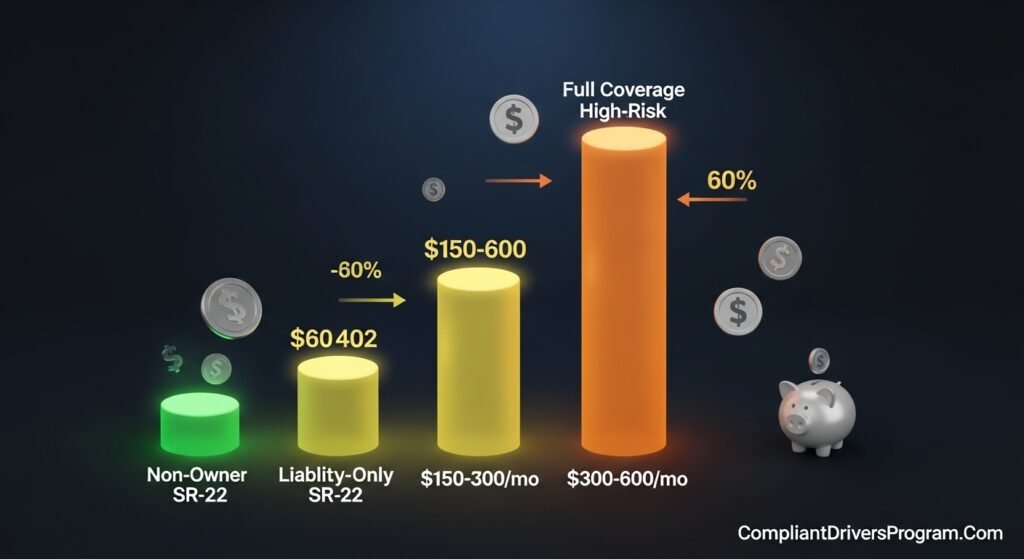
While exact prices vary, suspended license insurance and insurance with revoked license in 2026 often fall into ranges like:
- SR-22 filing fee: about $25–$50 one time
- Non-owner SR-22 policy: often around the low to mid hundreds per month
- Full coverage high-risk: usually much higher than standard policies
These are rough ranges; real costs depend on age, state, vehicle, and your record. Comparing multiple quotes through Car Insurance Quotes is the fastest way to get a real number for your situation.
How to Lower These Costs
To help manage high prices, use strategies similar to those in How to Lower Car Insurance Rates:
- Choose higher deductibles if you can afford them
- Drop extras you don’t need, especially while not driving
- Take part in safe driving or education programs if offered
- Keep a clean record once you’re back on the road
Over time, you can also aim for discounts like Safe Driver Discount and Accident Free Discount to lower your monthly costs.
Comparison: Options for Suspended License Insurance
| Option | Cost Range | Time Needed | Effectiveness | Best For |
|---|---|---|---|---|
| SR-22 Non-Owner Policy | Lower than full coverage | 3+ years typical | High for reinstatement | Drivers without a car needing reinstatement |
| SR-22 Owner Policy with Liability Only | Medium | 3+ years typical | High for legal needs | Owners not driving much, focused on license restoration |
| Full Coverage High-Risk Policy | Highest | 3–5 years of careful driving | Very high for protection | Drivers still using newer or financed cars |
| “Second Chance” High-Risk Program | Medium to high | Multi-year rebuild | High for long-term savings | Drivers with DUI or many tickets rebuilding history |
Resources like Second Chance Auto Insurance and High Risk Auto Insurance can help you choose which of these options fits you best.
Extra Tips for Managing Suspended License and Car Insurance in 2026
Maintain Coverage, Even When Not Driving
Most people want to cancel to save money, but that usually costs more later. You can:
- Switch to a non owner policy
- Reduce coverage while the car is stored
- Keep a minimal policy that still counts as continuous coverage
Rebuild Your Record Step-by-Step
Once you’re back on the road, focus on:
- No tickets or at-fault crashes
- No lapses in payment or coverage
- Asking your insurer regularly about new discount options
Over a few years, this can move you from high-risk pricing toward standard or even cheaper rates, especially if you pair it with shopping for Cheap Car Insurance.
Pro Tip: Set reminders for every key date—SR-22 end date, renewal dates, and license reinstatement eligibility—so you never miss a step and accidentally extend your suspension.
FAQ: Insurance Suspended License Questions in 2026
A: Yes, you can often get suspended license insurance through high-risk companies, usually with an SR-22 and sometimes a non owner policy.
A: You can name a licensed primary driver, adjust your coverages, or use a policy focused on suspended license and car insurance while you work toward license restoration.
A: Yes, insurers regularly check DMV records, especially when filing SR-22 or renewing your policy, so they know your status.
A: Most states demand minimum liability coverage plus proof through SR-22, kept active for a few years with no lapses.
A: In many states, driving without insurance can lead to a license suspended for no insurance, fines, and SR-22 requirements.
A: Yes, if you don’t pay a judgment from a crash, your license often stays suspended until you pay or set up an approved plan.
A: Yes, but they’re limited and usually high-risk. You may need programs similar to those in Second Chance Auto Insurance.
Key Takeaways and Next Steps
- Keep some form of insurance suspended license coverage to avoid future rate spikes.
- Use SR-22 and, when needed, a non owner policy to meet state rules for license reinstatement.
- Compare multiple quotes and explore high-risk and second chance options to control cost.
- Stay insured, avoid lapses, and drive carefully once restored to lower your rates over time.
Your best next step is to gather a few Car Insurance Quotes that support SR-22 filings, then choose the option that lets you keep coverage active while you work toward full license restoration.
License Status Insurance Checker 2026
• Your insurer files the form with your state’s DMV
• Typically required for 3 years after reinstatement
• Lapses can restart your SR-22 period
• Filing fee is usually $25-$50 one-time
• Consider higher deductibles to reduce premiums
• Complete defensive driving courses for discounts
• Bundle with other policies if possible
• Maintain continuous coverage to build good history
This article is for information only. Please consult a licensed insurance or legal professional before making financial or driving decisions.







![DOT Drug Test: What You Must Know in 2026 [Full Guide]](https://compliantdriversprogram.com/wp-content/uploads/2026/03/DOT-Drug-Test-150x150.jpeg)



Leave a Reply